

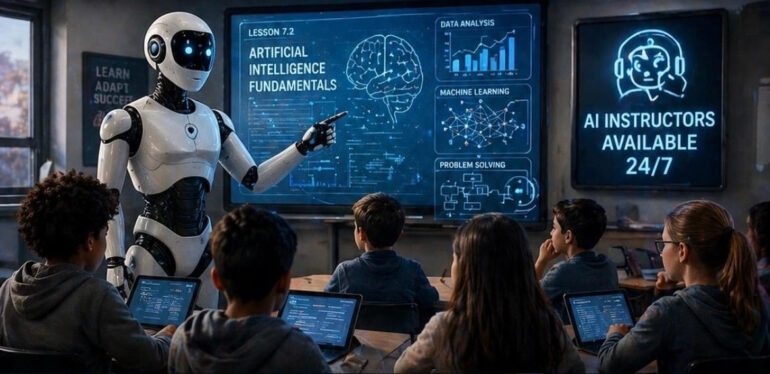
AI is fundamentally reshaping education in 2026 by transitioning from a controversial novelty to a core classroom tool. While it offers unprecedented levels of personalization, its rapid adoption has also introduced significant challenges regarding academic integrity and the erosion of human connection.
Positive Impacts…
Adaptive AI platforms now analyze individual student performance in real-time, instantly adjusting the difficulty of math problems or providing customized reading materials based on a student’s specific comprehension level.
Educators are reclaiming roughly six hours per week by using AI to automate routine tasks like drafting lesson plans, generating quizzes, and handling parent communication. This allows more time for direct mentorship and interactive instruction.
Tools like real-time translation, speech-to-text, and adaptive materials are removing barriers for multilingual learners and students with disabilities.
AI-driven virtual reality (VR) and clinical simulations allow students—particularly in healthcare—to practice complex skills in risk-free environments before applying them in real life.
Negative Impacts and Risks
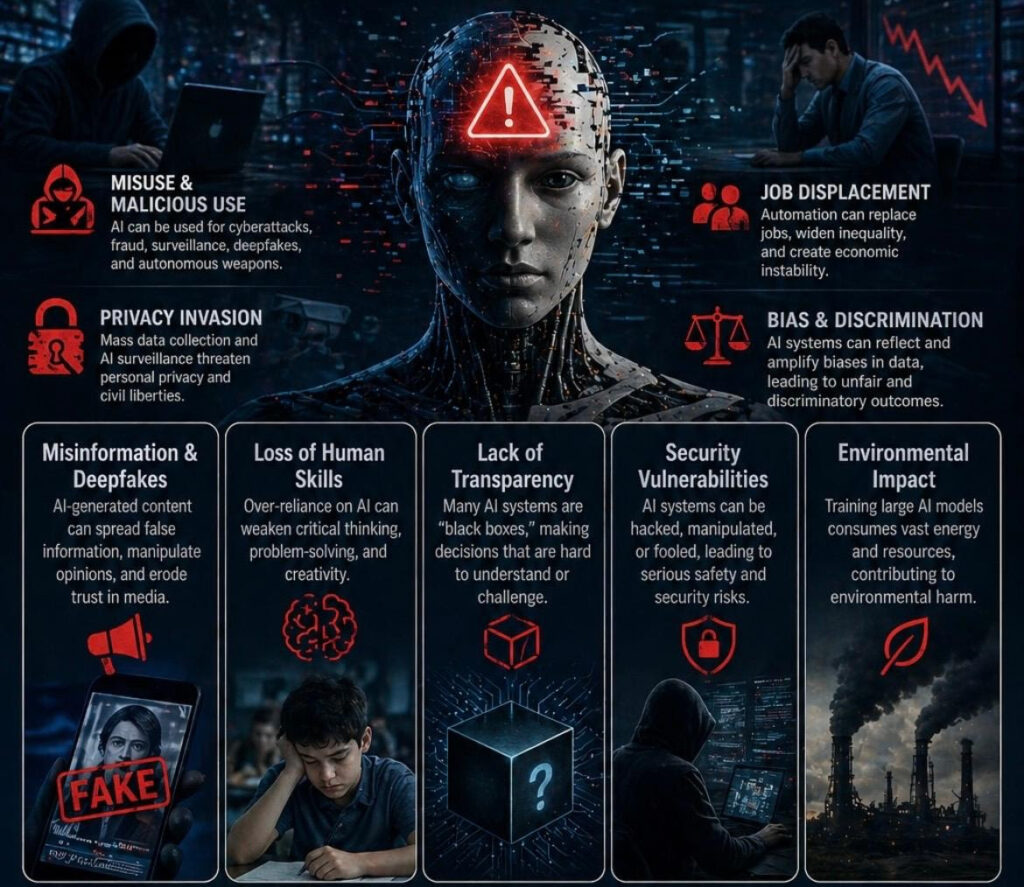
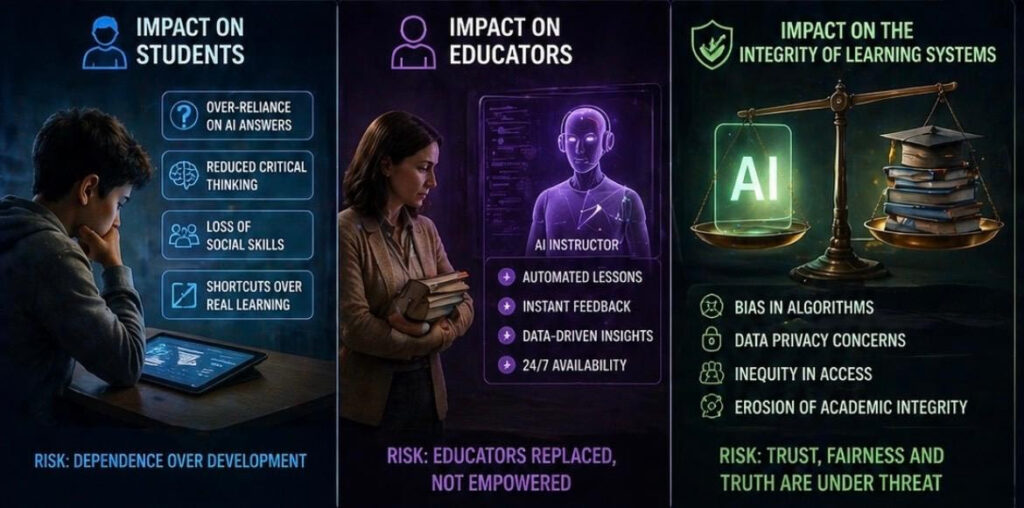
There is growing concern that students may rely too heavily on AI for answers rather than engaging in the “productive struggle” necessary for learning. Reports suggest this can lead to a decline in critical thinking and creativity. Approximately 50% of students feel that mediating their learning through AI makes them feel less connected to their teachers.

Overreliance on AI for decision-making and content generation may erode human creativity, critical thinking skills, and problem-solving abilities.
Increased interaction with AI instead of humans may lead to digital fatigue, loneliness, and the erosion of genuine human connection.
Risks to children include exposure to inappropriate AI-generated content, automated online grooming, and the creation of non-consensual imagery.
The Future of AI in the Classroom…
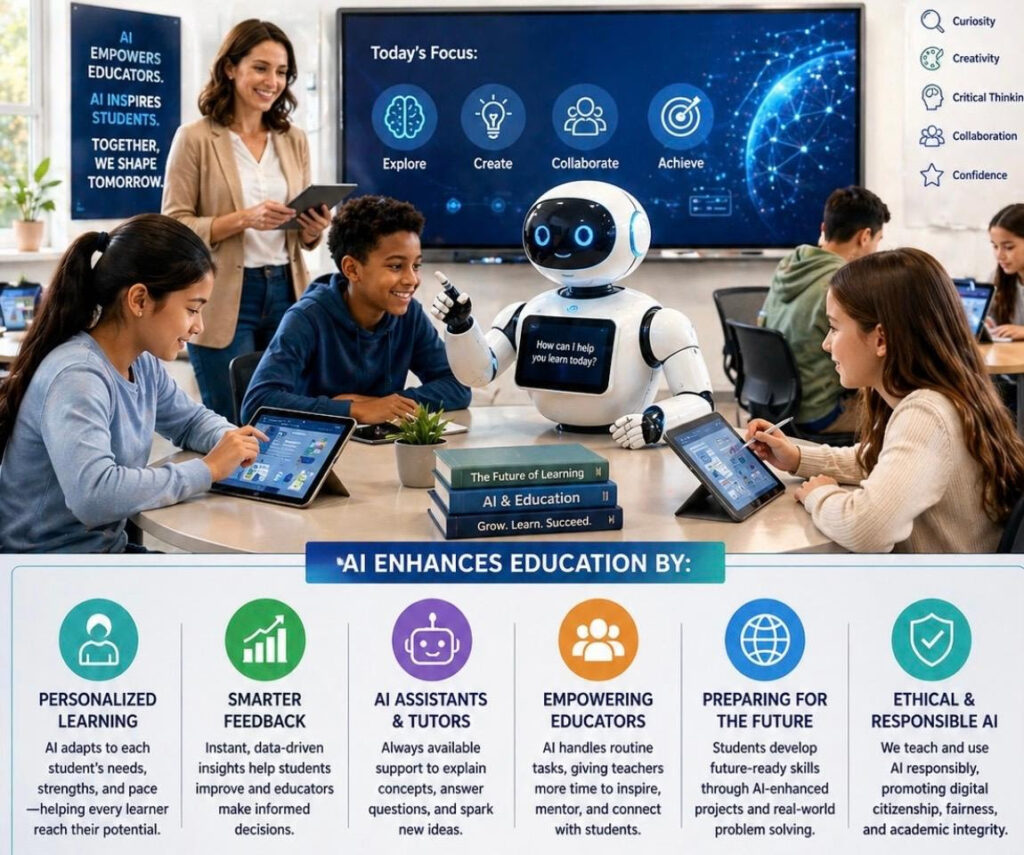
While AI can provide instant answers, the future of education depends on our ability to ensure it becomes a partner in learning rather than a shortcut that bypasses the vital cognitive struggle necessary for deep, critical thinking.
No matter how sophisticated algorithms become, the heart of a successful school will always be the strong relationships, trust, and shared social experiences that only human interaction can provide.