


Dark money is no longer a whisper in American politics. It is a force. A player. A power center operating behind the curtain while voters sit in the audience believing they are watching democracy unfold on stage.
Political Action Committees — PACs — now choose candidates the way casting directors choose actors. Once selected, millions of dollars flow — not to the candidate directly — but into television ads, digital campaigns, mailers, and messaging that the candidate legally cannot control. The PAC writes the script. The PAC produces the commercial. The PAC distributes it. And the candidate stands by, hands tied, benefiting from a performance they did not direct.
We are told there is no coordination. We are told the candidate has “no say.” But politics is not naïve. When a PAC spends millions to elevate a candidate, an understanding is formed. The obligation may be unspoken, but it is understood. Votes are expected. Positions are anticipated. Loyalty is implied.
And when loyalty is owed to funders rather than voters, representation is distorted.
AIPAC….
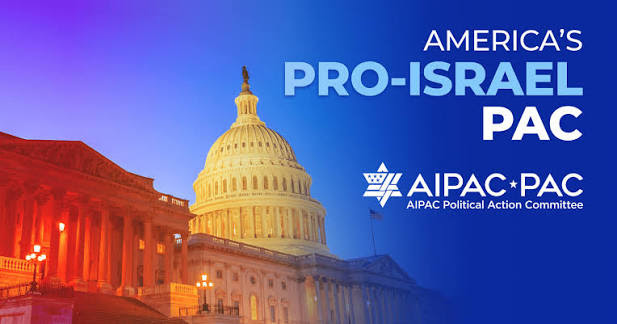
One of the most aggressive players in this space has been the American Israel Public Affairs Committee (AIPAC). Through affiliated PAC activity, it has demonstrated how concentrated money can reshape primaries and redefine who sits in Congress. This is political maneuvering behind the scenes — influence without fingerprints. For the 2026 midterm election, $13.6 million in PAC money has been issued to PAC candidates.
Illinois has seen this movie before.
In the 2nd Congressional District, Mel Reynolds challenged incumbent Gus Savage. Outside money poured in. Reports showed contributors from the northern suburbs investing heavily in a race centered in the southern suburbs and Chicago’s South Side — communities largely Black and working class. One had to ask: what was the interest?
Reynolds won. He served in Congress from 1993 to 1995. Wikipedia informs us that, ” He resigned in October of 1995 after a jury convicted him of sexual assault charges related to sex with an underage campaign worker.” His tenure in Congress became one of the most disappointing chapters in Illinois political history. The lesson should not be forgotten.

It is shameful what the PAC money has portrayed Representative LaShawn Ford as a “criminal” when the reality is that he is the only experienced legislator in his race. His picture is dark. He was falsely accused, and the IRS had to refund him money because he overpaid his taxes. It is shameful the way Toni Preckwinkle has been portrayed as responsible for taxes she does not control. The reality is that she has produced a balanced budget for each year that she has been President of the Cook County Board of Commissioners.
The PAC money enables controlled politics and a politics that is not necessarily representative of the district’s people. PAC money allows outsiders to bully a community and deprive them of real representation, instead offering PAC representation.
And yet, here we are again.
Another flood of outside PAC money enters the 2nd Congressional District, this time opposing the leading candidate, Jesse Jackson Jr., a former congressman with 17 years of seniority (1995 to 2012). Seniority matters. It means understanding the rules, the relationships, the levers of power. It means knowing more than where the bathroom is — it means knowing where influence resides.
When powerful interests prefer a less seasoned, more malleable candidate, voters should pause. If a candidate rises on millions they did not raise and messaging they did not craft, who exactly are they accountable to?
The PAC? Or the people?
This is not about personalities. It is about power. It is about whether the 2nd Congressional District wants a representative forged by community trust or financed by outside strategy.
When conflicts arise — and they always do — between district needs and donor expectations, which voice prevails? The classroom or the boardroom? The church or the checkbook?
Democracy demands clarity.
Voters must understand that dark money is not charity. It is investment. And investments expect returns.

The 2nd Congressional District deserves a congressman, not a PAC congressman, not a puppet congressman. Representation should not be remotely controlled. It should be accountable, visible, and rooted in the constituency.
Illinois has seen what happens when we ignore the warning signs.
Pay attention to make sure your vote wins.