

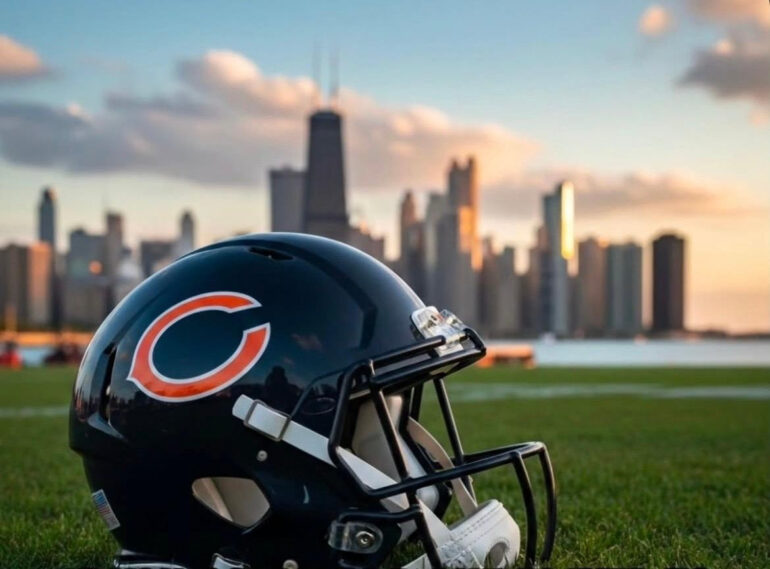
The Chicago Bears are part of Chicago. You think Chicago, you think lakefront, skyline, and then the sports teams, with the Bears at the top of the list. Go Bears. Outside of Chicago, it’s not real. Chicago. So now here we are, with the Bears choosing sites. Should they move to Arlington or even out of state to Hammond, Indiana? The answer is NO to both. The Bears belong in Chicago. Let’s work it out.
For the Bears Stadium to make economic sense, we have to find uses beyond nine Sundays. The stadium has to be rethought for other uses. The metrics don’t work. Stadium economics are proximity economics. Density is an essential element of a thriving entertainment district. Higher density means more potential customers, more transit and mobility options, and more consistent demand for non-NFL events. We have to consider programming concerts, mixed-use districts, younger and more diverse markets, and stronger participation in exactly the kind of events and attractions that make a stadium a regional economic anchor. The concerts of Taylor Swift, Beyoncé, and, coming this year, Bruno Mars make sense.
How about a Bad Bunny concert coming this way?
The Bears in Bronzeville Creates an Entertainment Corridor. . .
The Bears must remain in the Southside as an anchor institution. Alderman of the 4th Ward Lamont Robinson suggests. “A far more transformative solution is to build at the former Michael Reese Hospital site in Chicago’s Bronzeville—admittedly in the 4th Ward I represent.
Bringing the Bears to Bronzeville would be transformative for the South Side, Chicago, and Illinois. The area is already experiencing a renaissance.
A stadium could accelerate that momentum, anchoring growth in a historically significant community while creating jobs, housing opportunities, and long-term tax revenue. Paired with the privately funded Chicago Fire Stadium nearby, it could establish a powerful sports, entertainment, and commerce corridor on the Near South Side.”
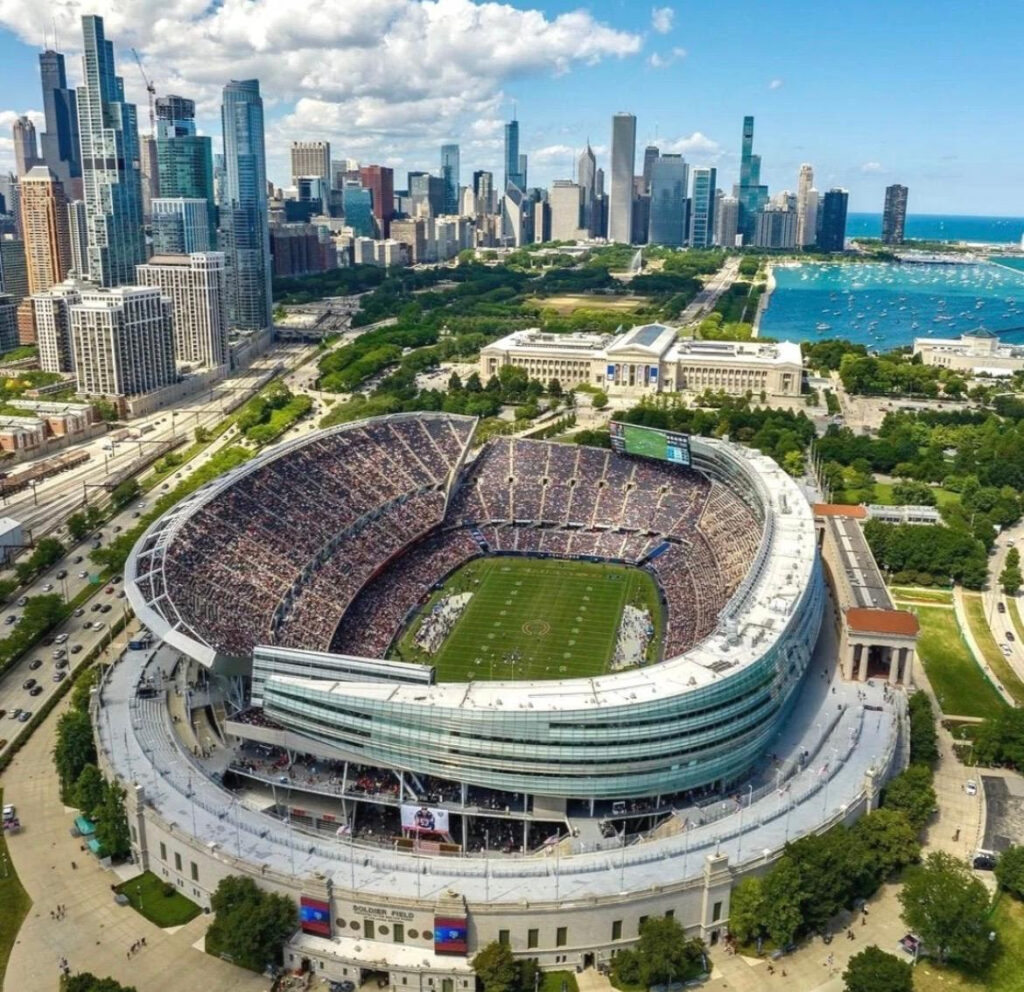
The other alternative is to create a retractable roof over the present lakefront space at Soldier Field. This also may be the most economical solution.

Spillover Effect
The “spillover” effect is the extent to which venue or event dollars ripple into the surrounding economy. A recent analysis showed that every job near Soldier Field generates more additional jobs and earnings than the same job near Arlington Park. One job near Soldier Field produced 1.13 additional jobs and $144,431 in earnings, compared with 1.07 additional jobs and $103,651 in earnings near Arlington Park. These statistics speak loudly.
The Chicago Brand
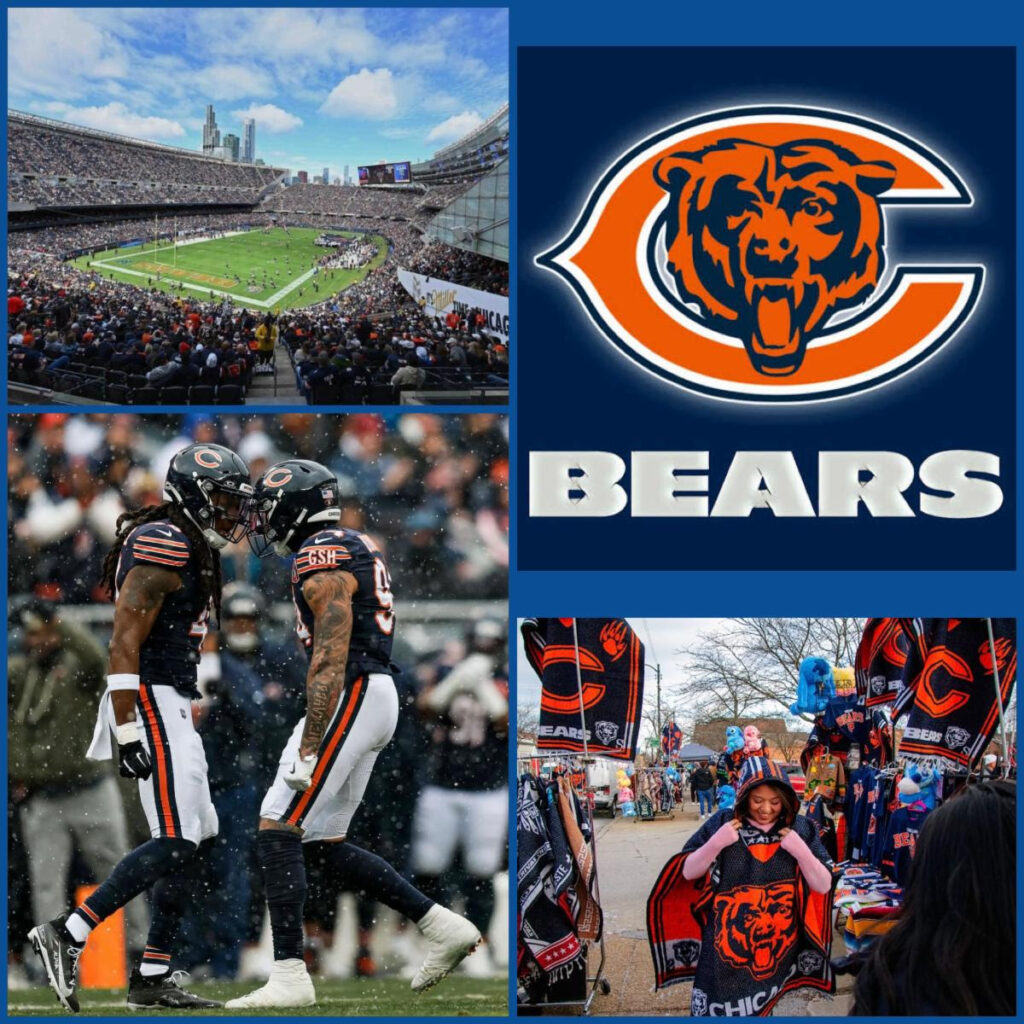
And then there is the branding effect. The “Chicago” brand is strong and benefits from being located in a region with a dense economy, the deepest consumer market, a plentiful workforce, and the strongest multiplier effects. Chicago is the stronger platform for the Bears’ future success and for the region’s long-term economic benefit.
The team is not just about winning and losing on the field. Its value also depends on the durability of cash flow, tied to branding, corporate demand, and the ability to operate as a year-round entertainment platform. A suburban location can succeed, but it changes the dynamics of revenue drivers in ways that investors and sponsors notice. The “Chicago” identity carries a market premium that will resonate with sponsorship pricing, premium seating demand, and national visibility. The risk of diluting that market premium is NOT theoretical; it is real.
The image of Chicago is powerful. As the Bears’ games improved and the city’s energy rose with excitement, the sports bars toasted to the joy, and the television product and social media content sparkled; this is Chicago clicking. The aerial shots over Soldier Field, the lakefront, the majestic skyline, and the Bears fans in all their imagination, all of this rolling behind the stadium — no suburban footprint can match or replicate it.
It is about aesthetics. It is about brand equity, broadcast value, and national marketing in its purest form. The Bears, as a franchise, are set against one of the most recognizable urban backdrops in America. When a team’s momentum is real, that setting amplifies it. The game becomes a city event, and Bears playing on a Sunday become a special holiday. The cash registers ring throughout the city, making it a sports mecca, and the city smiles at all levels.
It is not Go Bears; it is Bears Stay.