
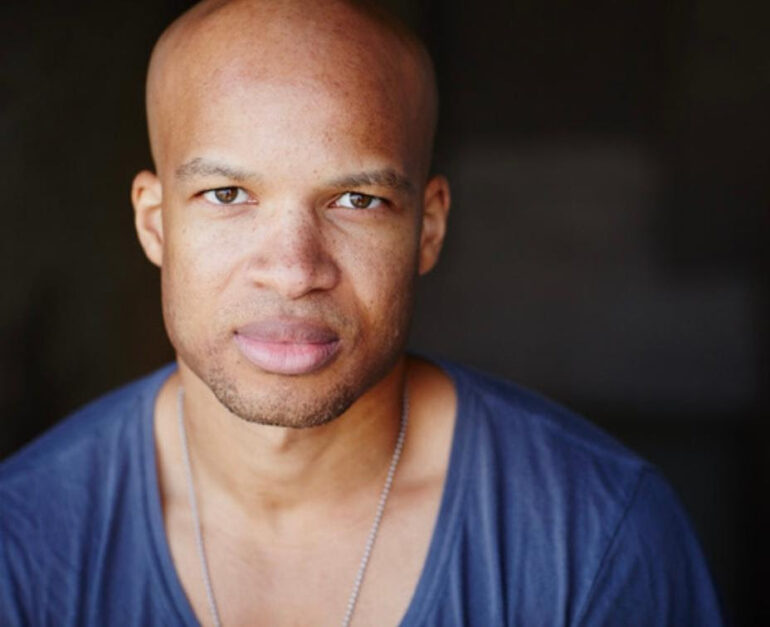
The Broadway stage is ablaze with “Purpose,” the Pulitzer Prize and Tony Award-winning play. At its heart is Glenn Davis, the acclaimed actor and Co-Artistic Director of Chicago’s Steppenwolf Theatre, where the play originated.
I sat down with Davis to explore the journey of this extraordinary production, and I’m excited to share this interview with the readers of N’DIGO.
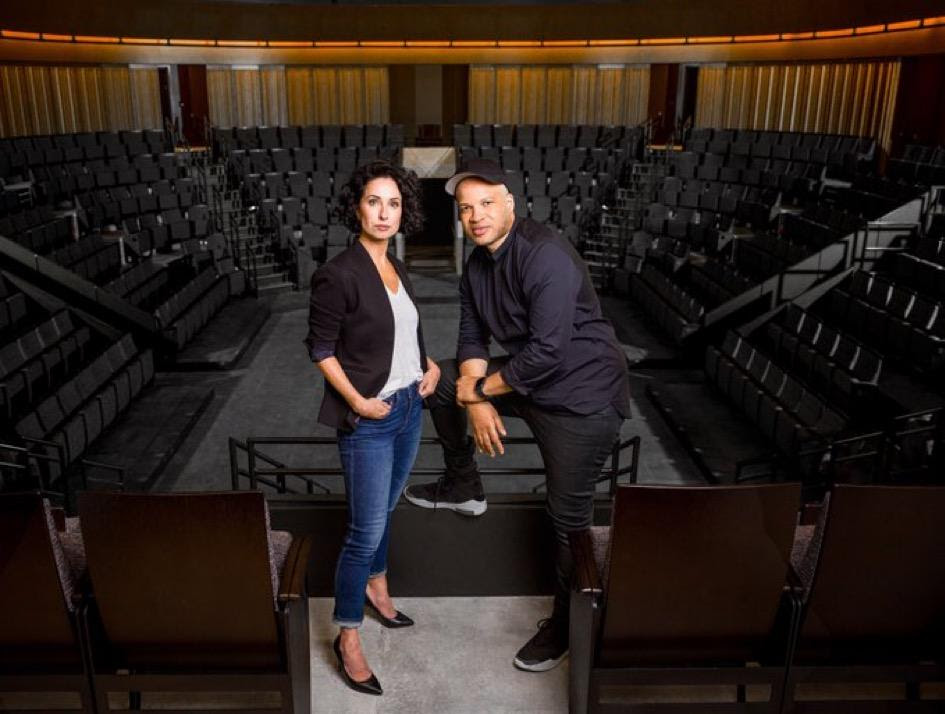
Reggie Ponder, The Reel Critic: Glenn, could you tell us a bit about yourself and your role as Co-Artistic Director at Steppenwolf Theatre Company? What drew you to a leadership role there?
Glenn Davis: I started in theater when I was a young kid out of drama school, and I took my first class at Steppenwolf. I did my first play there. So, for me to join as a company member in 2017 and then as our artistic director in 2021 was pretty remarkable and a full-circle moment for me. I’m from Chicago, it’s my hometown, and to be running the company and doing this play at the moment is a dream come true in every sense of the phrase.
Reggie Ponder, The Reel Critic: How did you come to be involved in bringing “Purpose” by Branden Jacobs-Jenkins to Steppenwolf, and what resonated with you so deeply?
Glenn Davis: When I became artistic director with Audrey Francis in 2021, we had already commissioned Brandon to write a play, and he had already been working on it. So back in 2019, I had done a workshop on it, and he was writing it for me, Alana Arenas, and John Michael Hill were both on “Purpose” with me. This was early on, when he was still trying to figure out what it was. He had a few pages, maybe like 30 to 35 pages, and when we were taking a long car ride in Denver to the airport, I just talked to him a little bit about the idea of the play. We just talked as friends.

Later, when I became artistic director in 2021, I called him up and I said, “Remember that play we were talking about?” He said, “Yes.” I said, “Do you think you could finish it if I programmed it?” And he said, “Absolutely.” So I programmed it, I want to say, sight unseen, because we had only about 34-35 pages. This is for a play that ended up being 120 pages. It was a big swing we took, programming it without having seen where the play would go. It’s been a journey, but I would do it a hundred times over, given what Brandon was able to create. But yeah, we programmed it without knowing what exactly the play was and where it was going.
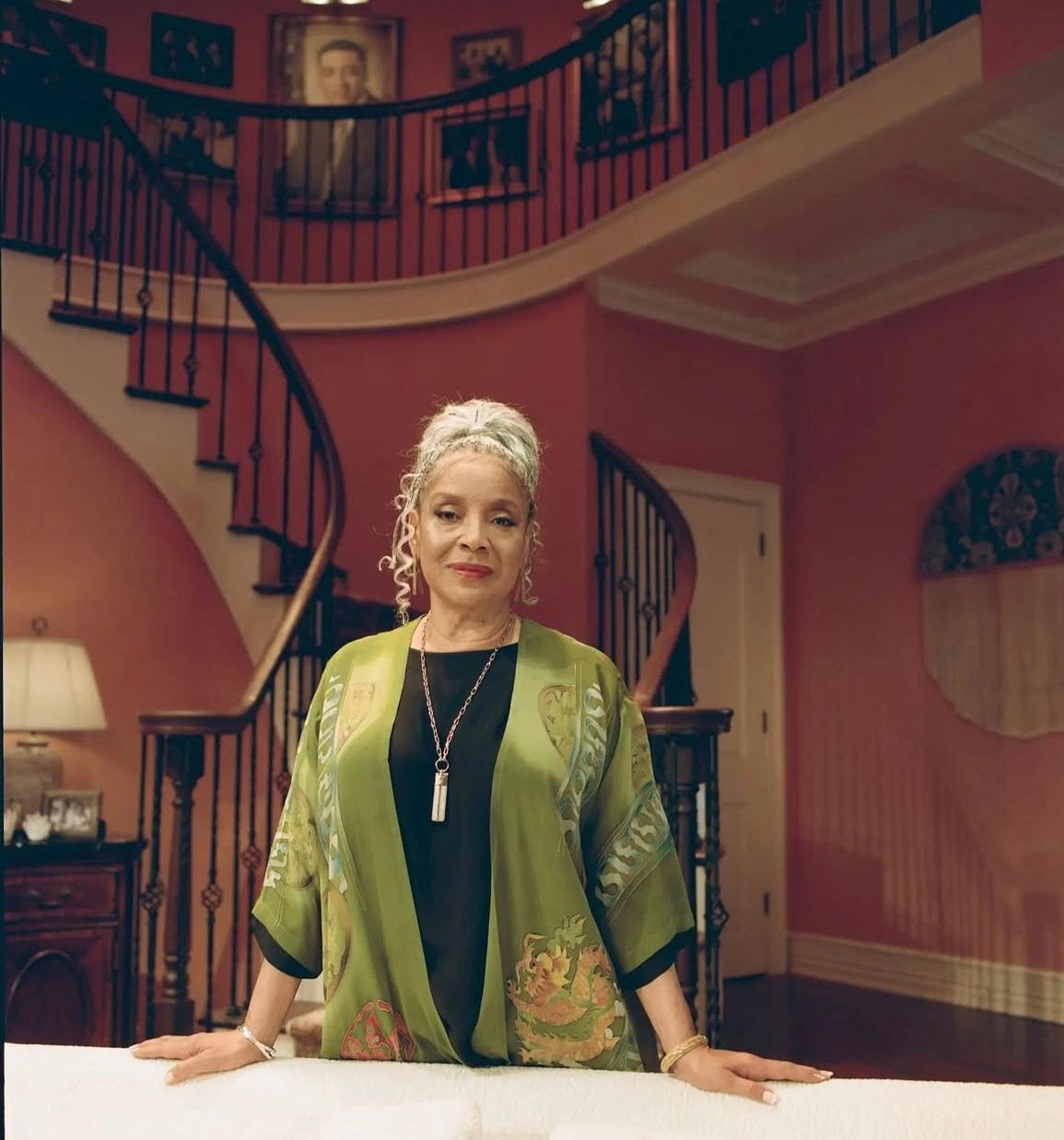
Reggie Ponder, The Reel Critic: How was the great Phylicia Rashad attached to this project, and what did her artistic vision mean to its development?
Glenn Davis: When I put the pieces together—me as the producer—I called Phylicia first and I said, “Would you come on as the director?” And she said, “Yes!” Her vision was what we needed because we didn’t have the play when we started rehearsal in Chicago; we only had about 40 pages. Her vision was everything, and her vision mostly had to do with allowing space and time for Brandon to finish what she said was his masterpiece. She said, “Let the master work.” She goes, “He is a master at his art form, and we need to let the genius work.” And so, that’s what we did. She was able to clear a path for him and stay off the pressures of the community, the institutions, even us as actors, but allow him space to go create his masterpiece. I call her a mystic of sorts because she knew, without knowing what the play was gonna be, she knew there was something incredible coming. And even when others were wondering, “Okay, what are we going to do next?” or, “What’s the scene going to look like?” or “Where’s the play going?” She didn’t know any more than any of us in terms of where Brandon was taking the play, because I think he was figuring it out as he was writing. He had some ideas of what he wanted to do, but it wasn’t completely congealed in his mind. What she was able to do was give him that time and space to go and think about what he wanted this play to do and where he wanted it to go. And she was the perfect director for this play.
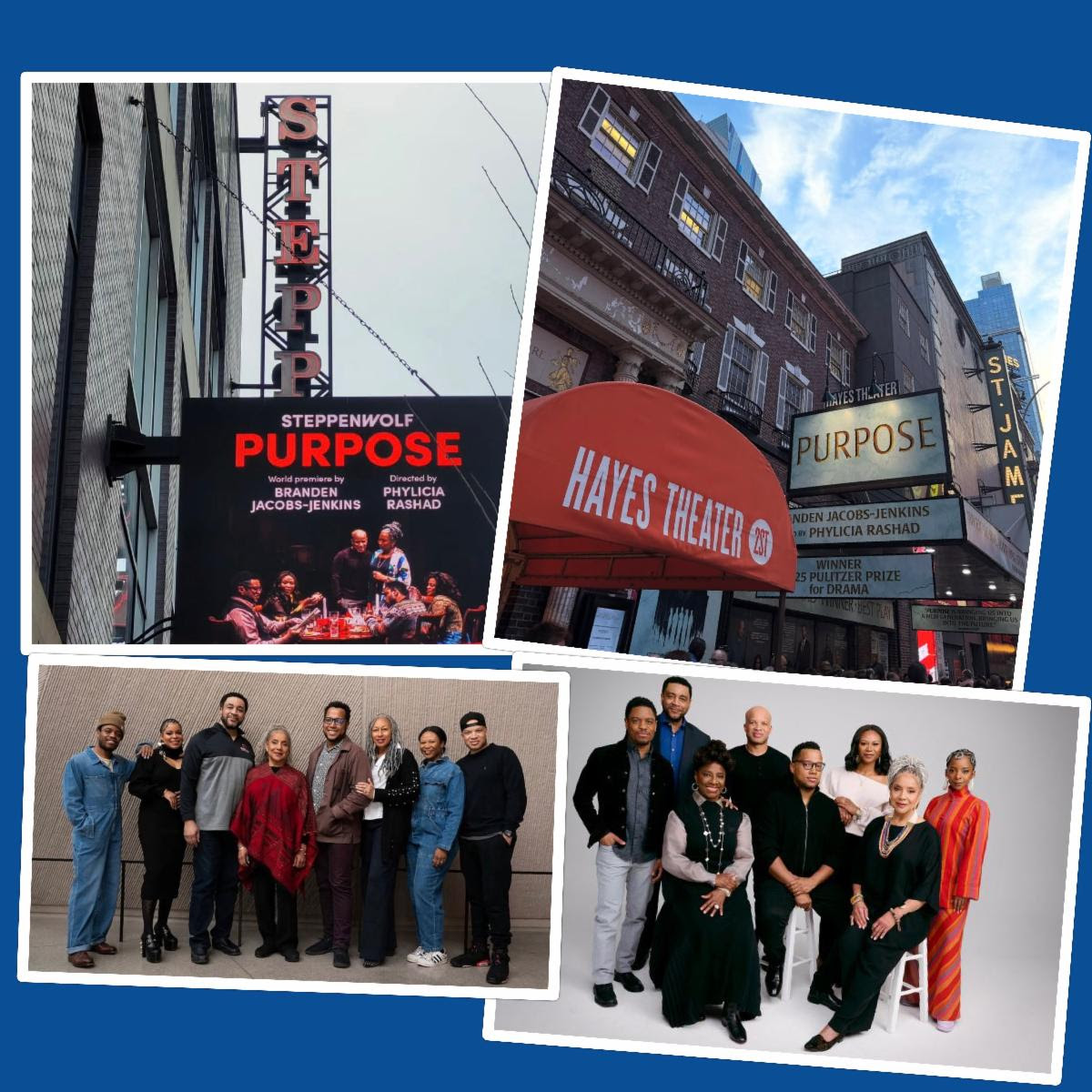
Reggie Ponder, The Reel Critic: Once “Purpose” was affirmed in Chicago, what refinements were needed to make it Broadway-ready?
Glenn Davis: We knew, once we had the play in Chicago fully developed and fully written, we knew it had great potential commercially. So on Broadway, we added some new actors to the show. Kara Young, who you know, just tied a record for a four-time Tony nominee in a row. And the legendary Latanya Richardson Jackson, who has been on Broadway many times, has been Tony-nominated, and has directed on Broadway. We knew with the two of them, they would elevate the play’s commercial appeal, but also the characters themselves. As Brandon is prone to do, he writes for whoever says his words. So, once we got the two of them in there, they both were able to dive deep into the characters, and the character development was incredible with Brandon and our dramaturg, Jonathan Green, working through what the character should look like, what they should feel like in writing to sort of this bespoke language for Ms. Latonya and for Kara. It all came together once we got to New York. The play just took leaps and bounds in terms of steps forward, and it congealed in New York, and it became the masterpiece that it is today. In Chicago, we had a great production and a good play. In New York, we had a great production and a masterpiece of a play.
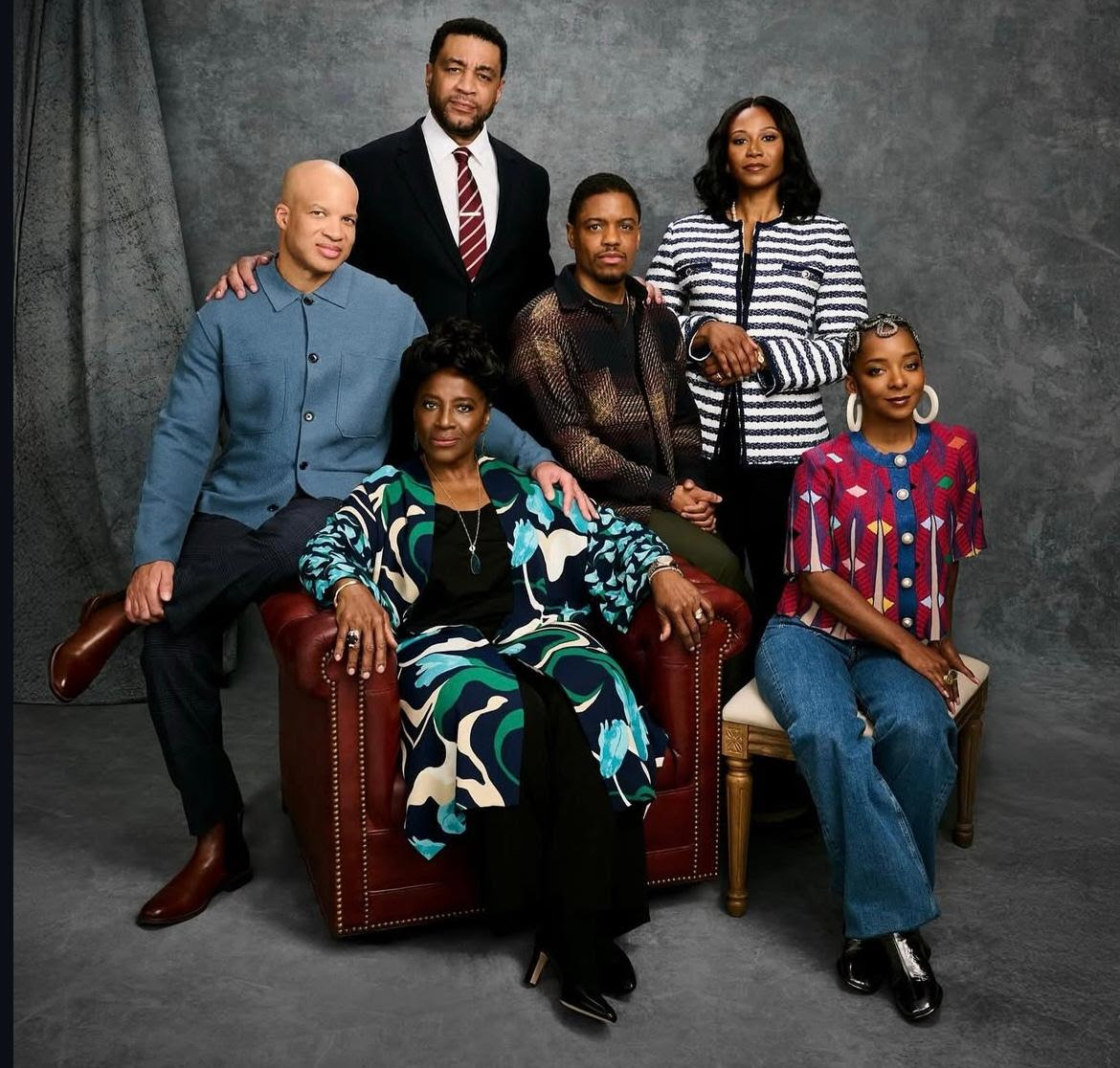
Reggie Ponder, The Reel Critic: If you could ask one of your castmates a question about their experience with “Purpose” or their character, what would it be and why?
Glenn Davis: I would ask each of them, in your wildest dreams, did you see this play doing everything that it has done? Because we all felt like the play was good, but we swept everything in terms of the award season. We got great reviews, and people are coming up to us every single day and telling us how affected they are, how much they love this play. So I would ask them, “Did you feel like this play had the potential to do everything that it’s done at this point? What were your highest hopes for the play when you first started on that first day of rehearsal? What did you think was the best case scenario?” I’ll be curious to know if any of them thought that this is what it would be.

Reggie Ponder, The Reel Critic: What impact has “Purpose” had on you personally, beyond the accolades?
Glenn Davis: I think that “Junior” was a very complex character, and I had to really do some research for myself in terms of what mental health means. If he was dealing with a mental illness, his background and where he was just coming from, and when the play starts, what his history is with his family. It challenged me in terms of the research I needed to do. And then, overwhelmingly, the play made me question things like purpose. What was Glenn here to do? Why was I the person in charge of helping to shepherd this play as far as it could go? So it made me consider my own purpose at Steppenwolf as artistic director, as producer of this play, and my responsibility to these artists and to the institutions that I represent. This play has had a profound effect on me in terms of what I had to do in the show, being in it, and being a producer on it. And then also what I think of as my life’s journey.

Reggie Ponder, The Reel Critic: “Purpose” is set in Chicago, and many observers have noted parallels to a prominent Chicago family. How do you view these observations, and how do you think Branden Jacobs-Jenkins navigates that line between inspiration and creating a unique fictional narrative?
Glenn Davis: Yeah, I think Brandon is someone who is hugely creative and imaginative. He never wants to lift a person’s story in its entirety and put it on stage. That’s not his brand. I think what he has done in this play is take inspiration from several prominent Black American families over the years, from Martin Luther King to Jesse Jackson, to Barack Obama, to Adam Clay Powell. I think he really was focused on creating his world through the prism of the Black, religious, and political spectrum, but he didn’t take any one person’s story and adopt it for his own. He was clear about that. You might recognize certain elements here and there; he might name certain people, but it wasn’t their story. It was his own concoction of sorts.
Reggie Ponder, The Reel Critic: The play balances weighty issues with moments of levity. How do you, as part of the creative team, navigate this balance without minimizing their importance?
Glenn Davis: I think that’s the genius of Brandon’s work, is that you can be laughing at something hysterically one moment, and then the next be questioning whether that should have been funny to you. You’re like, “Wait, I was just laughing, but was that okay?” You’re looking around at your cohorts in the audience, thinking, “Was that funny?” Or you might laugh at something that no one else thinks is funny, and you go, “I see my family.” It might be something recognizable to you. You go, “I know that person. I know this. That’s my aunt, that’s my uncle.” So I think that’s part of the brilliance of what he’s done, is that he’s created something where laughter and drama can live right next to each other, sometimes moment to moment, and have you questioning yourself and your notions of what’s funny and what’s serious. So I think it’s highly effective in that way.

Reggie Ponder, The Reel Critic: The accolades—Pulitzer, two Tony Awards—are extraordinary. What does that recognition mean to you?
Glenn Davis: Well, personally, it means the world to me because this play started out with just a kernel of an idea. And now that we have created this play, gone the distance, won every award that was on the table, and are selling out nightly on Broadway. It is, like you said, the Pulitzer, the Tony, the Drama Desk, New York Critics’ Circle—all of it. It doesn’t happen like this all that often, so when it does, you want to really live in the moment. And so it’s meant the world to me personally. Artistically, it’s a testament to the Steppenwolf Theater Company and the brand of work that we do.
We’ve had three plays over the course of 50 years win a Tony for Best New Play: The Grapes of Wrath in 1989, August: Osage County in 2008, and now here we are in 2025 with Purpose. If you look at the distance between each of those wins, people who saw the first one might not have seen the second one, or definitely might not have seen the third one. So that’s a generational thing, and being able to say that I was a part of bringing this generation the best new play is something that I’ll never be tired of. And to stand on that stage and hold that Tony and thank Steppenwolf and Chicago meant everything to me, because this is why we do it. We do it for each other. We do it for the other artists on the stage, and we do it for the audiences who come in every single night. For Steppenwolf to have that moment again all these years later was a monumental feat for me personally and professionally—along with Audrey Francis, my partner, and Brooke Flanagan, my executive director—it meant the world to us.
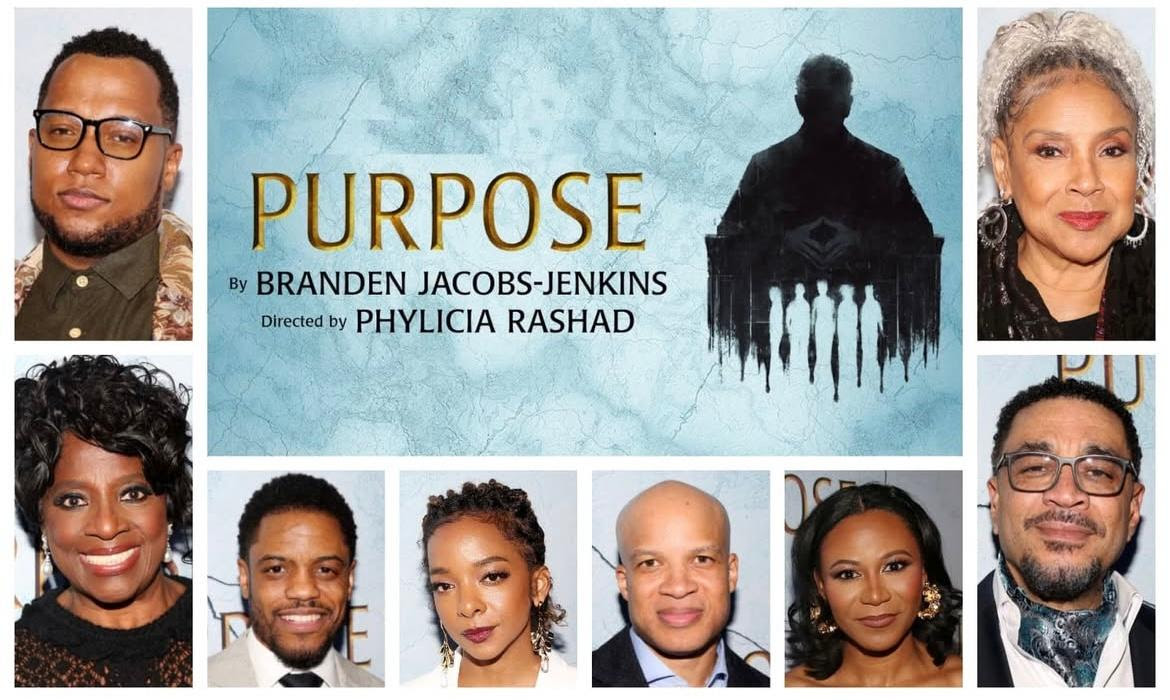
Reggie Ponder, The Reel Critic: What do you ultimately want people to take away from “Purpose“?
Glenn Davis: I want them to take away that the notion of a dysfunctional family is actually the wrong term, because all of our families are dysfunctional. We’re actually all trafficking in dysfunction to some degree or another, and we have to figure out a way through to the other side, to a healthy relationship with family members, and we all have that. We all go home for Thanksgiving or Christmas, or whatever holiday it may be, and you sit down at those tables, and you get into those homes, and you go, “Oh, I got a problem with this person,” or, “Something dramatic might happen with that person.” And it’s quite natural. We need to fully embrace the notion that we all have dysfunction in our families, and we have to work through that and make each other better and prove to one another that this experiment that is the nuclear family, or that the family in general, is something that’s ongoing. It’s a live notion or a live idea that we all have to embrace and work through. I think that there are a lot of things in this play, like you said, that you can take from it, but I think the spine of it is that we all have family drama, and you should feel like you’re no different than anyone else. When you look at your family and go, “Oh, my family’s crazy, my family’s wild, my family’s this”—that’s all of us. No matter who you are, no matter what background you have, no matter what walk of life you are currently in, it’s everybody.
Reggie Ponder, The Reel Critic: Speaking of potential family drama, Chicago Pizza or New York Pizza? What say you, Fam?
Glenn Davis: Chicago. Pizza, Chicago. You’re not gonna get me in trouble with Chicago and not say Chicago Pizza. I gotta come back home.
Reggie Ponder, The Reel Critic: It’s been a pleasure, man. Thank you so much for your time. Congratulations on all the accolades and the things that you guys are doing. I really appreciate you, brother. Thank you so much.
Glenn Davis: Thank you, Reginald. It’s my pleasure. And thank you for having me.