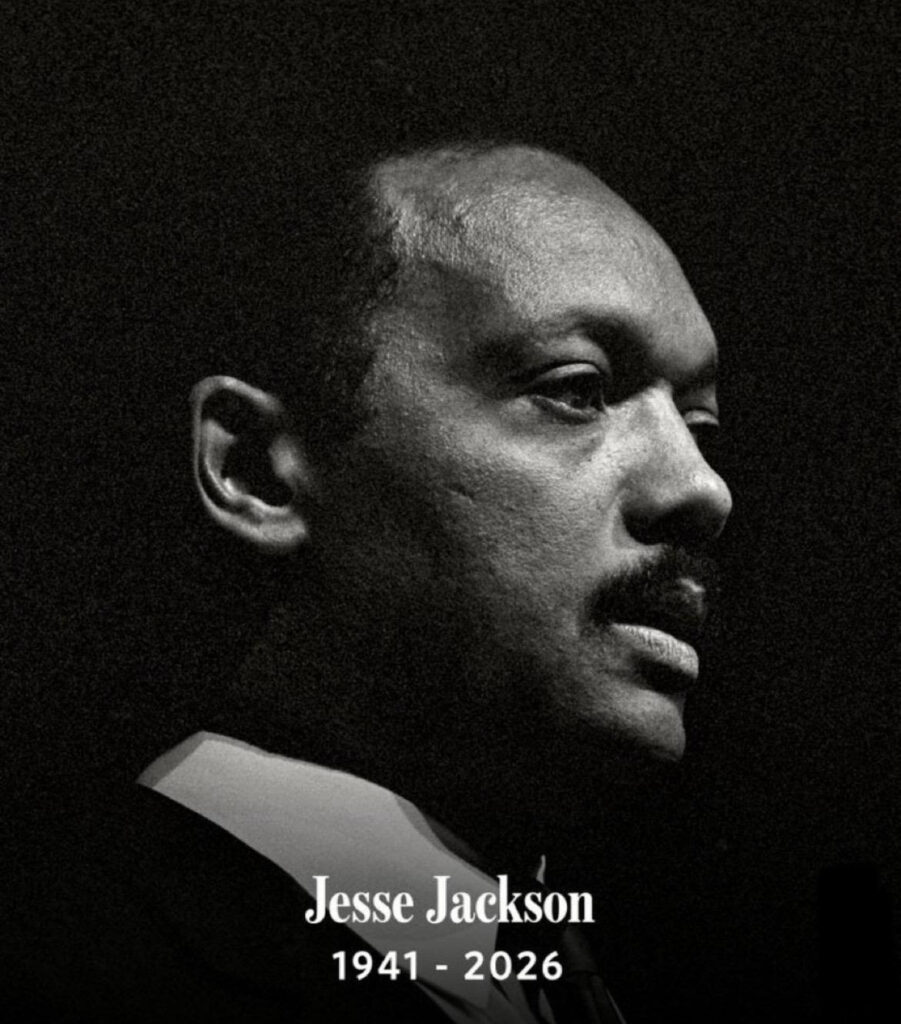

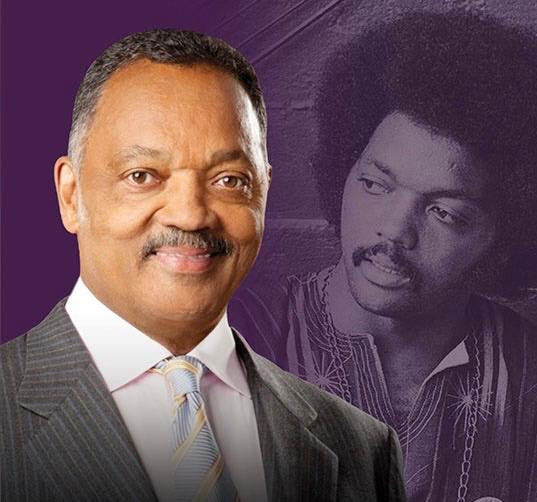
For some of us, on February 17, 2026, the world stood still, as it was announced that Rev. Jesse Jackson had passed.
As I have read newspaper stories and listened to news reports,
there is much unknown about this giant of a man. Here are some things I think the public should know about Rev. Jackson, in short order.
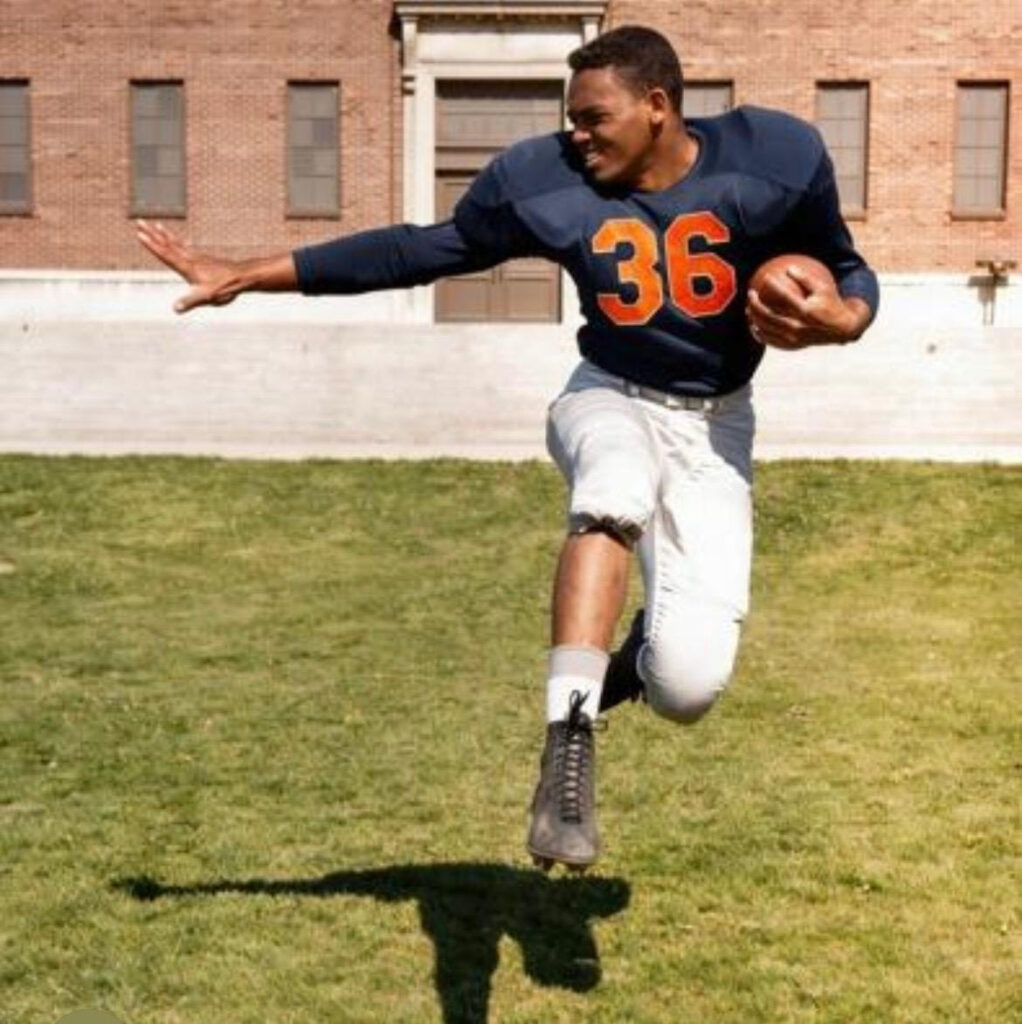
Rev. Jesse Jackson was a student at the University of Illinois (1959-60) on a football scholarship. He did not like the cold winters and, for the first time, was called the “N-word.” He also had the opportunity to play professional baseball. He returned to North Carolina A&T, a historic Black college. He received a B.A. in Sociology in 1,964.
He came back to Chicago to attend Chicago Theological Seminary, but did not graduate, Instead he left school to join Martin Luther King, Jr. in Selma. He would later receive his Ph,D. from the seminary for his life’s work at a later date.
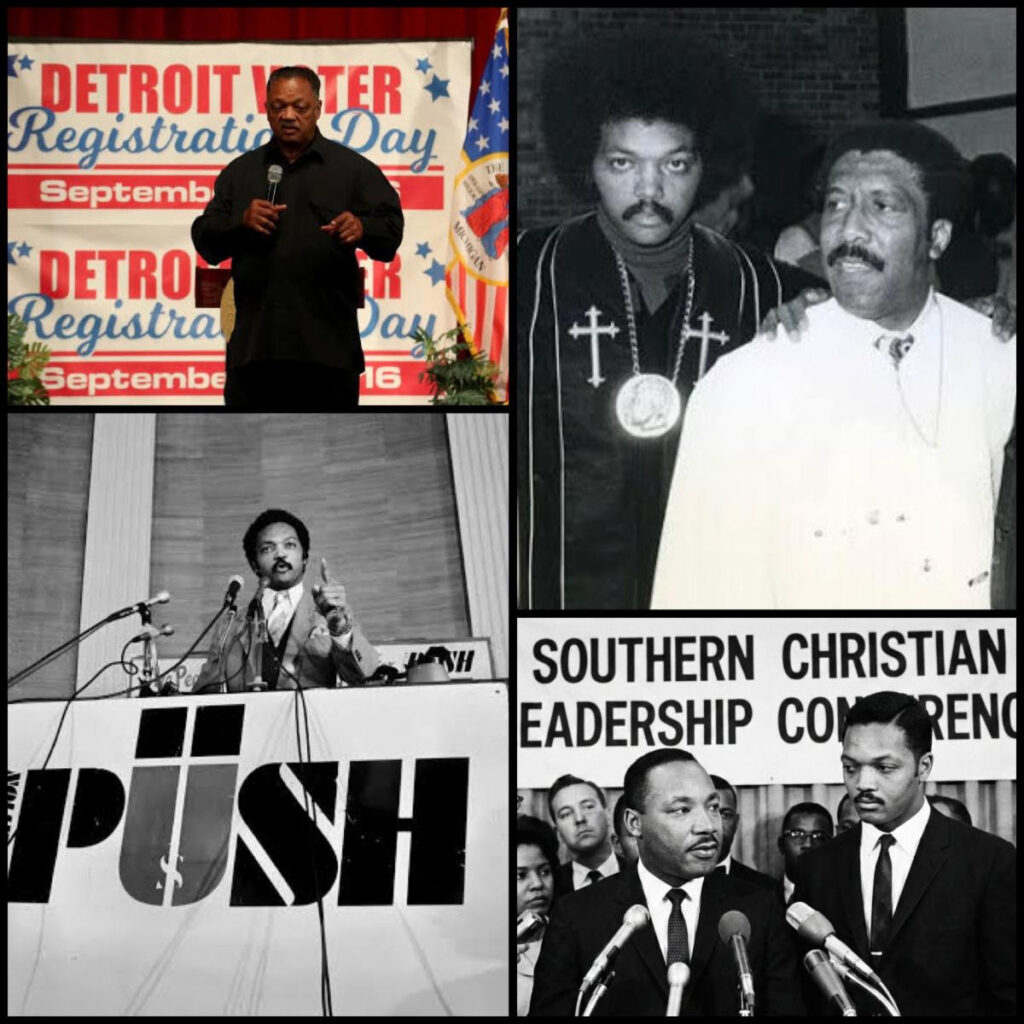
Jesse Jackson was the Assistant Minister at Fellowship Baptist Church, pastored by the late Rev. Clay Evans. Because Rev. Evans allowed Dr. King to use his pulpit, Mayor Daley halted construction of his new church. Jackson signed for a million dollar loan for the church’s new building,
Dr. King’s assignment to Jackson was to serve as the National Director of Operation Breadbasket. He never stopped working to increase Black enterprise at all levels. Breadbasket became so successful that King’s successor, Dr. Ralph Abernathy, wanted it moved to Atlanta. Jackson refused and resigned from Southern Christian Leadership Conference (SCLC), founding a new organization, PUSH, on Christmas Day, 1971.

Jackson labeled his leadership style “situational.” He rose to the occasion and called for what was demanded.
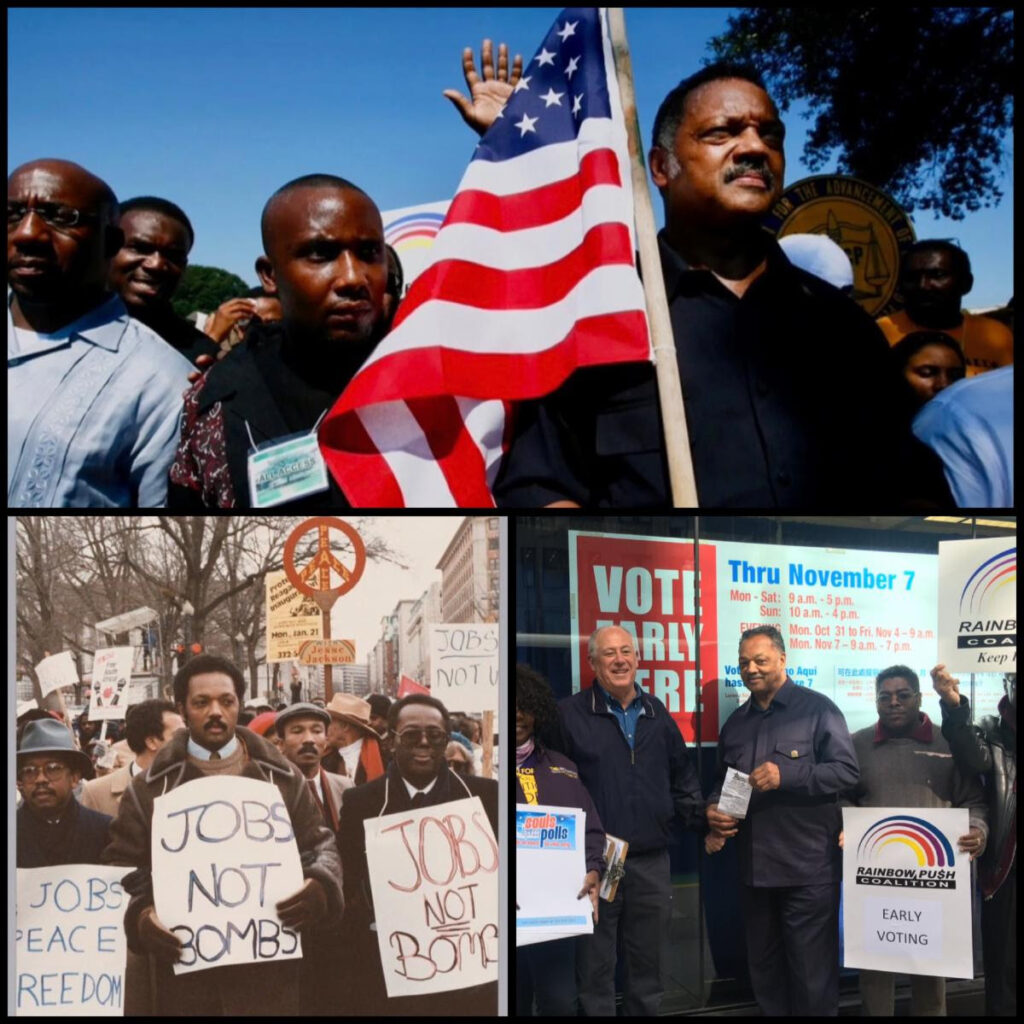
Jackson registered more voters than any other American with his various campaigns. It is estimated that he added 6 to 7 million to the voter rolls. He also has probably marched in more demonstrations than any other. And he has also probably preached in more churches than any other.
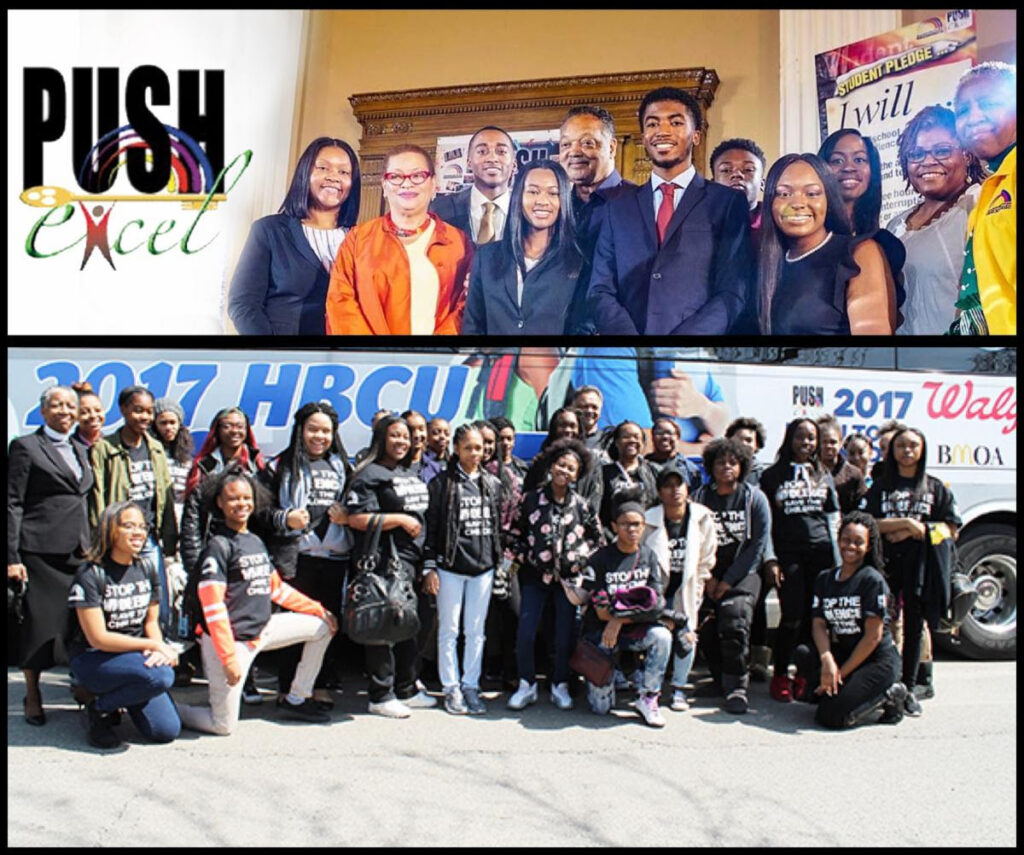
Jackson founded PUSH EXCEL in 1975 and traveled the country, motivating Black students to succeed. He created a 7-point pledge for parents, committing them to accountability for their child’s education. It includes taking their child to school, meeting the teacher, and exchanging phone numbers with the teacher; turning off the TV for 3 hours a night; taking the child to church, temple, or synagogue; and advocating for adequate funding for public education.
Students also had a pledge to attend school, maintain good study habits, and read each day. The campaign was so successful that President Jimmy Carter gave PUSH a government grant, and today thousands of students have benefited across the country. Annually, PUSH takes high school students on a college tour.
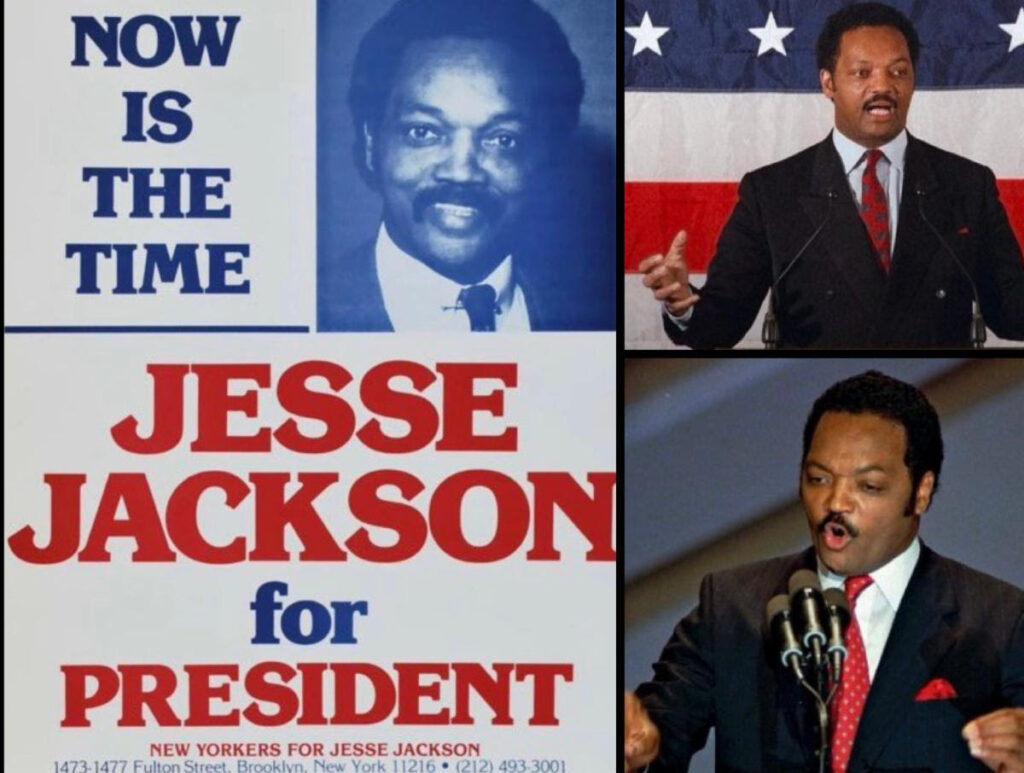
Jesse did not want to run for President, but after requesting that the former Mayor of Atlanta, Maynard Jackson, and Andrew Young put their names in the race, they turned him down, so he decided to run himself. In doing so, he lost the race but changed the Democratic Party by eliminating the “winner-take-all” state primaries and replacing them with proportional representation for delegate allocations. Under the new proportionality, a new formula was put in place that President Bill Clinton and President Barack Obama used to secure their presidencies.
Jackson was a “man of the people.” He fought “systemic racism” and fought it with moral leadership. His leadership was both transformational and controversial. In 1996, Jackson protested Hollywood’s lack of diversity at the Academy Awards ceremony, noting that among 166 nominees that year, only one Black artist was nominated.
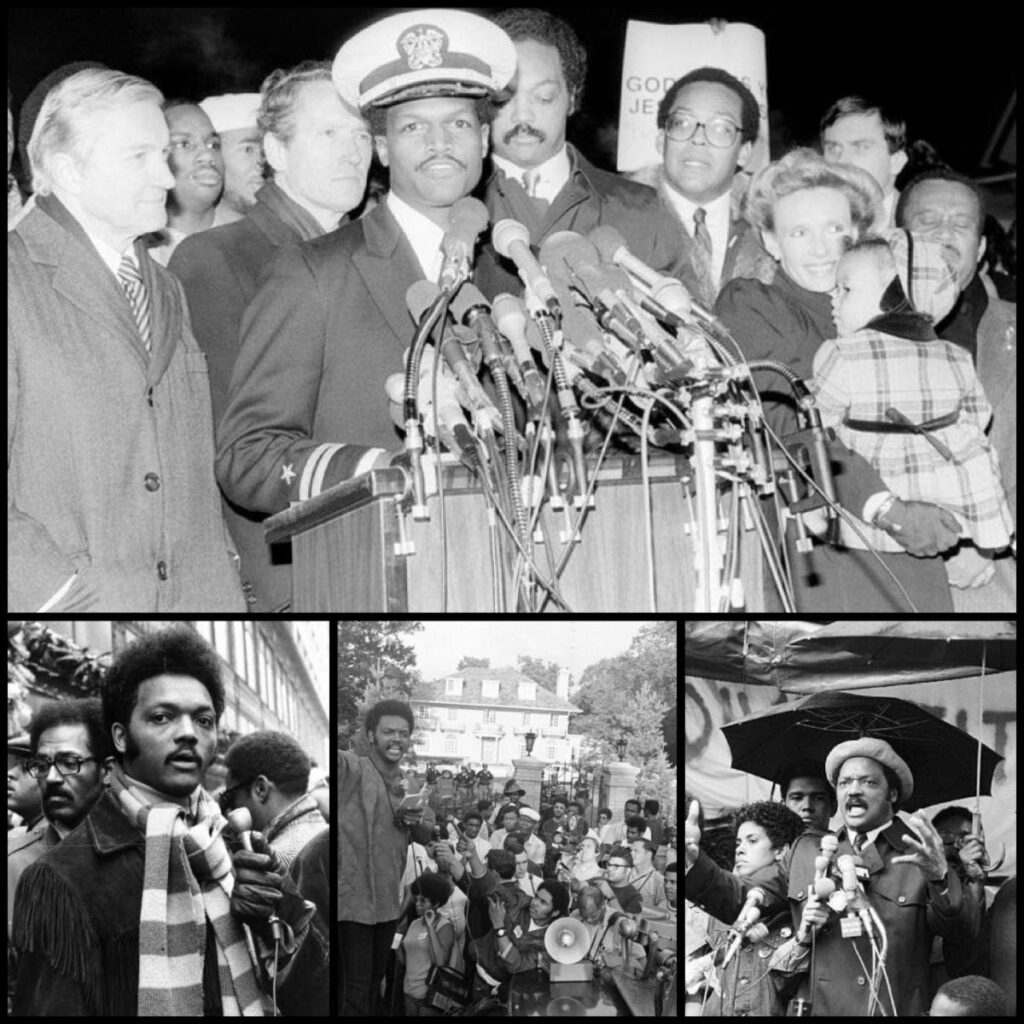
When Jesse traveled the world on rescue missions, he did so at his own expense without government support, successfully returning hostages to the United States. His rescue missions include:
1. December 30, 1983 – Early January 3, 1984 — Syria / Lebanon
Jackson traveled to Damascus, Syria to negotiate the release of Navy Lt. Robert O. Goodman, whose aircraft had been shot down over Lebanon in December 1983. Goodman was released and reunited with Jackson in January 1984.
2. June 1984 — Cuba (Release of Americans)
During a diplomatic visit to Cuba, Jackson secured the release of 22 Americans being held by the Cuban government — a rare direct negotiation with Fidel Castro at the time.
3. 1991 — Iraq / Kuwait (Human Shield Release)
In the months leading up to the Gulf War, Jackson traveled to Iraq to plead for the release of foreign nationals labeled as “human shields.” He helped secure the freedom of several Britons and about 20 Americans.
4. March — April 29, 1999 — Yugoslavia / Kosovo War
While serving as an unofficial negotiator, Jackson led a delegation into Belgrade during the NATO bombing of Yugoslavia to secure the release of three U.S. soldiers (Staff Sgt. Christopher Stone, Staff Sgt. Andrew Ramirez, and Spc. Steven Gonzales) who had been captured near the Macedonia border on March 31, 1999. The soldiers were released on April 29, 1999.
Some Final Things You Should Know About Rev. Jesse Jackson:
Jesse Jackson was a shadow delegate and shadow senator for the District of Columbia from 1991 to 1997. He had 100,000 votes but did not have a vote in Congress.
Jesse Jackson fought America’s Black veil, fought racism, and America’s caste system.
Rev. Jesse Jackson acted as a “private citizen” never as an “elected official.”