
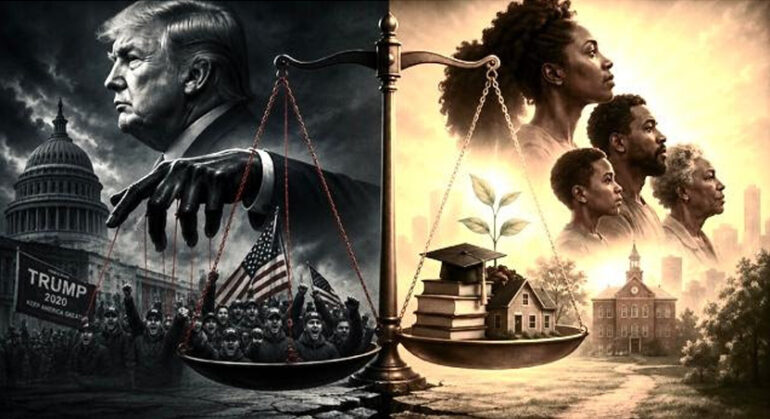
America is in a defining moment. History will record Donald Trump as one of the most consequential and controversial presidents in modern times. His political movement has challenged not only policies but the nation’s understanding of democracy, truth, accountability, and even history itself.
Across the country, battles rage over what Americans are allowed to remember. Books are challenged. Historical narratives are softened or erased. Diversity programs are dismantled. Voting districts are redrawn in ways critics argue dilute minority power. Long-standing civil rights protections are weakened under the banner of “fairness” and “colorblindness.” To many Americans, particularly Black Americans, these are not isolated political acts. They are attempts to turn the American clock backward. This is history repeating itself from the days of reconstruction.
No event symbolizes this crisis more than the events of January 6, 2021. On that day, a violent mob stormed the United States Capitol in an effort to overturn a certified presidential election. Police officers were beaten. Members of Congress hid in fear inside the chamber. The nation watched in disbelief as the peaceful transfer of power — the foundation of American democracy — came under attack.
Even the Vice President of the United States, Mike Pence, faced threats against his life because he refused to violate constitutional voting procedures. January 6 was not patriotism. It was chaos, intimidation, and an assault on democracy itself.
Yet now, there are efforts within Trump-aligned circles to seek financial compensation or legal retribution on behalf of individuals tied to the January 6 prosecutions. The idea that taxpayer dollars could reward participants in an attack on democratic institutions has shocked even members within the Republican Party. There is no modern precedent for such action.
At the center of this debate is Trump’s repeated claim of “weaponization” — the belief that government institutions have unfairly targeted him and his allies. Whether or not those claims gain political traction, they open a larger national question that America has avoided for generations:

If the federal government can acknowledge harm against one group of citizens and consider compensation or restitution, then what about Black America?
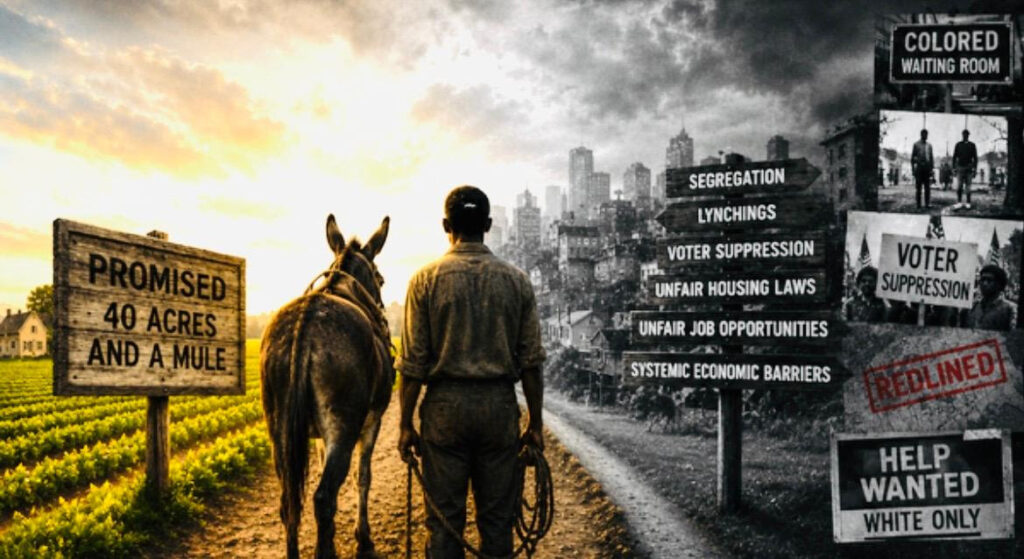
Black Americans possess perhaps the clearest, longest, and most documented case for reparations in the nation’s history.
For more than 250 years, enslaved Africans built the economic foundation of America without wages or rights. After slavery came Jim Crow segregation, lynching, voter suppression, housing discrimination, unequal education, exclusion from employment opportunities, and systematic economic barriers enforced not only socially, but legally by government institutions.
Black Americans were denied the full promise of citizenship while contributing labor, taxes, military service, invention, culture, and moral leadership to the nation. From redlining to mass incarceration, from segregated schools to employment discrimination, the harm was not accidental. It was structured and enforced and it was legal.
This is not ancient history. The economic consequences remain visible today in wealth gaps, homeownership disparities, educational inequality, healthcare outcomes, and access to opportunity.
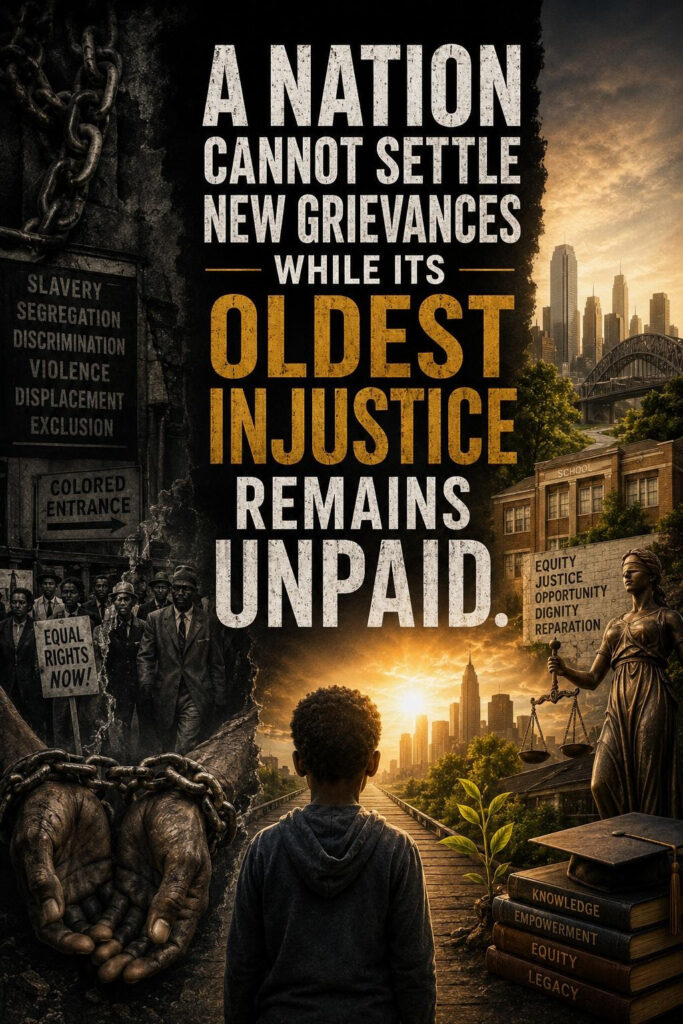
For decades, reparations conversations were dismissed as unrealistic or divisive. But America itself has already established precedents for compensating groups harmed by government actions. Japanese Americans interned during World War II received formal apologies and compensation. Victims of government misconduct in other cases have also received settlements and restitution.
So, the question becomes unavoidable: if claims of political persecution can justify compensation discussions today, how can America continue to deny the measurable and documented harms imposed upon Black citizens over centuries?
This is not about revenge. It is about recognition, repair, and honesty.
America cannot selectively acknowledge suffering based on political convenience. The nation cannot reward one group’s grievances while dismissing another group’s historic pain as irrelevant or too old to address.
The debate over “weaponization” may ultimately fail politically. Courts may reject it. Congress may never fund it. But it has unintentionally exposed something much larger: America’s unresolved moral debt for its greatest sin.
If the nation is willing to discuss compensation for perceived injustice, then Black America has every right to demand that the country finally confront the longest-standing injustice in its history.
That conversation is no longer radical. It is overdue.