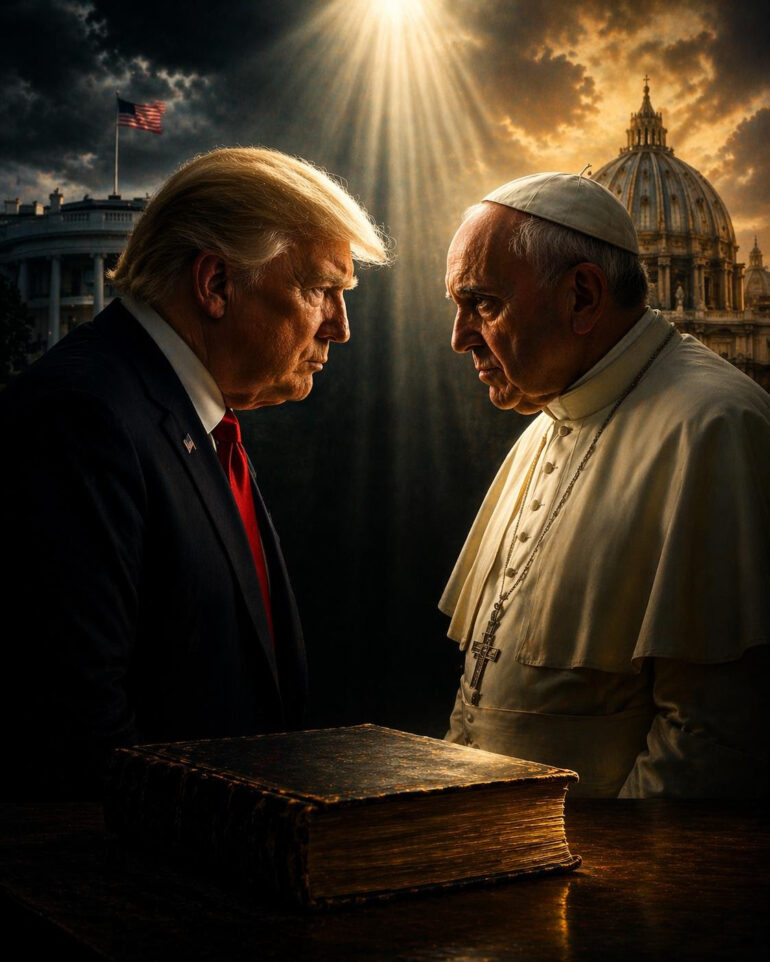
There are moments in history when the world is forced to choose between power and principle, between force and faith. This is one of those moments as America celebrates its 250th year.
The emergence of Pope Leo XIV—a Pontiff shaped by the streets, struggles, and spirit of Chicago’s Southland—has introduced a moral clarity that stands in stark contrast to the political theater of Donald Trump. At a time when drums of war echo in Iran and beyond, the Pope has chosen not silence, but conscience.
He has called for peace.
Not negotiation as performance or theater played for TV cameras, not power as dominance. Peace is a moral imperative.
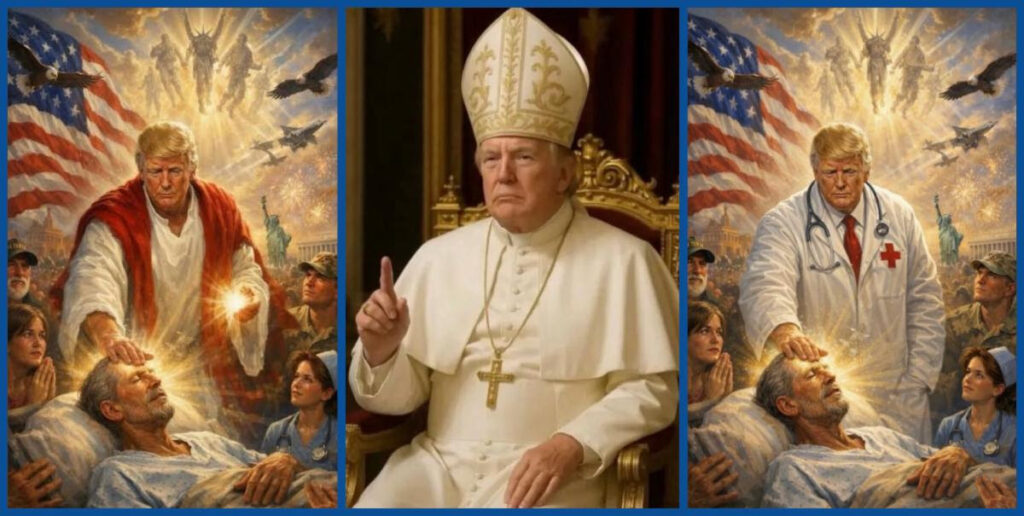
Meanwhile, President Trump traffics in imagery that should alarm even his most loyal supporters. Artificial intelligence renderings depicting himself as a messianic figure—draped in patriotism, elevated to near-divinity—are not merely eccentric. They are dangerous. When a leader begins to blur the line between public service and personal mythology, history tells us to pay attention. Trump becomes a Pharaoh on social media, not Jesus or a doctor that helps people, is his claim.
We have seen this before.
The language of absolute power—the suggestion of being “the chosen one,” the embodiment of authority, the singular voice of destiny—echoes through the corridors of history with chilling familiarity. From emperors to dictators, the pattern is the same: elevate the self, diminish dissent, justify destruction. When the President’s rhetoric drifts toward the annihilation of a people or a civilization, we cannot ignore the historical parallels to the “Final Solution“—a reminder of how dehumanization begins with words before it ends in human mass tragedy.
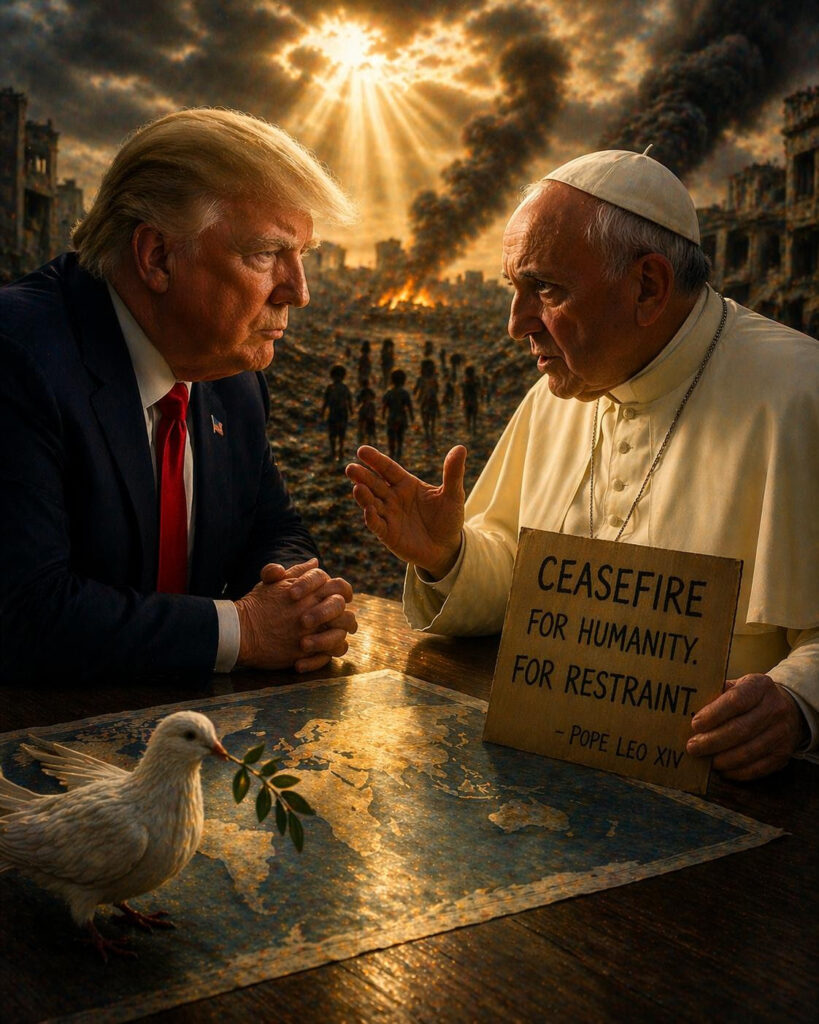
Pope Leo XIV has directly challenged Trump’s trajectory. He has named the moral crisis. He has rejected the notion that war—particularly what many now call a “war of choice“—is justified. He has called for a ceasefire, for humanity, for restraint.

This is not politics. This is gospel. There are 1.406 billion Catholics worldwide. Roughly 1 out of 6 people on Earth are Catholic and growing. Pope Leo’s voice carries the moral weight reminiscent of “Letter from Birmingham Jail ” by Martin Luther King Jr. Dr. King did not write to the oppressed; he wrote to the clergy—the moral gatekeepers who had chosen comfort over courage. He asked them: where do you stand when justice is on the line?
That same question now confronts us.
Fifty-five percent of Catholics supported Trump. But did they vote for war? Did they vote for escalation? Did they vote for the dehumanization of entire populations? The Pope is not rebuking their vote; he is challenging their conscience.
And what of the broader faith community?
Where are the pastors, the rabbis, the imams? Where are the interfaith coalitions that once marched, organized, and spoke truth to power? Will they join the Pope in this moral stand, or will they retreat into silence, cloaked in neutrality while the world edges closer to catastrophe?
Even within the Church, the message is becoming unmistakable.
Cardinal Blase Cupich, in a rare and pointed national interview, warned of a culture that has grown disturbingly comfortable with violence—where images of suffering, even of children, are consumed as spectacle. This is not just a political failure; it is a spiritual one. He called some of the images on social media “sickening”.
The declaration that this conflict is “not a just war” is not casual language. It is a profound theological indictment. The concept of “just war” has long been a cornerstone of moral reasoning in conflict. To reject it is to say plainly: this is wrong.
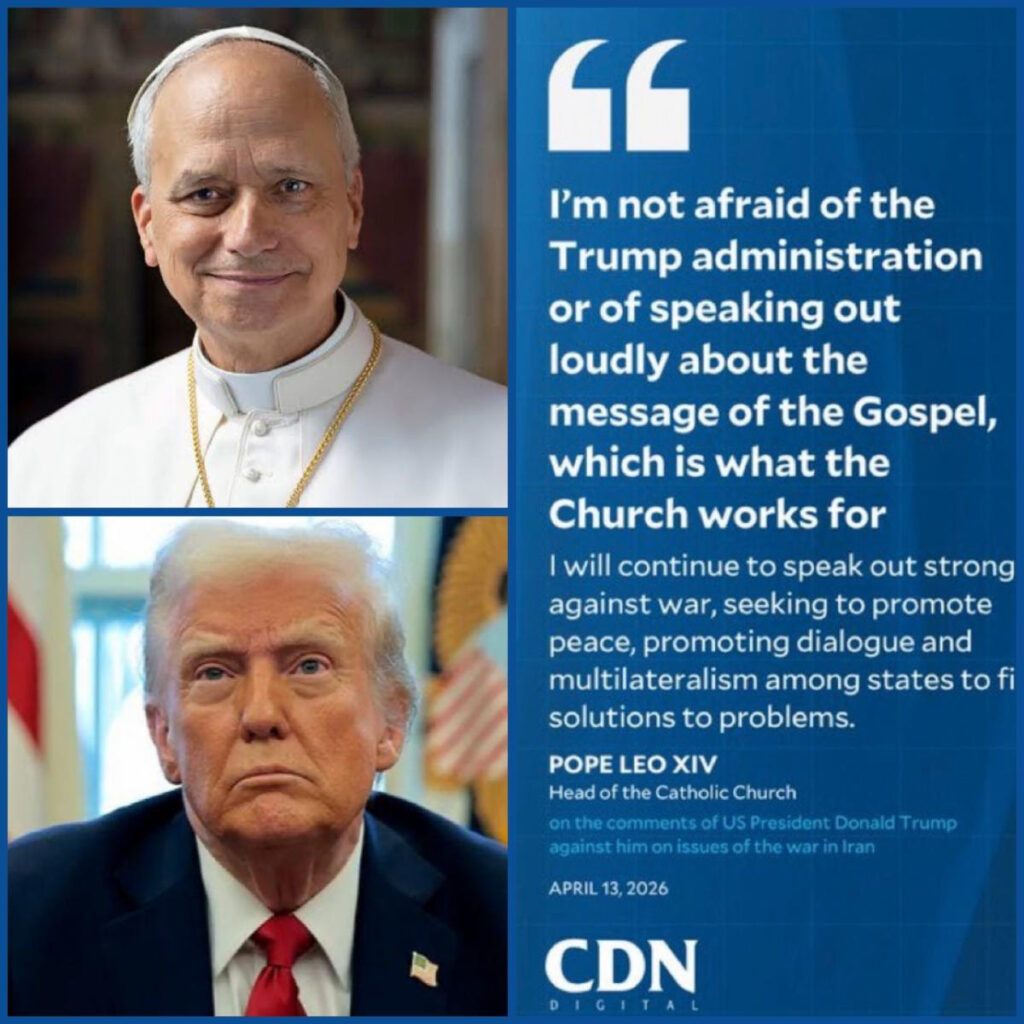
Still, critics argue the Pope should remain apolitical.
But what they misunderstand is this: the Pope is not being political—he is being moral. There is a difference. When human life is at stake, when the machinery of war begins to turn, silence is not neutrality. It is complicity.
The Pope understands his role. He is not elected by voters; he is called to conscience. His duty is not to preserve power, but to challenge it—especially when that power threatens to destroy. And so he speaks.
“I am not afraid,” he says.
Those words matter. Because fear is often what keeps others quiet—politicians, clergy, citizens alike. Fear of backlash. Fear of isolation. Fear of being on the wrong side of power.
But history does not remember those who were comfortable. It remembers those who were courageous. During the rise of Nazi Germany, the Pope was Pope Pius XII. Critics argue he did not speak out strongly enough or publicly enough against Hitler and the Holocaust. Supporters, however, say he worked quietly behind the scenes to save Jewish lives and avoid making things worse. The Pope did not endorse Hitler or Nazism. The real question historians wrestle with is whether the Church—especially under Pius XII—did enough, loudly enough, to oppose the horrors of World War II.
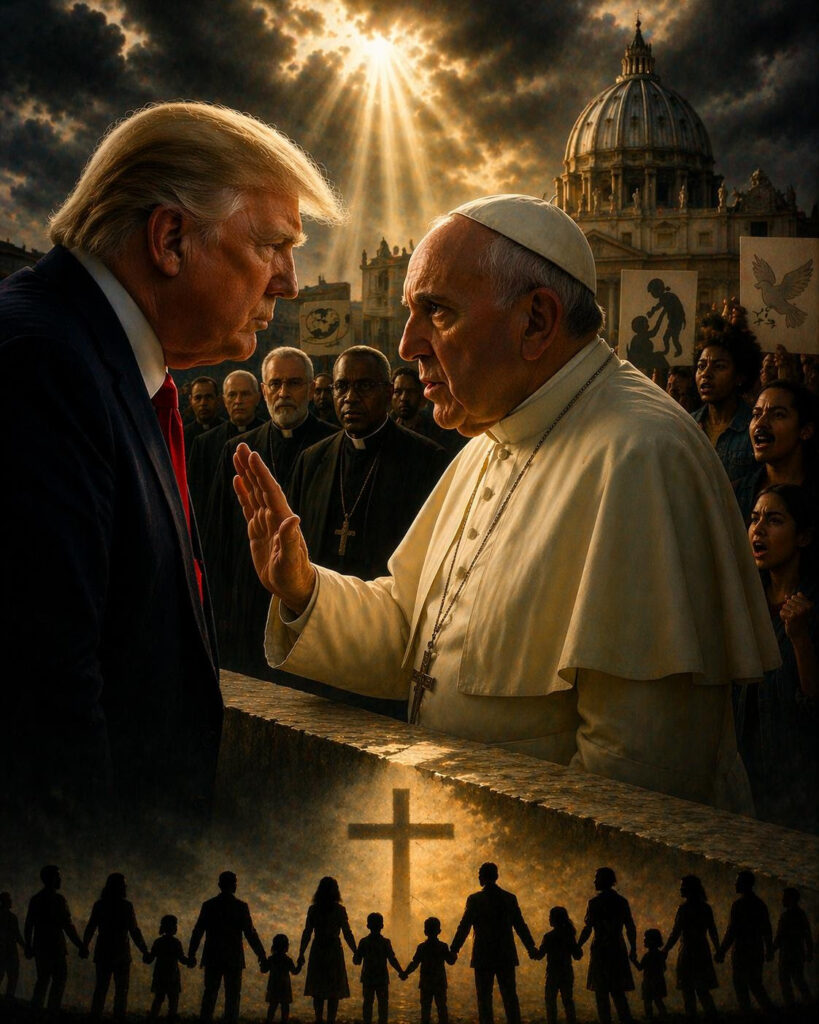
Today, we stand at the edge of decisions that could shape the course of nations—and possibly ignite a broader global conflict. Talk of expansion, of drawing in other regions, of testing alliances like NATO—all signal a volatility that cannot be ignored.
War is not a game. It is not a strategy to be tested on the global stage. It is human lives—lost, shattered, displaced.
The Pope has drawn a line.
Now the question is: who will stand with him?
Will it be the faithful? The clergy? The new civil rights leaders who once marched in the streets for justice? Or will we wait—again—for history to force our hand?
Because by then, it may be too late.
In times like these, the world does not need more power.
It needs more conscience.