

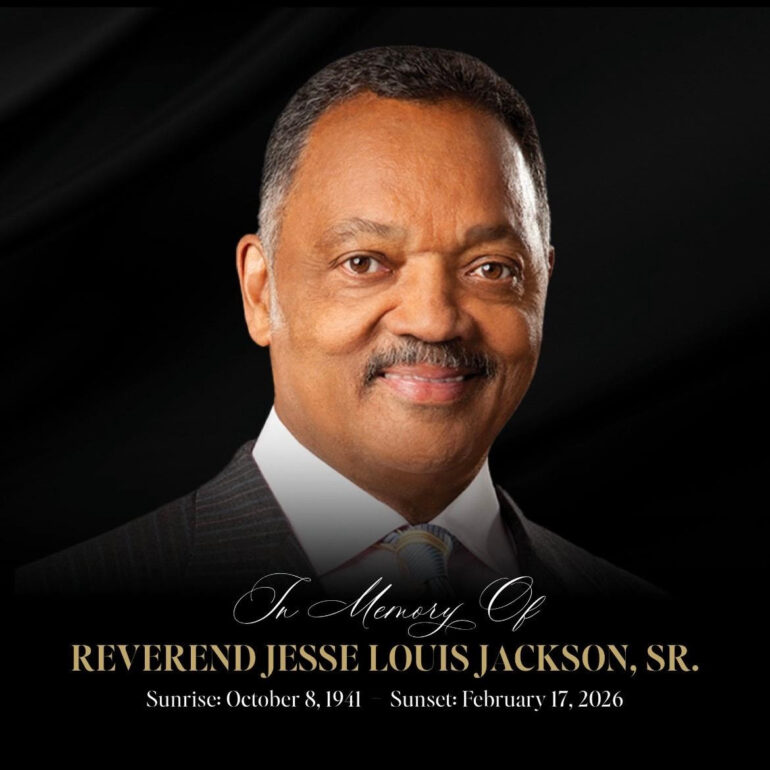
I write today with a very heavy heart and crying bouts. I have lost a dear friend in the passing of Rev. Jesse Jackson. He became a big brother to an only child. I became his confidante. A lasting friendship, another family developed from what was a student internship.
I met Jesse while I was a student at Roosevelt University. After classes, I began volunteering at the office. What started as ordinary student work — typing letters, making phone calls, taking notes in meetings, handling the quiet mechanics of organizing — grew into something far more meaningful. We developed a friendship that endured across decades, strategies, media discussions, movements, victories, controversies, and history itself.
Jesse was striking in presence — tall, beige, handsome, athletic — but those surface qualities quickly gave way to something more compelling: an exceptional mind paired with relentless discipline. He was an incredible social/ political analyst. Long before CNN talk shows, we would have roundtable discussions about the day’s happenings as we offered perspectives. He was a teacher long before he was widely recognized as a national figure. He helped me with homework. We read and debated ideas. Aristotle. Plato. The Federalist Papers. The Wretched of the Earth, The Colony and The Colonized. He had me read one of Dr. King’s favorites by Paul Tillich, Love, Power, and Justice.
We spoke of sociology, power, morality, slavery, and the Holocaust. Our conversations often began before sunrise. He talked a lot about Dr. Martin Luther King, lessons learned, and strategies. King was Jesse’s mentor and the father he longed for. At five o’clock in the morning, the phone would ring, and Jesse would already be deep into current events, mapping strategy, laying out the week’s work. He was an avid reader. And he read all the newspapers and news magazines. He always asked me, “What do you think?” We talked about America and its contradictions. As I read the Federalist Papers, the great documents on freedom from America’s forefathers, Jesse pointed out, they were also slavemasters. Contradiction.
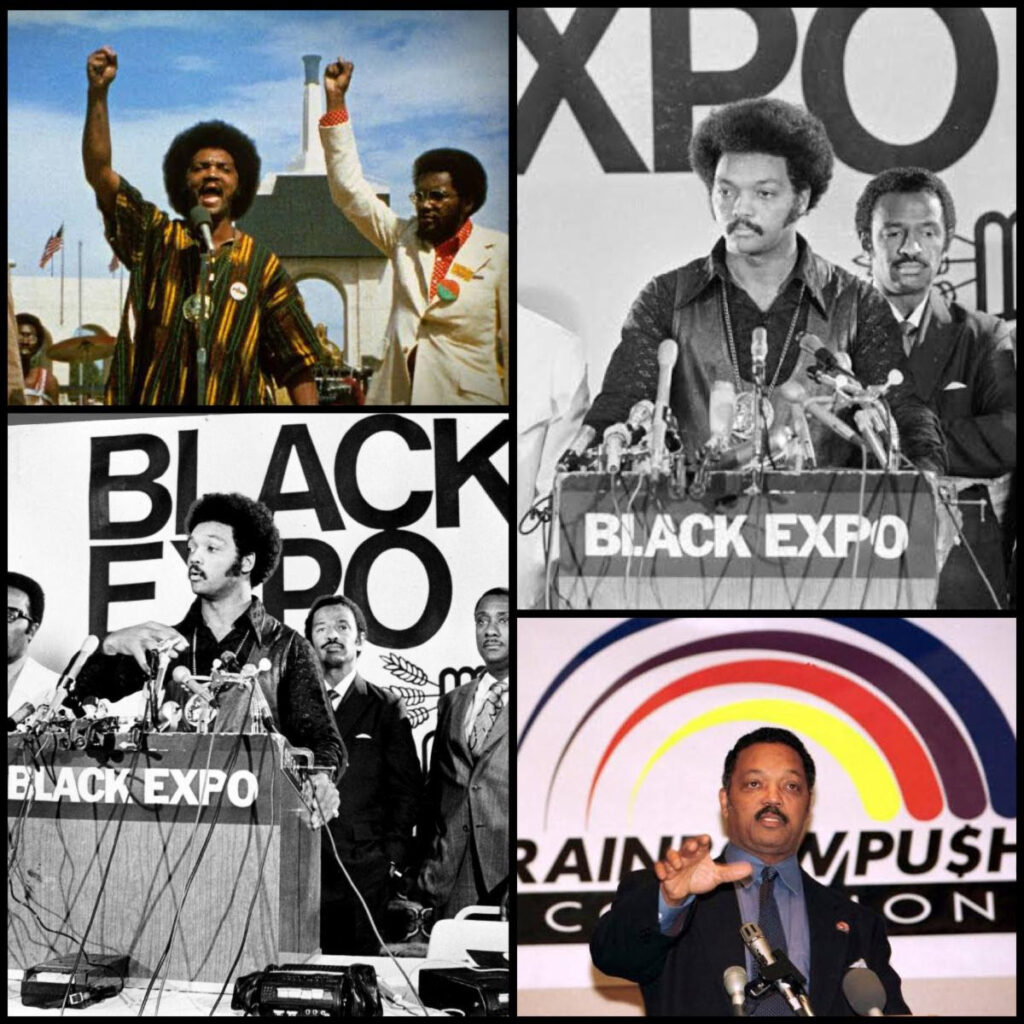
Most of all, Jesse was a minister. His politics, his activism, his organizing — all were extensions of a moral calling. He believed in justice and equality not as rhetoric, but as an obligation. He hated racism not as an abstraction, but as a lived injury. He stood up, head high, flat-footed, voice unwavering, and spoke truth to power. He was afraid of nothing. He challenged, and he rhymed. He began to travel a lot. Once, he was overwhelmed with speaking engagements and asked me to research and write a speech. “What, how do you do that? ” He said, “Treat it like a term paper. Let me tell you what I want to say.” A writer was born.
My mother did not want me marching, so I became an administrator of resistance — coordinating signs, schedules, people, and logistics from the office. The boycotts worked. Jobs were created. Black-owned businesses gained shelf space. Joe Louis Milk. Grove Fresh Orange Juice, Silvercup Bread, and Collins Bar-B-Q Sauce, for example, were among the businesses that prospered. Economic justice was not theoretical; it was measurable. Breadbasket was organized into spokes. – political, education, business, and clergy. Jesse held meetings on Friday evenings as the Leadership Council, and we would confer and report on various issues related to the spokes. For me, this was a class as valuable as any I took in college. Jesse made leadership a class.

This was Jesse’s genius: he understood that civil rights without economic rights were an incomplete promise. His work ethic was simple: Work all the time, don’t quit until the work is done, and then move on to the next project. He was innovative and creative.
I met my husband, David Wallace, at PUSH. David and Jesse were classmates at the seminary, and I helped David with media. Jesse married us. After Saturday’s meetings, David wrote press releases. We delivered them every Saturday afternoon. No one picked up our stories. We started adding pictures. They still didn’t pick up our stories. I quit because I was frustrated. I told Jesse I was quitting because it wasn’t productive. “You quit,” is that what you said? “Yes.” “Herman, we never quit. We just have to figure it out.” The next week, when we delivered press releases, I did something different. The late gossip columnist, Irv Kupicient. worked on Saturdays, writing his Sunday column and preparing for his TV show. I went to his office with the press release for the Sun-Times. He listened. He asked who attended. I told him that community members, as well as Sidney Poitier and Robert Culp, came this week. “What, he asked?” I had his attention. I invited Kup to join us next Saturday. The press problem was solved. I told him Jesse would make a great guest on his program because he could talk about anything. My PR career had just begun.
Jesse had a vision for the Black Expo — a bold showcase, a trade fair, Black excellence in enterprise, culture, and entertainment. I chaired the cultural programming, introducing audiences to Black fine artists whose brilliance demanded visibility. This was my first stab at leadership. I was at his side all the way, no matter who or what or when. I was now a graduate college student. “Where is Herman?” “Go get Herman.” “Herman will do it.” By the third year, more than a million visitors attended. The Expo stage introduced the Jackson Five. Marvin Gaye sang deep into the night. Quincy Jones directed the music. Issac Hayes appeared in tights and gold chains and sang the night away with a spotlight to screaming women. I finished the cultural work early and became an assistant to Quincy as shows were forming. Another lifelong friendship developed. Businesses thrived. Pride flourished. To date, it remains the largest such event in America. It was filmed as a documentary, “SAVE THE CHILDREN“, which was the Expo theme in the third year. It was pure excitement.
In Chicago, Jesse changed the political landscape. He empowered. He challenged the Democratic machine, loosened the grip of “boss” politics, and replaced resignation with participation. Through basic organization, he changed Chicago’s “plantation politics” to “independent politics.” He spoke of “We the People” long before it became fashionable language again. On Saturday mornings at the Parkway Ballroom, the young preacher in blue jeans and a dashiki delivered fiery sermons on economics, stereotypes, racism, justice, equality, dignity, and power. All were welcome. Come join us if you will.
The choir and Breadbasket band, led by Ben Branch, created a new sound — jazz-infused, blues-rooted, gospel-driven — mirroring the fusion of faith and activism that defined the movement. Sometimes on Friday evening, we would go to the bars and lounges, and Jesse would speak from the bar counter to the cafe crowd, urging them to come to Breadbasket on Saturday morning. It was the place to be. Jesse Jackson Organizing 101. Find people where they are. Whatever entertainers were in town, they came to the meetings. Aretha Franklin, Gladys Knight, Bill Cosby, Sidney Poitier, and Robert Culp. I was their host sometimes. A movement was occurring. It was young, unafraid, bold, and confident. The Breadbasket people were close, and we developed a tight-knit group who became lifelong friends. We would eat together, and I mostly had lunch at Jesse’s home. I met his wife, Jacqueline, and his children, Santita, Jesse Jr., Jonathan, Yusef, and Jacqueline.
I became a babysitter.
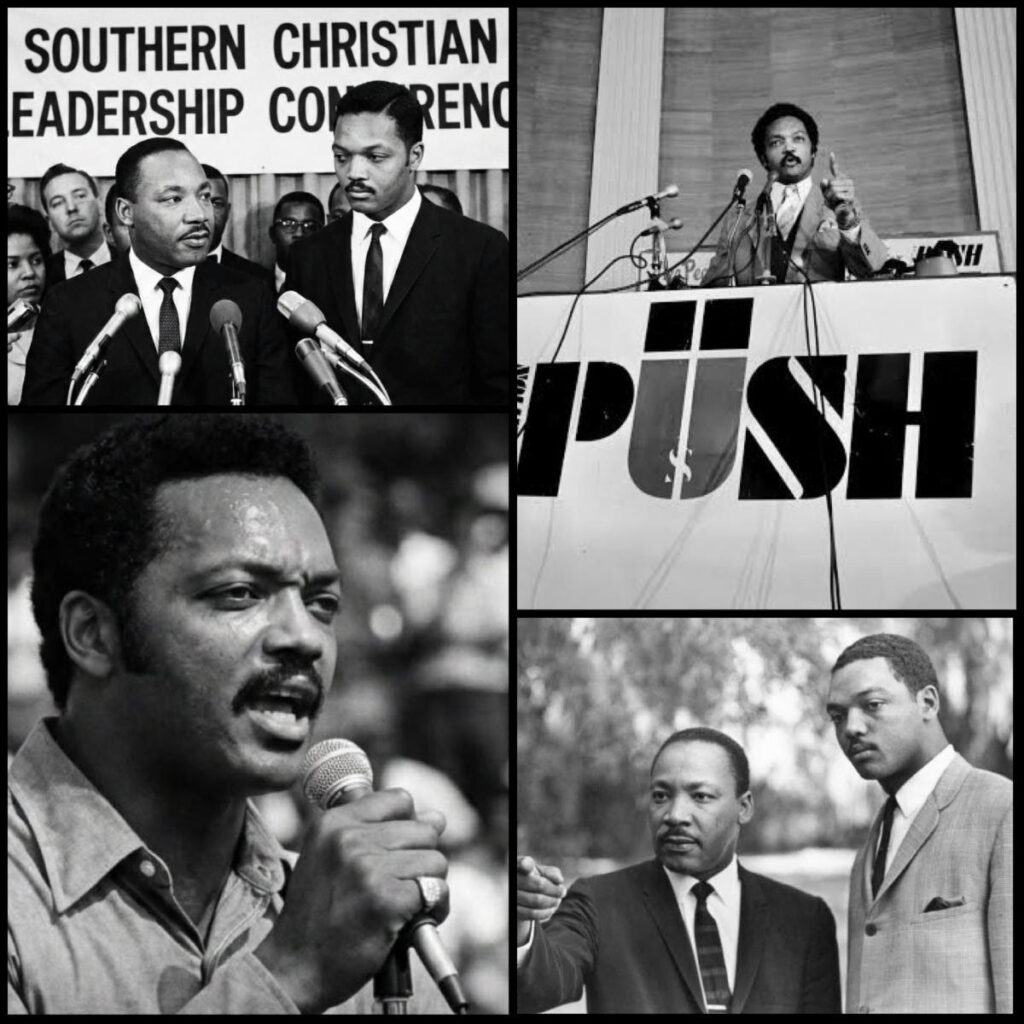
Though deeply influenced by Martin Luther King Jr., Jesse was never a replica. His independence eventually led him to break from the Southern Christian Leadership Conference and build PUSH. It began one cold Saturday morning in an unheated MET theater packed with five thousand believers. It was Christmas. Money was raised. People cried. A new movement was born. Jesse had claimed his own institutional voice. He was the youngest member of the SCLC staff, and his departure made national news. He was bright, urban, and ambitious. He saw new ways to continue King’s actions and the Civil Rights Movement. “Let’s go, Herman.”
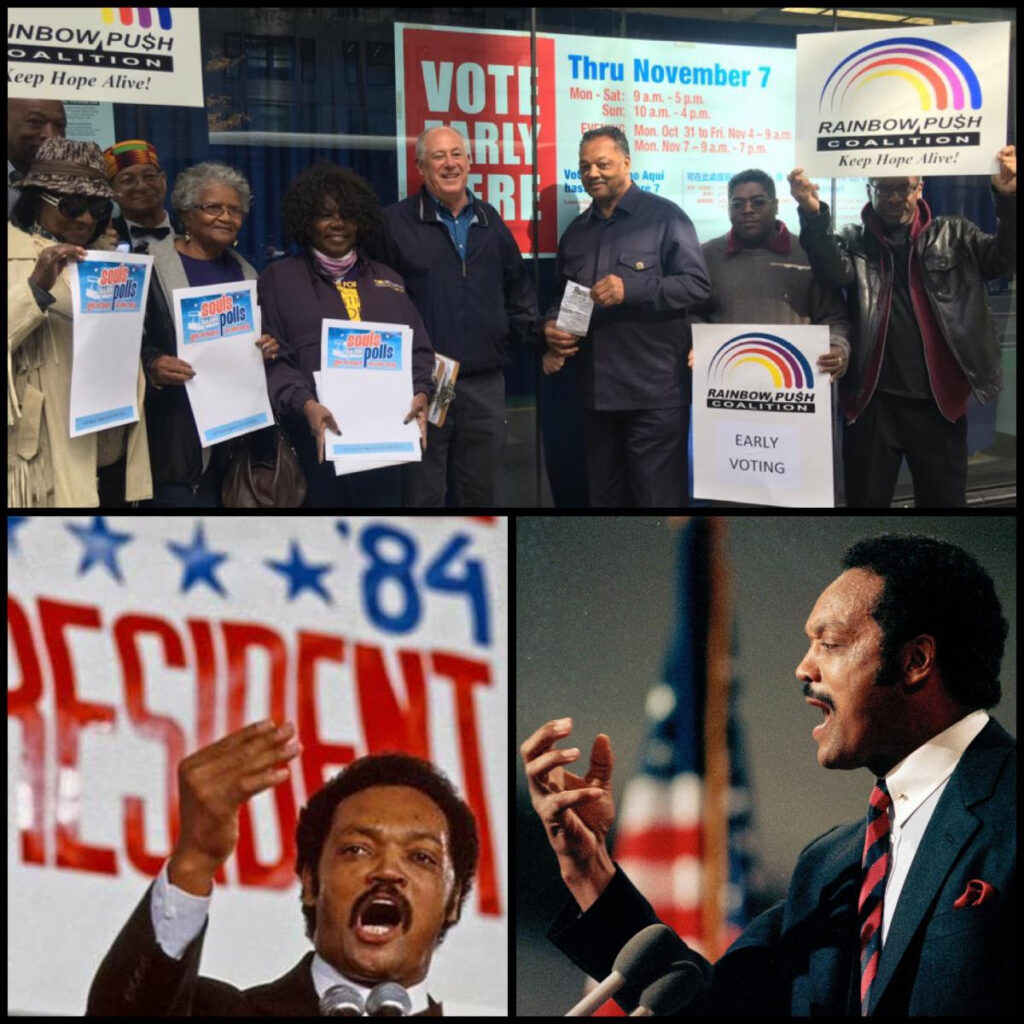
He ran campaigns the way he lived life — with the stamina of an athlete, the urgency of a preacher, and the foresight of a visionary. Everywhere he went, he registered voters. Before speeches, he would ask the audience: How many of you are registered? Those who were not could sign up at the back of the room. Millions did.
The late Professor Charles Ogletree estimated Jesse registered between six and seven million voters — an extraordinary expansion of democratic participation. He registered more voters than any American. I watched his leadership evolve, develop, and mature. His leadership was broad; he believed in a big tent. He was flexible. He has probably marched more than any other American.
At the 1988 Democratic National Convention, his speeches soared. He spoke plainly of poverty, faith, struggle, hope, and the unfinished promise of America. He challenged the nation’s caste system, not with bitterness, but with moral insistence. It was his finest hour. He never forgot the downtrodden. He knew a teenage mother, hunger, and a poor lifestyle. He was steeped in his religion and could hear his grandmother, Matilda Burns, affectionately known as “Tibby,” in his ear saying, “You are somebody.” Her words, her sentiment, her encouraging, loving voice was powerful, shaping a young boy who would make her words his anthem. He solved problems. He was a skillful negotiator. He was persuasive. He was not afraid of power; he challenged it as he pursued his own.
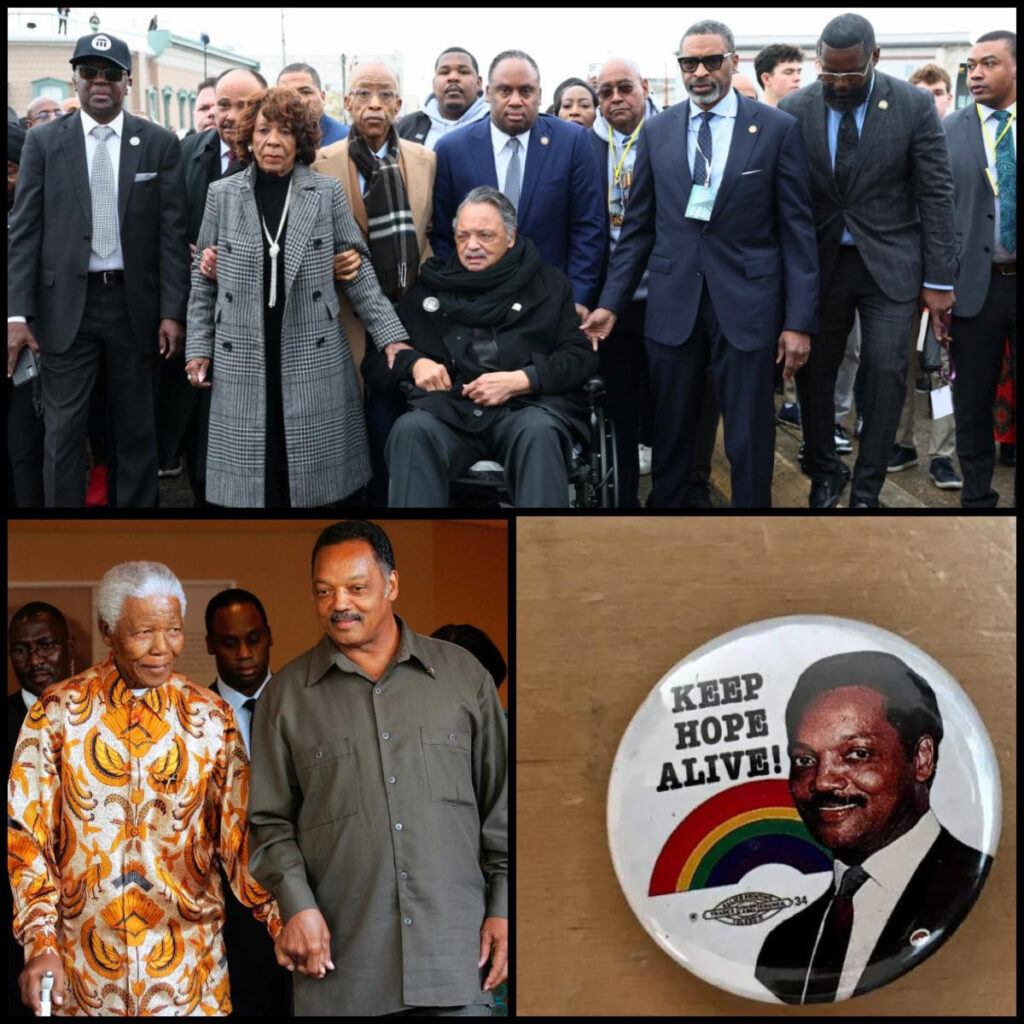
.He reached audiences through CNN, at the invitation of Ted Turner, bringing the conversation of justice into living rooms across the country.
He traveled the world on rescue missions, negotiating the release of prisoners, mostly without official sanction. He visited jails at Christmas to remind inmates of their humanity: You are better than this. He saw possibility where others saw permanence.
Even in physical decline, Jesse did not retreat. In a wheelchair, he continued the pilgrimage to the Edmund Pettus Bridge, honoring history while pressing forward.
He was controversial. He was imperfect. He was human. But he was always real.
We weep for Jesse today, but his ministry leaves us with instruction rather than despair. “Joy comes in the morning,” he would say. “Keep Hope Alive.” There will be tributes galore. Books will be written.
If we seek to honor his life, the path is neither symbolic nor complicated.
Register to vote.
Participate.
Continue the work.
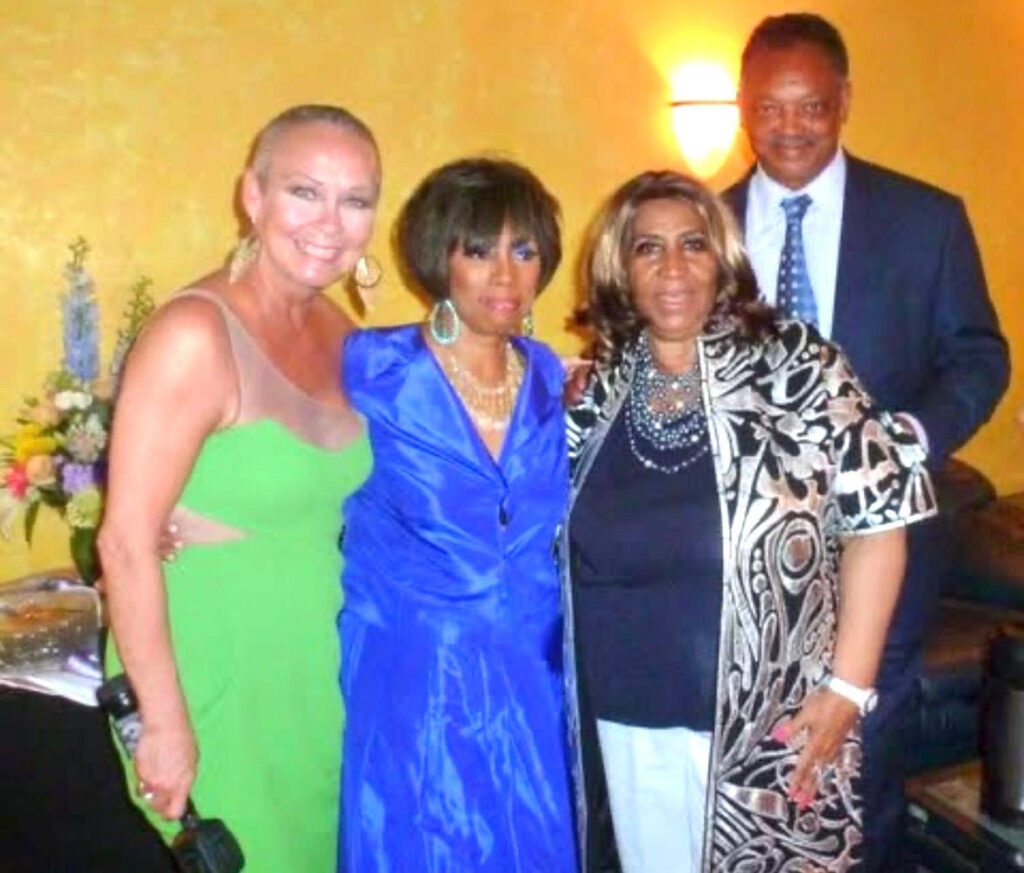
Jesse Jackson spent a lifetime expanding the boundaries of American democracy. The best tribute we can offer is to keep walking through the doors he forced open.
On a personal level, I will cry, reflect, and continue his work with a bright, bold energy.



Hermene, excellent written memory article. It humanizes a man, a movement’s of commitment to humanity. Thank you for the human touch that sometimes will not be seen or felt understanding a world recognized person. Among kings, queens, mayors, politicians, and world leaders, he was/is:
Jessie L. Jackson, just a “Country Preacher”.
Lorenzo Clemons