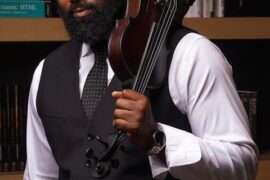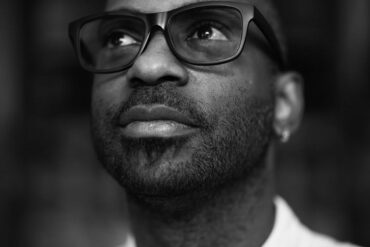

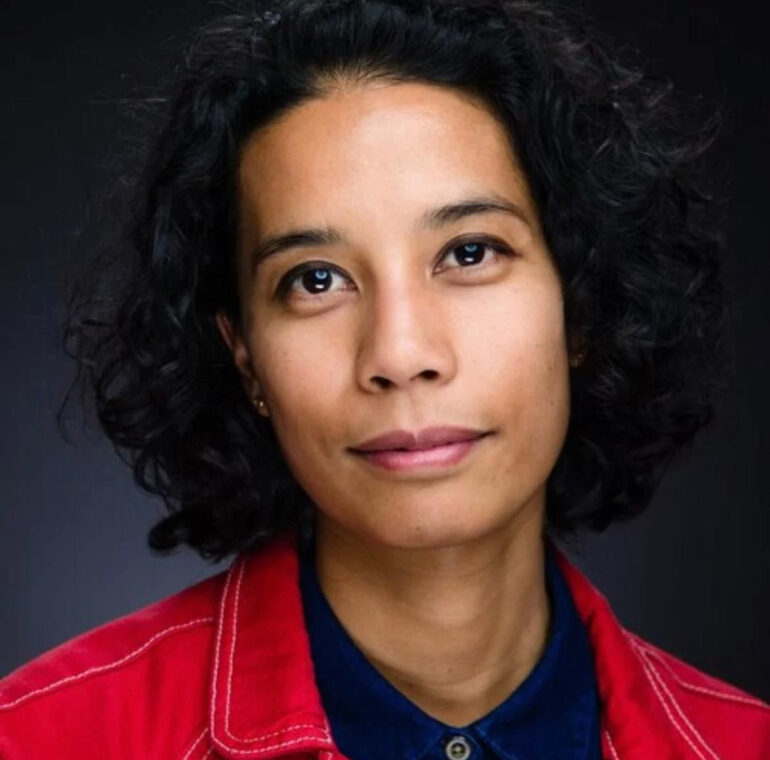
Christine Turner is a filmmaker whose portraits of artists, activists, and everyday people capture the beauty and struggle of life.
Previously, her short documentary, The Barber of Little Rock (The New Yorker), about a local barber’s fight for a just economy, was nominated for Best Short Documentary at the 2024 Academy Awards.
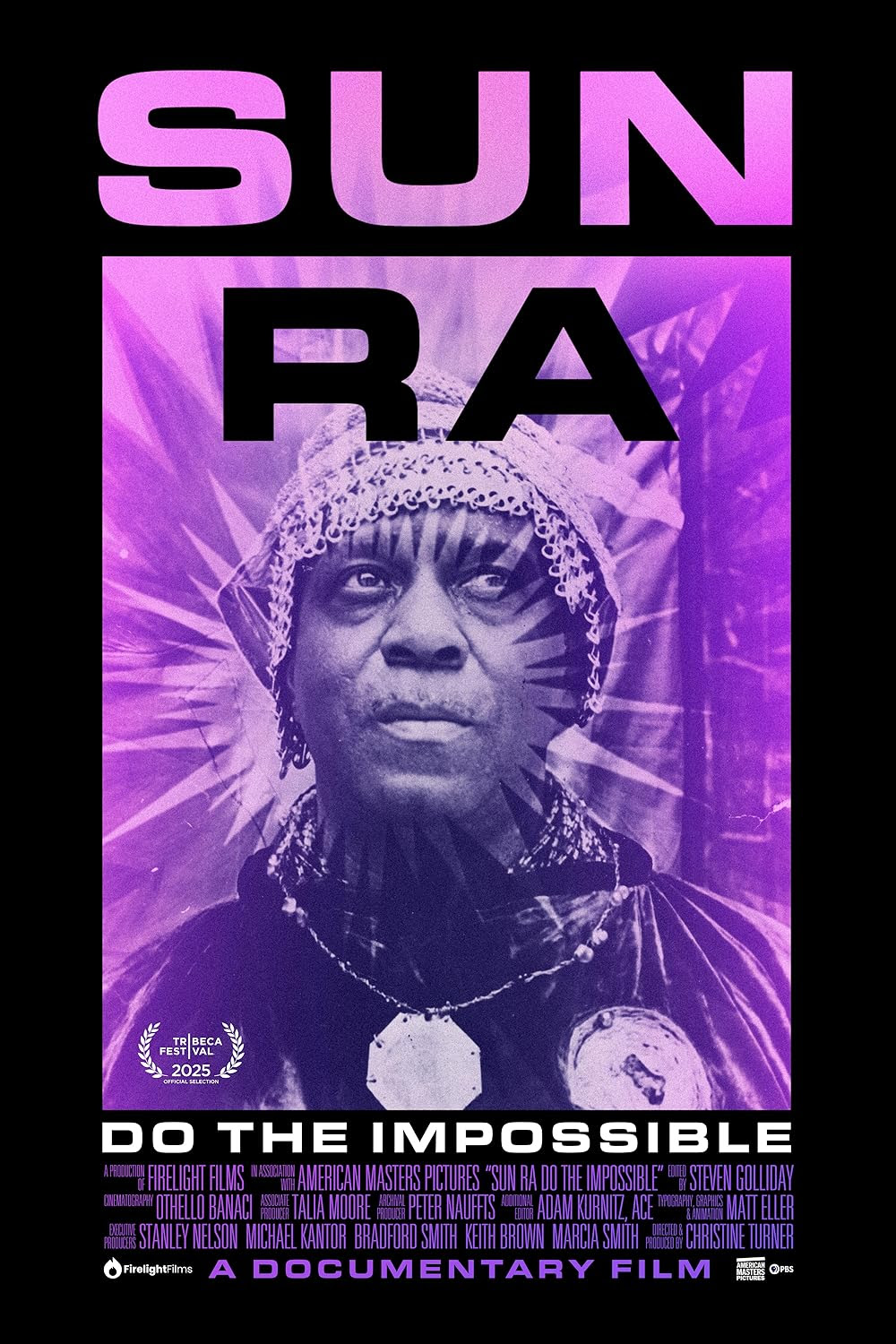
Christine’s film, Sun Ra: Do The Impossible, was recently at The Chicago International Film Festival, and was a part two of our spotlight on African American Directors. We got a chance to speak with her about the film and her hope for its impact.
1. Philosophical Core and Charisma
Reggie Ponder: Sun Ra spoke in riddles and contradictions. Did the Arkestra challenge his philosophy, or did they accept his unearthly narrative?
Christine Turner: I guess it depends. Do you mean did other journalists or writers challenge him or did people within challenge? Yeah, I think all the time. I think he mystified people. He presented a challenge to those who tried to interview him because he had a way of speaking in riddles or talking in a way that would sidestep a question or turn the question around on the interviewer.

You describe Sun Ra as an “unreliable narrator.” How did this deliberate mystification challenge you as a filmmaker trying to capture his portrait?
He was a very challenging person for people to interview and you see some of that in the film. But there were those who took his work seriously, and knew his music and really knew and understood what he was, getting at. I think he let in a little bit more. An example of that would probably be Phil Schaap from WKCR, who had extensive recordings of interviewing Sun Ra. We drew from a lengthy interview he did with Sun Ra that was quite revealing, but Sun Ra said different things at different times. I think it’s fair to call him an unreliable narrator, and that presents a challenge to the filmmaker. Of course, here we are telling a story, trying to get underneath the surface and capture a portrait of this incredibly complicated but charismatic person. One could say that in many ways his project was very much at odds with our project in a sense. Here is somebody who for many years obscured, his past and as I said, would speak in riddles and talk around things so that has its own challenge. But certainly we found through speaking with band members, that he worked with for years and years. They helped in some sense to de-demystify a lot about Sun Ra.
II. The Arkestra: Loyalty and Sacrifice
A member of the Arkestra called it a cult. Based on your research, what was the core appeal that kept musicians dedicated to Sun Ra’s vision for decades?
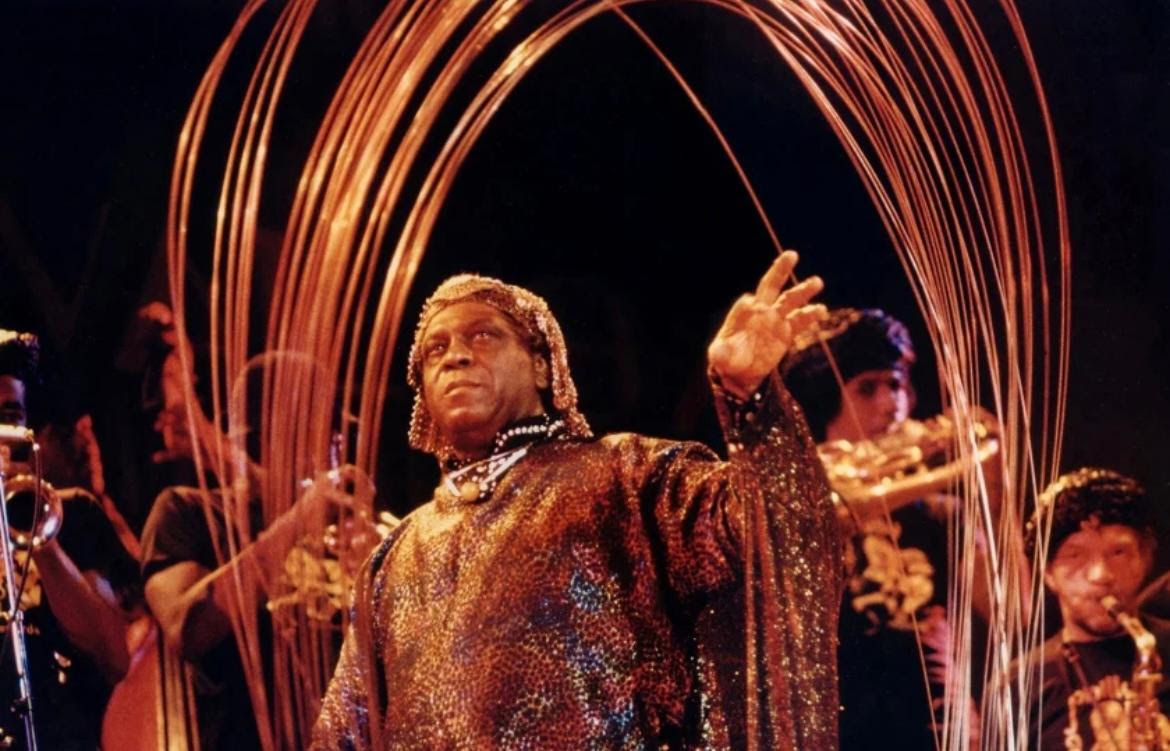
He had to be offering something that nobody else was quite offering, and I think that was probably a combination. Many of the musicians that I spoke with talked about how he was able to pull out incredible performances from them and that he allowed them to play, at heights they had never played and they did not think that they could play. So he was a lot able to draw a lot out of them as musicians. I think others also appreciated the Arkestra as a community. I think it’s interesting that there’s something like close to a hundred different band members that played with Sun Ra over his career. There were many people in the Arkestra, some people who came and went, but others that would return like John Gilmore and Marshall Allen, who, clearly could have gone on to have their own successful career but didn’t. And I think that’s because, Sun Ra was able to really offer something that they were not able to get playing with others or playing on their own. And that was a combination of taking them to new musical heights and also for some, a sense of community or family that the Arkestra provided. Many of them also spoke to the importance of discipline to Sun Ra and how he very much instilled that in them. As I said earlier, he was really upholding this big band tradition long after it had passed. There weren’t too many other big bands playing that kind of music that they could have belonged to. I think it was his vision and his charisma that they were drawn to.
Despite his dictatorial demands—like discouraging family and not paying well—why were band members willing to make such sacrifices?
People felt that there was a greater purpose that they were able to serve through the music and through the band. They were willing to make sacrifices, as many artists often do. They felt that they were being spiritually nourished, creatively nourished. It was a unique opportunity that they were willing to make those kinds of sacrifices.
III. Contradictions of Leadership
Sun Ra’s philosophy seemed male-centric. How do you reconcile this with the immense autonomy and trust he gave June Tyson, making her a central voice and leader?
I think that he would have to be the one to answer how that is reconciled. But when I spoke to the women in the orchestra and not June unfortunately, because she’s been passed, but when I spoke with and interviewed, several of his dancers, they all felt really embraced by Sun Ra as women, and that they were given important roles and that they had an important role that they played in the band as women. They were expected to pull their own weight like any of the men but that they were embraced by Sun Ra. They didn’t speak directly to any sexism and also the times were probably different, right? Getting back to June. Sun Ra had an incredible respect for June. She was somebody that he trusted with his poetry. Somebody that he allowed to take the center of the stage and perform that poetry and the music. He put so much trust in her and her ability to be in many ways the voice of the Arkestra.
IV. Audience and Influence
Why did Sun Ra’s audience become predominantly white later in his career, despite his profound impact on Black art?
Yeah, I think it’s not quite that simple. Coming up, certainly in Birmingham and in Chicago, his audience was primarily Black. He was playing for Black audiences. Then there comes a point when, during, at some point during his New York years, and he begins to play more avant-garde music. I think for a really long time, the mainstream jazz establishment did not embrace or accept Sun Ra. And so partially as a result of that, other groups and others started to take him on. In some ways, he had been really embraced by those in rock music, indie rock, electronic music, and those doing a kind of noise music. So he is embraced by people working in all these other genres, and that’s part of the story. But also there did come a time where, his audience shifts and he is more embraced abroad in Europe and other places than he is back at home as well. So yeah, the orchestra does go on to play for largely white audiences but I think what we’re finding out today or what we’re seeing today is his music at the time was also hard to come by. You had to go to a concert or you had to know how to order it. It was, very different. It was difficult to access and so now the music is more readily available and it’s reaching, I think, even more audiences than it has in the past. And there are certainly Black and white artists today who have undoubtedly been influenced by Sun Ra.
V. Lasting Impact
Sun Ra was known for playing everything from outer-space synthesizers to Gershwin. What is his most significant and lasting musical impact today?
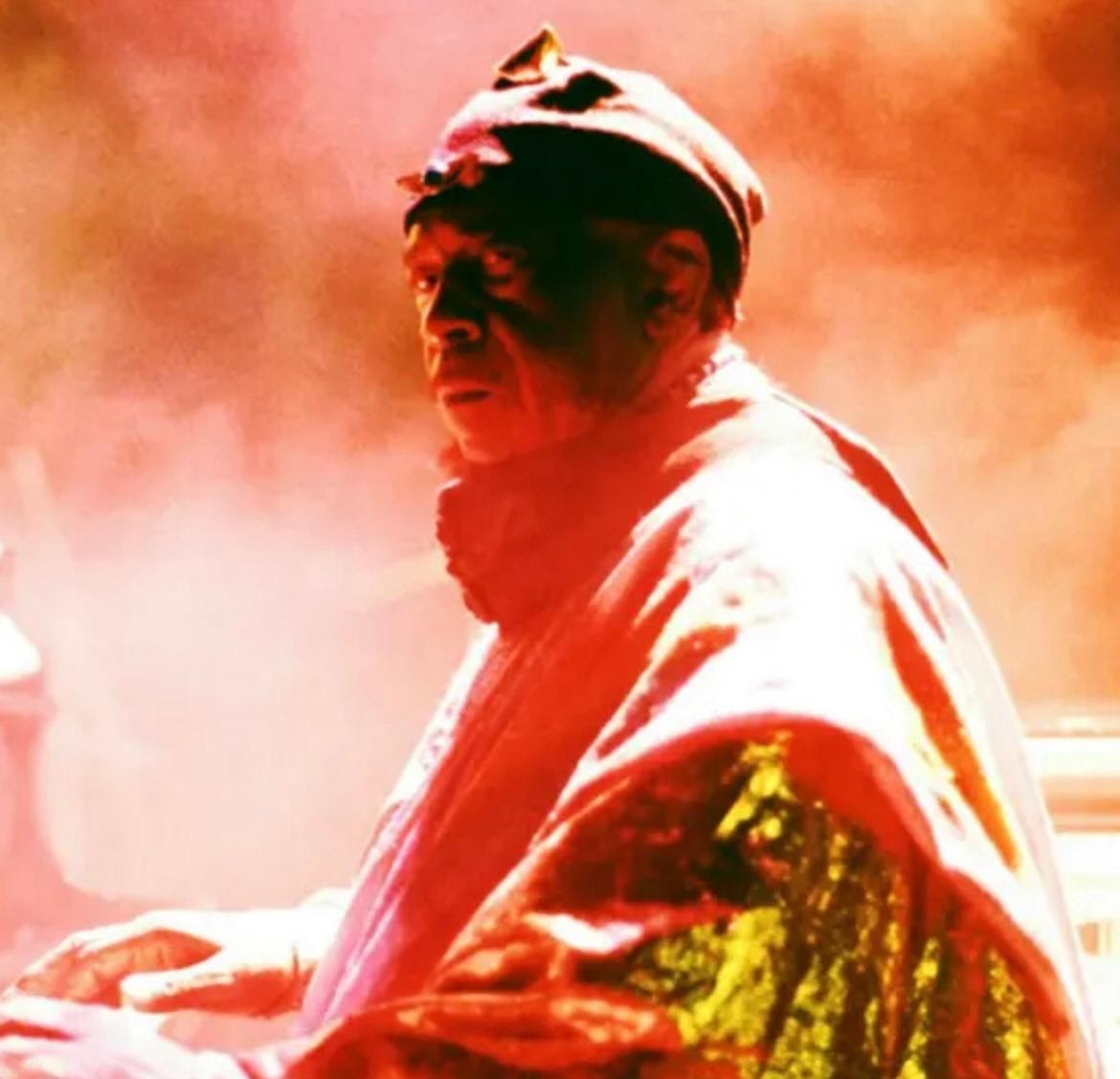
He couldn’t be confined by genre. He couldn’t be placed in a box. He was who he was, and he wanted to play the music that he wanted to play. So on the one hand, you have somebody who’s playing, outer-space synthesizers at the same time he could play Gershwin or “Over the Rainbow” Duke Ellington and Count Basie and all of the great swing big band composers. So he, wasn’t discriminating in that way.
You mentioned his influence comes from his “fearlessness” and “alternative ways of being.” What do you think that philosophical example means to artists today?
Music, that’s just musically, I think he sets an example of alternative ways of being in the world, and that he was truly himself, he was authentic. And when I’ve spoken with artists today who talk about why he’s influential, it’s not necessarily just the music, it’s actually the way that he was in the world. There was a fearlessness that he had that I think people really could recognize and embrace. I also want to go back to something earlier when you were asking about musicians. He challenged them to do the impossible. He was able to bring out something in them that they didn’t even know that they had. And so many of them said that Sun Ra told us to do the impossible.
What would you hope people would take away from this film?
Well, first and foremost, I hope that people who maybe overlooked Sun Ra in the past will give him a chance, will take the time to check out his music. But I also hope that the film serves as inspiration, not just to other artists, but to anybody who is wanting to see a difference in our world. I hope that his message of impossibility or his message of possibility resonates with people in this moment. I hope that they are shaken out of complacency, which was what his goal was as an artist to do.