


I attended the Chicago Board of Education’s scheduled Budget Hearing on Tuesday. August 19, 2025, at 4:30 pm, for the purpose of addressing the current “Budget Crisis” facing the Chicago Public Schools. I arrived at 3:25 p.m., so I could sign up to speak. When I approached the sign-in table, the woman in charge said, “The rules have changed!”
The new rules indicate that a person must sign up to speak at least 48 hours before the scheduled Board Meeting; their name will then be entered into a lottery. Afterwards, up to fifteen (15) names will be randomly selected. It should be noted that if one hundred (100), fifty (50), twenty-five (25), or twenty (20) people sign up, only fifteen (15) will be allowed to speak. This is not on a first-come, first-served basis! Following the protocol, I registered to speak on Tuesday, August 26, 2025, at approximately 10:30 a.m. for the Board of Education meeting scheduled for Thursday, August 28, 2025. On Wednesday, August 27, I received a notice from the Chicago Board of Education informing me that I had not been “selected” to speak at the August 28, 2025, meeting.
I believe this is a blatant violation of the Open Meetings Act (OMA). According to 5 ILCS 120/Open Meetings Act, “it is the public policy of Illinois that public bodies exist to aid in the conduct of the people’s business and that the people have a right to be informed as to the conduct of their business. So that the people shall be informed, the General Assembly finds and declares that this Act intends to ensure that the actions of public bodies are taken openly and that the deliberations are conducted openly.”
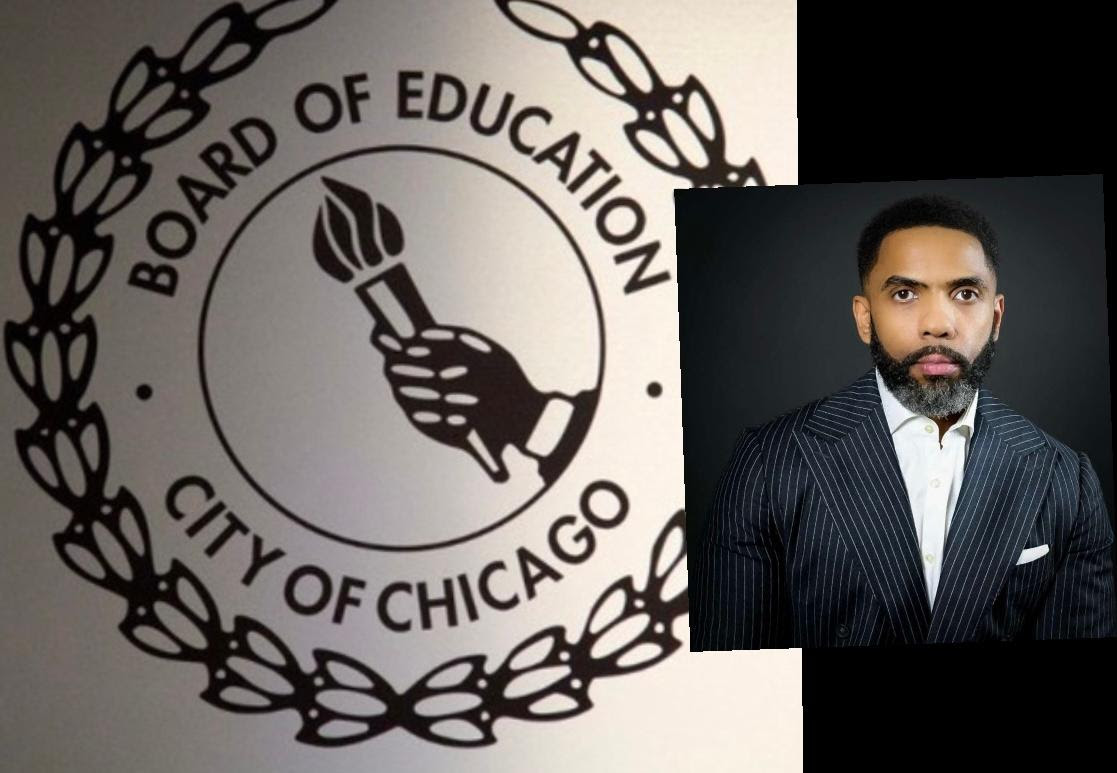
Sean Harden, the current President of the Chicago Board of Education, seems unaware that a public body cannot use a lottery or raffle to decide who gets to speak. This is because all decisions must be made openly and not by chance. In most U.S. states, using lotteries or raffles for official decisions is forbidden, and this principle comes from open meeting laws. These laws require the government’s process to be transparent, with decisions made openly based on publicly discussed criteria, not by chance. Public discussion helps prevent “backroom deals,” which are created to hide or justify decisions made secretly or through improper means, thus violating the law.
The use of a lottery undermines public trust, due process, and the principles of fairness. Credibility depends on decisions being fair and justified. Decisions made by chance weaken public confidence and imply that public agencies have abdicated their responsibility to make reasoned judgments for the public. Using a random draw to select a single speaker from a list violates basic principles of fairness and due process. The public and interested parties have the right to be heard and to have their ideas and proposals evaluated based on their merits, not by chance.
Derrick B. Harris is a Culture, Education, Lifestyle Writer and Contributing Writer for N’DIGO.