
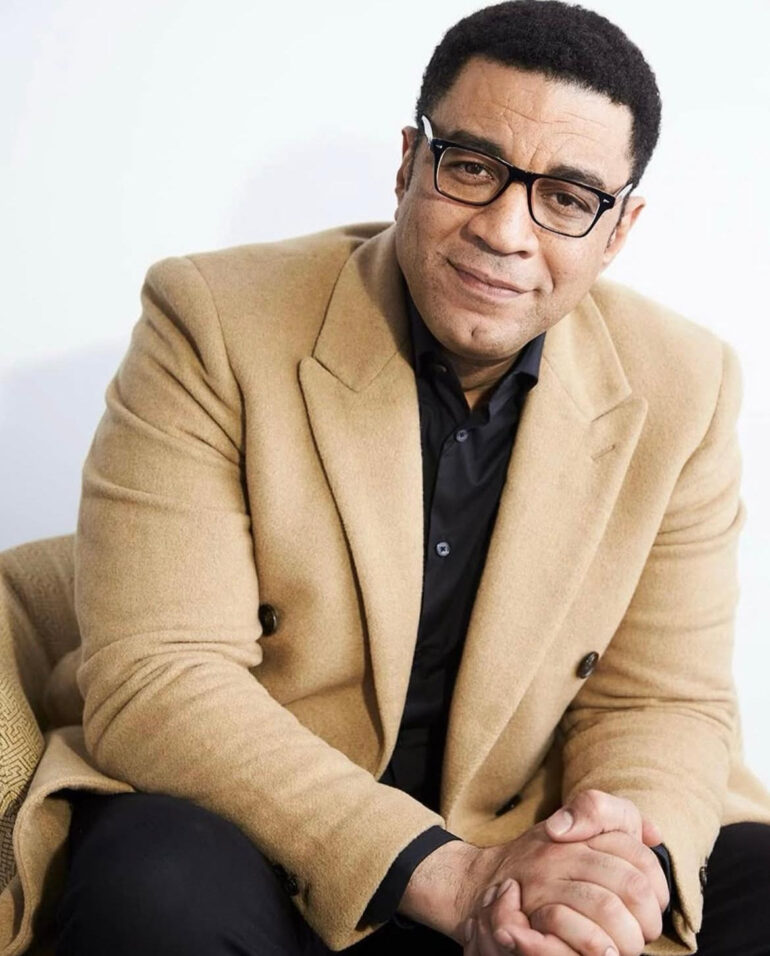
A distinguished film, television, and stage actor, Harry Lennix is a proud Chicago native and a graduate of Northwestern University. Throughout his decades-long career, he has established a reputation as an accomplished actor and a deeply committed community member. He has brought to life fan-favorite characters in blockbusters like The Matrix and Man of Steel, while also starring in critically acclaimed projects like The Five Heartbeats and Ray. Most recently, his powerful performance in the Broadway play Purpose earned him a Tony Award nomination. He sat down with Reggie Ponder to discuss this new chapter and what “purpose” means to him, beyond the stage.
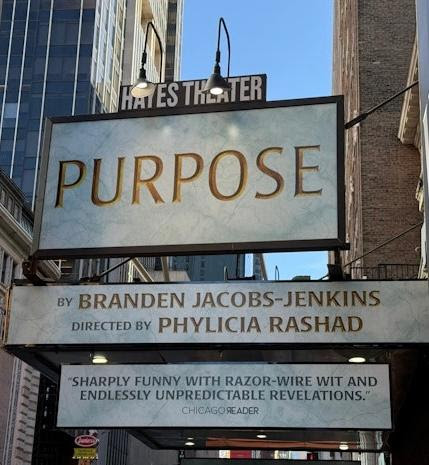
Reggie Ponder, The Reel Critic: I am here with a Chicago icon: a Tony-nominated, never-duplicated, and very complicated actor, director, and producer, the one and only Harry Lennix. We’re here to talk about his work in the critically acclaimed Broadway play, “Purpose,” and use that as a jumping-off point to explore his own remarkable purpose, from the stages of Chicago to the screen and beyond. Thanks so much for joining me, Harry.
Harry Lennix: Great to be with you, Reggie. Thanks for having me.
Reggie Ponder: The play you’re in, “Purpose,” has a title that resonates deeply. For someone who has devoted so much of their life to theater and community, what does the word “purpose” mean to you now, at this stage of your career and your life?
Harry Lennix: It’s one of those plays where I don’t think it’s a coincidence that it came into my life at this time. I’m 60 now, and it’s time to start thinking about what the leave-behind is. What is it that will be better because I lived, or if it’s even possible to accomplish such a thing? That’s what this play deals with. It asks, “Why are we here?” It’s the age-old question. Shakespeare said, “To be or not to be.” Solomon Jasper, the character I play in “Purpose,” or at least Brandon Jacobs-Jenkins, who wrote Solomon, is asking, “What is my purpose?” and “How do we deal with it?” At a certain age, when what we thought and what we expected in our lives doesn’t turn out to be what we thought it would be, can we redeem that situation? Or at least begin to consider it in such a way that a greater good was served? I think that’s what this play is about. It’s about legacy, obligation, and family expectation. I guess the word these days is that it’s intersectional—it deals with all of these issues. At the root of it, I think it’s about why we are what we are and how we are.
Reggie Ponder: Do you think “purpose” means something different to you now than it would have when you were in your 30s?

Harry Lennix: I certainly think so. I remember even in high school, I had my motto in the yearbook and a button that said, “Why?” So I think at 30, I was asking the same question: “Why are things the way they are?” “Why am I the way I am?” “Why do I exist?” “What is my function?” “What is my purpose?” This is referred to in philosophy as the theological argument, or question—the “intention, aim, purpose.” And so, having been in the seminary and studied these questions from a theological point of view, I’ve never been able to escape it. I’ve always wondered about my purpose.
A Chicago Man: A Commitment to Community

Reggie Ponder: You’ve also spoken about Chicago as your home, and your career is really intertwined with the artistic fabric of this city. From your involvement with the founding of Congo Square Theatre to your work with the Lillian Marcie Center, your commitment to this city is absolutely undeniable. What drives this deep-seated dedication to Chicago and its arts community?
Harry Lennix: For me, it’s about giving back what I received from it and trying to pass that on. I was talking to Father Michael Pfleger once as a friend of mine was dying, and he told me to say to that friend who asked, “Why is this happening to me?” “Well, this is a relay race. Life was going on before we were here, and it’ll be going on after we’re here. We have to make it mean something more significant while we were here.” Because I got what I got as an actor and artist from Chicago—because I’m from the South Side, where we were literally surrounded by excellence in the arts, in politics, in business and enterprise—it feels like an obligation. For a little while there, at least, Chicago had the most Black millionaires of any city in the country, probably therefore the world. You had the Johnsons, the hair care people; you had the publisher; and of course, the Honorable Elijah Muhammad with his enterprises and businesses. We had an ethic there that I think has been missing now, and I think it was stripped away on purpose. They took away arts programming in the schools. I taught music in Chicago Public Schools, and they took it away for a shorter school day. Recess? They took that away. This idea of joy, play, and art has been stripped away, and its vacuum has left nothing but destruction rather than creativity. So, I don’t see what I’m doing as some great good; it’s an obligation and a duty to put it back where it belongs, where it comes from.
Reggie Ponder: Part of that relay race, if you will. You’ve mentioned you grew up on the South Side. Where exactly did you grow up, and what high school did you attend?
Harry Lennix: The age-old questions, right? I have to give my bona fides, of course. I grew up in South Shore, basically at 77th and Yates. I used to play at Rainbow Beach. I played baseball at Eckersall Park, and basketball too. Not very well, either one. I went to Quigley Preparatory Seminary South, which is now St. Rita. The Pope went there. He went to St. Rita when it was in another location. So there you go, I guess by six degrees of separation!
Reggie Ponder: We had to get those credentials; you know how we are in Chicago. Who would you say, in addition to your parents, was a teacher that really inspired you to go on to do what you’ve been doing?
Harry Lennix: I would say the first time I thought seriously about maybe becoming an actor was in high school at the seminary. I had a professor there who was actually the librarian, but also a director. His name was Father Robert Bridge, and he took me to my first professional play when I was a sophomore, going into my junior year. It was a great musical, Fiorello!. I don’t even know if it was any good, but I remember it. It changed me. I saw the devices, the mechanical parts of the theater—a turntable stage, and these costumes that were all designed to coordinate. It was an amazing spectacle to me. So he’s probably most responsible for me being an actor. I’ve had very many great teachers. My favorite teacher was probably Mark Wukas, my literature teacher. He was not even a priest at the seminary, but he introduced me to all sorts of great literature, from Mark Twain to J.D. Salinger, of course, and Hemingway. Later, in college, I was introduced to the great Black American writers by a man named Leon Forrest, a very famous, erudite gentleman from the South Side, who was a fantastic teacher at Northwestern University. So I’ve had many great influences.
The Art of Acting: “It’s a Magic Trick”
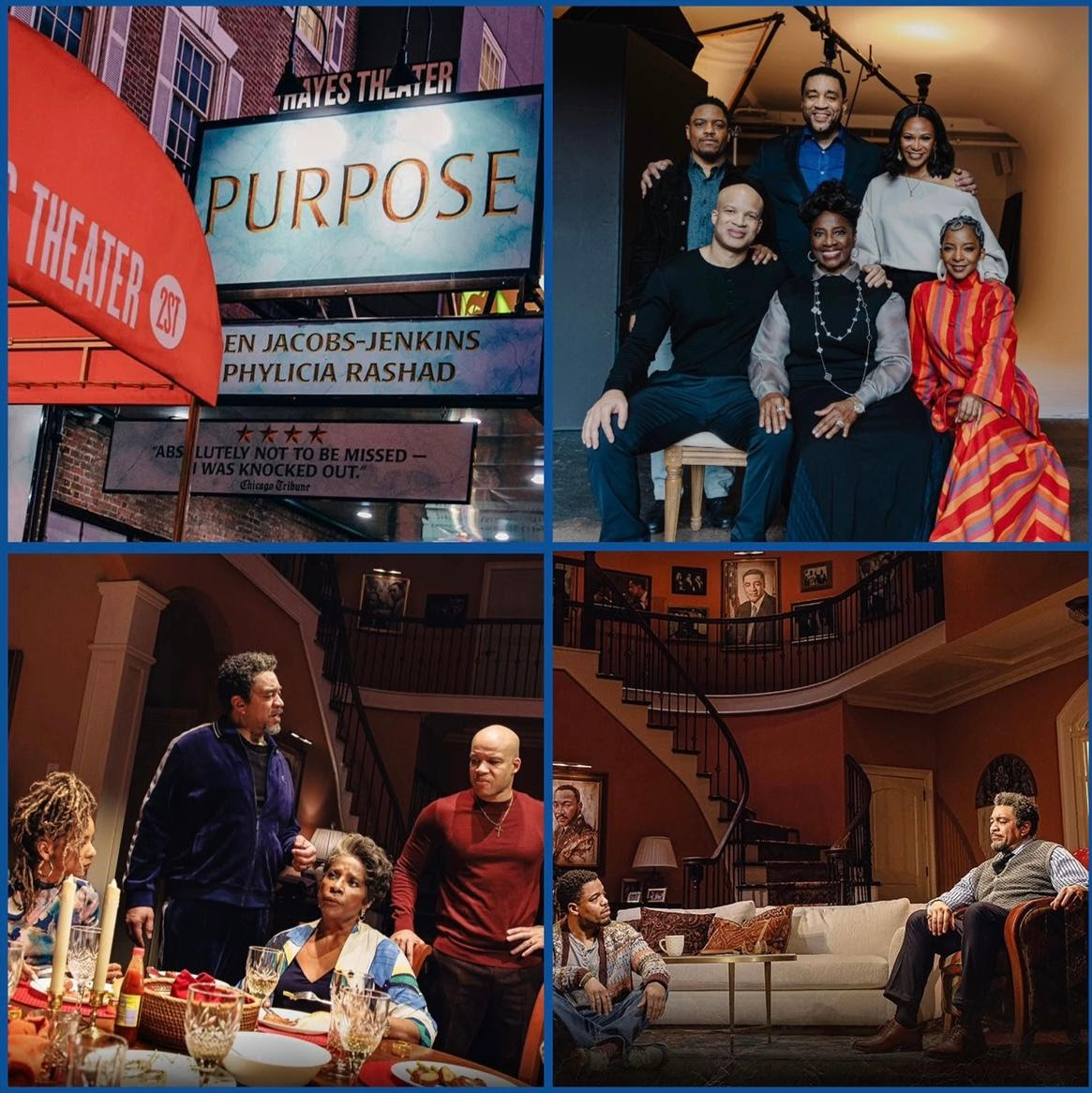
Reggie Ponder: Let’s talk specifically about the play, “Purpose.” The production has been a Tony-winning success with powerful storytelling. What was it about this particular project that drew you in?
Harry Lennix: About 25 years ago, a young man named Glenn Davis came to see a play at the Goodman Theatre, A Raisin in the Sun. He was 17 or 18, and he is now the co-artistic director at Steppenwolf Theatre. We’ve kept in touch over the years, and he always said he wanted to work with me. So he sent me 40 pages of a play about two years ago and asked if I would consider doing it at Steppenwolf. The 40 pages knocked me off my feet. I was like, “Heck yeah, I’ll do it!” It was really out of the blue. This call came because Glenn kept his promise that he was determined to work with me.
Reggie Ponder: I first saw the play when you guys were still refining the direction, and you were also performing another play at the same time. I don’t even know how you did that! How did you manage to juggle both of those demanding roles, and how did Purpose evolve from its run in Chicago to its Tony-winning success in New York?
Harry Lennix: We were learning the play while it was being written. Thank God my wife, Djena Graves who was in Chicago at the time. When we finally got a script for Purpose, I had about two weeks of rehearsal to learn it, and every day I would just learn chunks of dialogue by rote. It was a real challenge, but I’m grateful my wife was there to help me. I think the actor, in general, has to have many people running around inside of himself at any time. That’s what we do. It’s not difficult. Even within the play itself, the one-man play, I have to play several different characters. We all have a bag of tricks that we can pull out from time to time. The human mind is capable of memory far superior to what I did there. I could probably memorize five plays and have them pretty ready to go. That’s what actors used to do—they were traveling craftsmen who knew various plays and could join in at any given moment. That’s how they used to do it.
Reggie Ponder: But my pushback, Harry, is that you have to be able to provide the emotional energy from one thing to the next, and I just don’t buy that it’s that simple!
Harry Lennix: It’s an illusion, though. There are different philosophies about acting. Some so-called method actors think that you have to really be feeling and believing the things that the character is doing, but that’s not true. It’s a magic trick. The idea is that it seems as if you are feeling or believing. That’s why actors can cry on demand or do anything you want, and they can do it repeatedly. If they’re not insane, they can do it at the drop of a hat. I count myself as one such actor; my job is to fool you into thinking that I’m going through an experience.
Reggie Ponder: Well, on Purpose, I’m gonna tell you, you absolutely did fool me. I saw it three times—twice in Chicago and obviously in New York. The play explores a family grappling with legacy and identity. What does it have to say about the complexities of family dynamics, and what do you hope audiences take away from this portrayal of generational divides? I have 10 brothers and sisters, so I totally want to hear what you have to say on this one.
Harry Lennix: Well, the play draws on these things you’re talking about with this question: what does it say about legacy, family, and obligation? Generational obligation, and in some sense, perhaps a generational curse—the sins of the father. There’s no accident that the character’s name is Solomon. He asks, very directly, at the end of his days, “Has everything been in vain?” This is the first time we hear the word “purpose.” I think to him, and to our generation, is the last of that line—the baby boom, if you will. I think our sense of obligation, debt, and what we owe is different from what it is now. So I think that’s what Brandon’s grappling with in the play, and I don’t think there are any answers provided.
What’s Next: Bronzeville, Biopics, and Broadway
Reggie Ponder: What’s next for Harry Lennix?
Harry Lennix: That’s a great question. I am, of course, working on the Bronzeville Renaissance Project in Chicago. I’m hoping that I have cause to be working on that until the end of the year and into next year. Maybe this play, Purpose, will travel. But I don’t have any hard work plans currently.
Reggie Ponder: I don’t really believe that because the Harry Lennox that I think I know must have a special project that he’d been working on. Come on Harry Give me the scoop!
Harry Lennix: Actually, I’m glad that you brought that up again, thank you for revisiting this. I am excited for a couple of other projects that I am hoping maybe we can get off the ground.
One is an Ella Fitzgerald biopic that is about the greatest American singer, and it is shocking to me that there is no such film as of now. I have a great script that a friend of mine wrote. We have an actress that we’re very excited about. I can’t say her name just yet. And perhaps, a couple of other fantastic surprises in terms of the casting. That’s one thing.
The other is I wrote a musical, well, a book to a musical. Not the music, but I wrote the script part, and I’m trying to get that developed. I have the people who can write the music very exciting team there too, from lyricists to composers and the like. And it’s a biblically based story — an updated version of the Book of Ruth, set at the turn of the last century. So yes, I have things in the works.

Reggie Ponder: You’re going 10 toes deep into Bronzeville with the Lilian Marcie Center. I see you’re already doing artistic programming, and this summer you had a festival. Talk a little bit about this project—the name of the center and why you want to do it in Chicago. It feels like a Smithsonian-type project.
Harry Lennix: Yes, indeed. That is our hope. The Bronzeville Renaissance Project includes the Lillian Marcy Center for the Performing Arts, as well as the African American Museum for the Performing Arts (AMPA), which will program in the center. The name Lillian Marcy honors the two women who were my great mentors: my mother, Lillian, and Marcella Gilly, who was the principal of Bass Elementary School when I taught in Chicago public schools. I think of the nurturing of mothers and mentors, and it’s appropriate. These women engendered creativity in hundreds of children; they gave them access and taught them a love of art, music, literature, and so forth. That’s why we named it that. When I think of a renaissance, I think of what it means to be reborn. All the stuff that I’m trying to help put back there was there before. My great partner, TaRon Patton, has been insistent that we continue to do programming even as we await the state funding that will get us under construction. She has really championed keeping this machine moving. It has been a concerted effort, but we believe in this. And in spite of the frustration of waiting, we’re going to hang on to this dream as long as possible. We know we can get started this year if there’s the will to make it happen.
Reggie Ponder: Is there anything you’d like to share about working with the talented people in Purpose?
Harry Lennix: Yes. We have LaTanya Richardson Jackson, Tamara Tunie, and now Brenda Pressley. We’ve got Kara Young, a two-time Tony Winner. We have the Steppenwolfs: Jon Michael Hill, Glenn Davis, and Alana Arenas. I call them all the “shark tank”—swimming with the sharks. Each of them is an apex predator who could kill other actors, in a good sense, of course. We are a well-oiled machine at this point. It is a joy to go to work every day with these people. It’s a family offstage and a family on stage, and it is such a great relief to have that experience. The last time I was on Broadway was not so happy, but this time it is, and it’s made up for everything. You mentioned the Tony nomination and the whole sort of being the toast of Broadway for a little while. You can make the case that we’re the best game in town. It’s a joy every day. It’s like Michael Jordan going to play with the Bulls. It’s the love of the game. That’s what we’re doing right now.
Reggie Ponder: Harry, thank you so much. Congratulations and much success. I know I’ll see you in the city because you’re working on your thing.
Harry Lennix: Thank you. I enjoyed our conversation.