
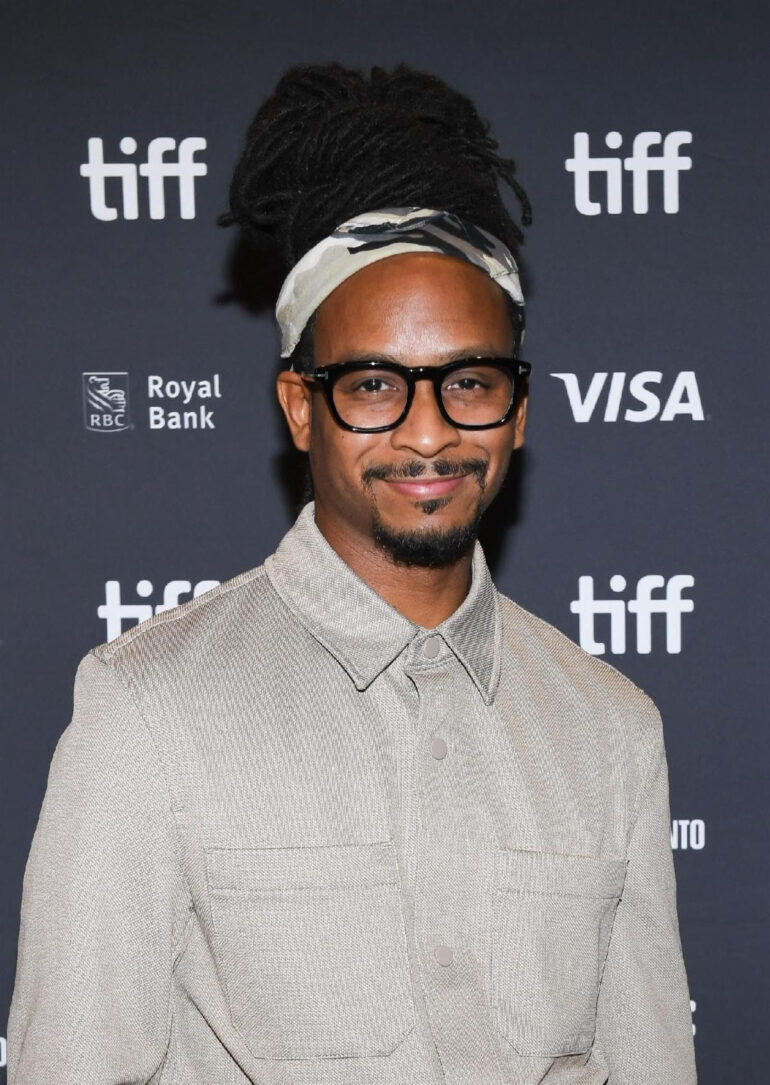
R.T. Thorne, writer and director of the groundbreaking film ’40 Acres,’ boldly reimagines a post-apocalyptic future, moving Black characters from footnotes to the forefront. His vision powerfully highlights the enduring bond and shared history of Black and Indigenous Americans, showcasing their collective resilience in the face of immense challenges. I recently had the opportunity to speak with Thorne about this thought-provoking film, and here is an excerpt from our discussion.
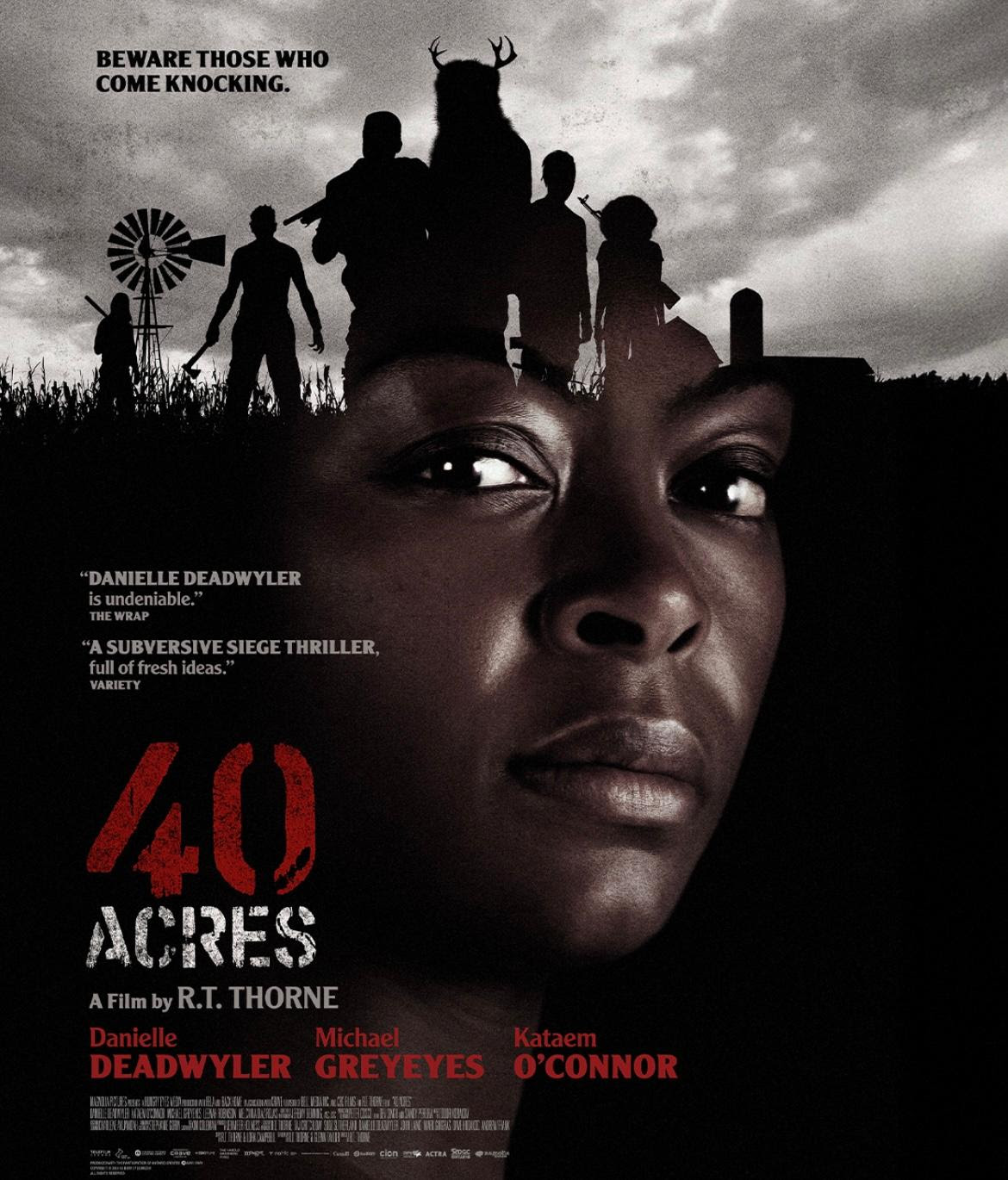
Reggie Ponder, The Reel Critic: “40 Acres” seems to tackle fundamental human experiences like survival, obedience, and the very definition of family. But before we dive into those, I’m curious: how does the unique lens of the Black experience inform and shape the exploration of these universal themes in your film?
R. T. Thorne: Yeah, I think when you look at the canon of post-apocalyptic, survival stories that we see out there, you often don’t see it from our lens. We may be part of that. We might be the sidekick or somebody that helps out, but you don’t see our community centered, and I wanted to tell a story about how this particular family survives in the future and how it differs from the family in “A Quiet Place” or from the people who roam around in “The Walking Dead” who somehow have food to eat. But I don’t understand how they do (have food to eat), but I’m not gonna get into it.
For me personally, when I talk about Black farmers having land, and in my future, famine is widespread. There are no more animals. And if you don’t know how to work the land, you are in trouble. And if you know how to work the land, you’re in trouble because people are coming for your land. I wanted to make a story where this particular family not only did they survive with military might, but they also survive by preserving their culture, and their culture is integral to how they survive.
Understanding their history is important. Hailey is an archivist. She makes her children read books about revolutionaries in the past so they can understand who they are and why the land that they’re working is important. She tells this story of the history of the land, how their ancestors came up through the Underground Railroad and escaped slavery, and were able to get their 40 acres in this land when it was denied by the American government in the past.

The cultural practices of preserving your art, music, and dance are very important to this family, and it’s expressed through different scenes in the film. The agricultural practices in the film are expressed a little bit through the Indigenous side of the family. They have certain remedies to help treat crops that nobody else in the region knows how to do, which makes them the family that people want help from. It’s all rooted in cultural preservation that relies on the ancestors and understanding the ancestral knowledge. And that’s how this family really, really survives. I wanted all that sprinkled in.
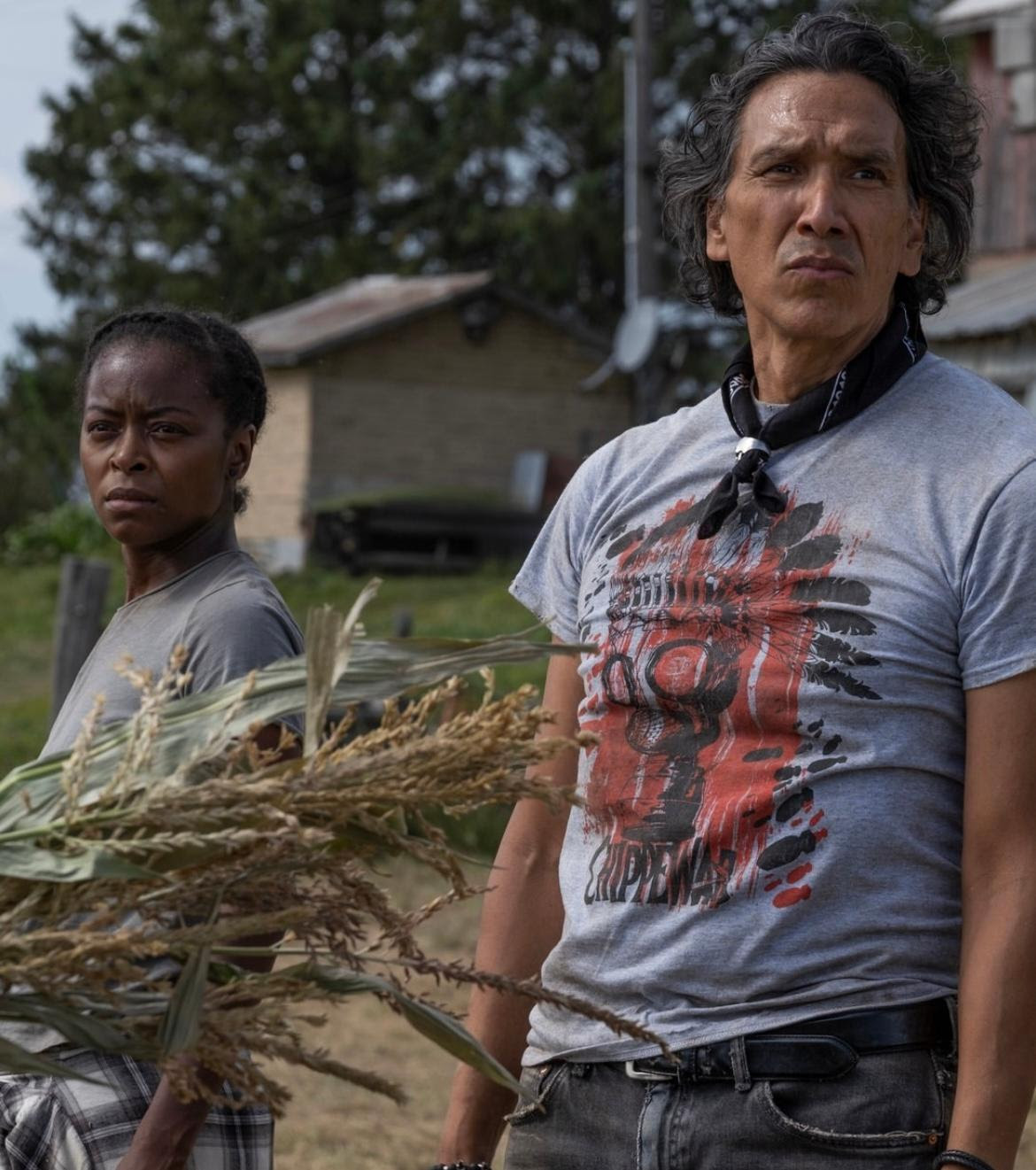
Reggie Ponder, The Reel Critic: It’s powerful how your film portrays this strong connection between Indigenous and Black communities. Was this alliance a conscious decision in your storytelling, and what deeper meaning does it carry for the narrative, especially when viewed through a Black lens?
R. T. Thorne: The idea of alliance between cultural communities, specifically the Indigenous and the Black communities, is important. I remember a quote by Michael Grayeyes who plays Galen. The interviewer asked him about the times feeling very dark these days and how does the Indigenous community think about surviving in these times? And he said, “The Indigenous community has survived apocalyptic times. The worst that can be done to our community has been done to our community and we are still here. We are so resilient that we have lived past that moment, the moment of erasure.”
And I feel deeply that the same can be said for Black communities. For 400 years they attempted to erase us and replace our cultural identity and force us into servitude. So the worst thing that can be done has been done to us already. And the fact is that we are here, very present and resilient.
Grayeyes’ comments echoed with me and it made me want to present this family in the future to say that they are the most resilient. They know how to survive. They’ve been through it. It’s in their DNA. So the connection was very deliberate because the two communities have been on parallel tracks of resilience and survival, and there’s a lot of unknown history of camaraderie between these communities that’s just not been shown because of who’s telling the stories.
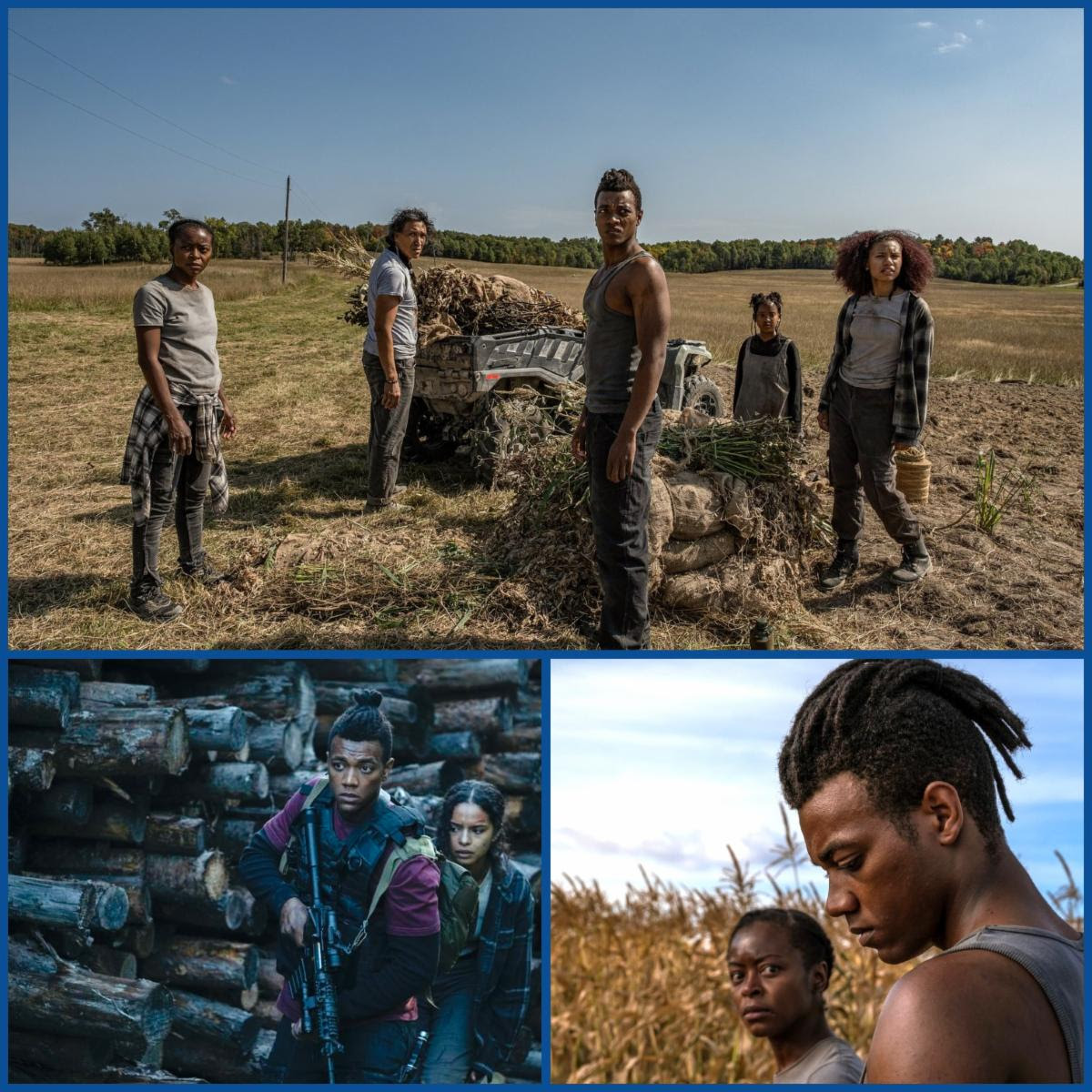
Reggie Ponder, The Reel Critic: As a parent, I totally get Hailey’s fierce dedication to protecting her family, even if it means isolating them. Emmanuel’s desire to forge his own path, well, sometimes you just want to say, “Do what I say!” From a Black family perspective, that “do what I say” mentality is often very present. Can you elaborate on the complexities of this mother-son dynamic?
R. T. Thorne: It’s semi-autobiographical. I’m not calling my mom a military killer—let me just get that out of the way. But the relationship at the core: Mother and son. That’s me and my mom. My mother raised me and my brother virtually by herself, and really taught us a lot about the world, how we had to move through it, and how her experiences shaped how we thought about the world. And we ran into these conflicts.
I think, in the film, I’m never trying to say that anybody’s right or wrong. I really think that Hailey is generally right, across the board. But biologically, something is happening to Emmanuel, and no matter what you do as a parent, how much you try to shelter your kids or keep them safe, there’s a need for them to try to figure it out on their own. And if you don’t recognize that need and you don’t allow it to happen, it is gonna happen some way, shape, or form.
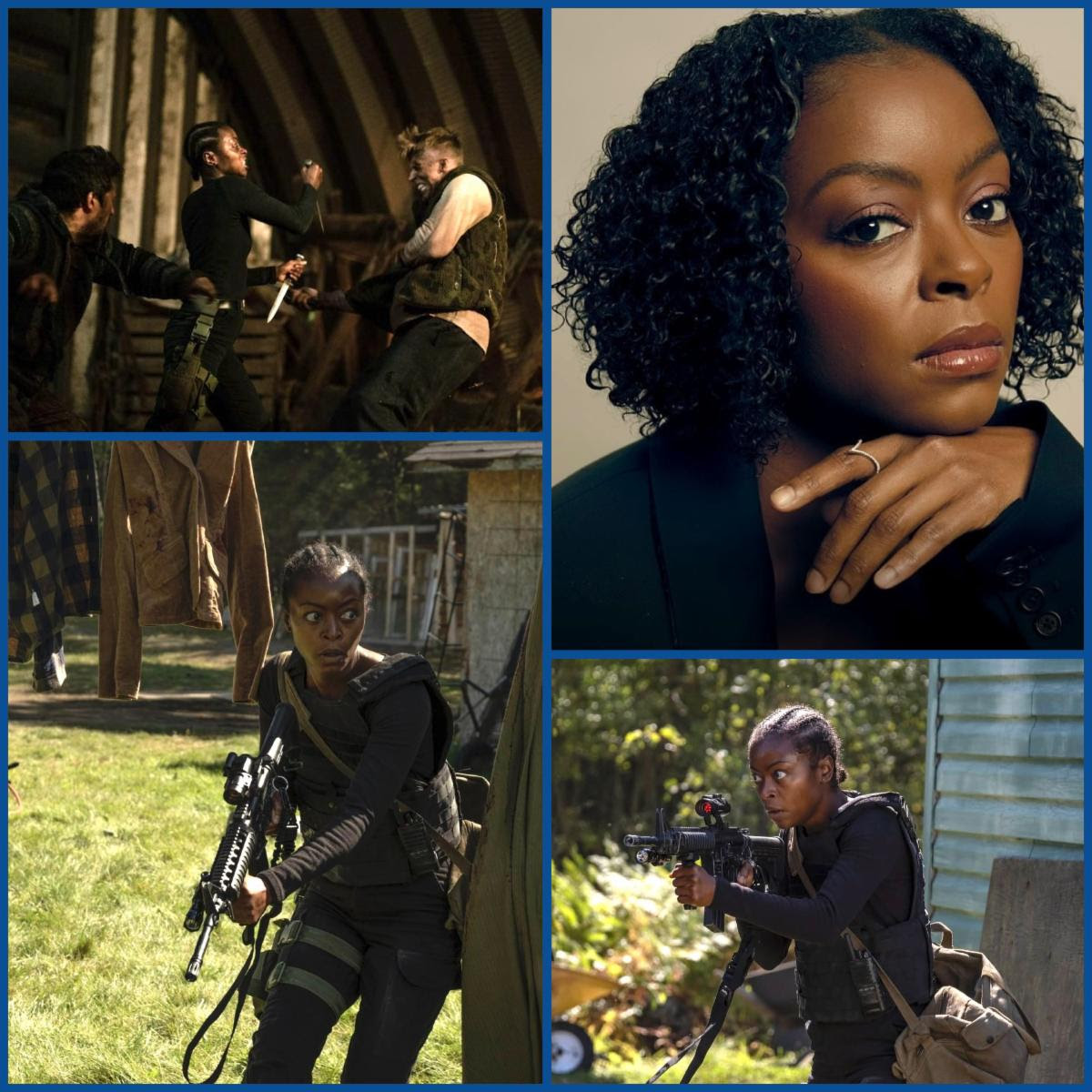
Reggie Ponder, The Reel Critic: Your cast truly brought this family to life. Could you share a bit about their process and how they were able to embody the raw authenticity and weighty decisions of these characters?
R. T. Thorne: It was a heavy challenge to them. I’m not gonna lie. I wanted the film to be very grounded. I didn’t want it to be like they’re having fun killing everybody. I wanted it to be real. I wanted you to feel the earth under their feet and feel the weight of the decisions that they’re making. And it is a big challenge.
But when you’ve got Danielle Deadwyler, she’s a generational talent. What Denzel just said about her is “she’s one of one.” And that’s Denzel saying that. She brought gravity to Hailey. She brought a beautiful discipline to Hailey, a hard texture to Hailey, but then this beautiful, soft love, you can see—everything she does is truly out of love. You can connect with her, and her presence was just incredible. Michael Grayeyes is the yin to her yang. He’s tough as nails, but he has a warmth and a humor to himself that balances her out. And then a lot of the young actors, led by Kataem O’Connor, who plays Manny, is a different form of masculinity. He can take care of business, and he’s from the farm, but also there’s a naivete that he had that I hope audiences kind of feel. I’m mad at this kid, but I understand him.
And then Leenah Robinson as Raine, Jaeda LeBlanc, and Haile Amare as the two younger sisters, it was beautiful to see them come together. Danielle and Michael really grounded them, and then they brought their own energy. For Haile, it was her first film, so she had no reference for this acting stuff. She’s coming with this energy that’s just very pure. And I’m sure it caught Danielle and Michael off guard, responding to her. It was a beautiful thing to see them come together the way they did.

Reggie Ponder, The Reel Critic: Considering the themes of legacy and survival in the film, what made “40 Acres” the perfect title to encapsulate its spirit?
R. T. Thorne: I said, we’re gonna talk about Black farmers. And when you talk about that, for me, the legacy of land is an important thing to talk about. I knew that I wanted to make reference to the broken promise, obviously to give formerly enslaved Black people land to which would to build a legacy. This film pays tribute to that and to the ones that came up through the Underground Railroad and actually landed in Canada, where they were able to get their 40 acres.
That’s the history of the family, the Freeman family, in this film. So that was the reason that I felt that it was very important that the film had to be historically tied, but that it was its own story in the future. A story of this family now having the resilience to have survived this long, and they’re the ones that are out there kicking ass, and everybody else is coming to them for help.
Reggie Ponder, The Reel Critic: Thank you so much, R.T. You’ve truly created a film that provokes thought and sparks conversation.