
Ishmael probably never believed that a day like Juneteenth, a national holiday, recognizing and celebrating the end of slavery in America, would ever happen.
Most 6-year-old boys spend their days playing and enjoying life! But that never was the actuality of Ishmael’s life as a little boy. On Oct. 11, 1831, he was sold to the highest bidder, Daniel Brown in Mississippi.
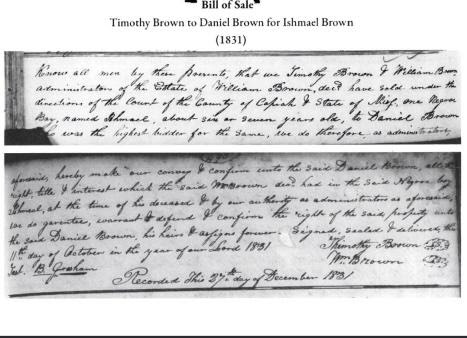
As the bill of sale (below) shows, Ishmael was “about six or seven years old.” This little boy, who was arguably psychologically scarred from being born into slavery, was further traumatized by this transaction. There is the strong probability that he was taken from his mother, father and other family members, abused physically and mentally and made to work from sunup to sundown.
Ishmael was my paternal great-great-great-grandfather!

I discovered this information two years ago when my daughter, Ariel, gifted me the services of an outstanding genealogist, Christopher Smothers, as a Father’s Day present. Christopher used death certificates, church records, newspaper articles, birth certificates, probate records, deeds and estate inventory lists to complete my family tree puzzle, which led to Ishmael.

In fact, on the Inventory of the Estate of the deceased man who originally enslaved him along with cattle and livestock, was Ishmael, a negro boy valued at $75.
By 1831, when this little boy was sold as property, enslavement of Black people in the United States had existed for 212 years, since 1619. Given this longevity, I am certain that Ishmael never imagined that slavery would end in his lifetime.
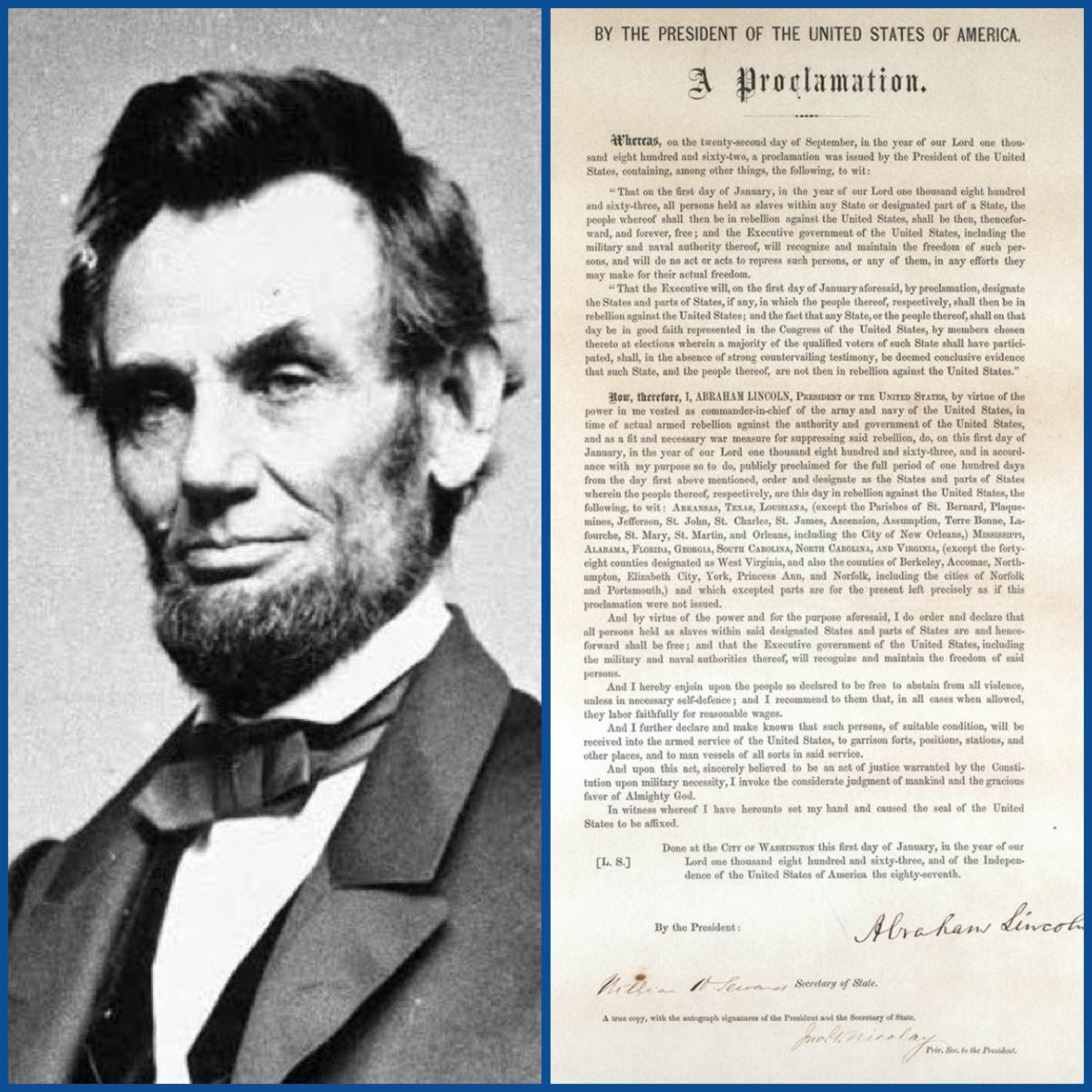
Thirty-one years later, in 1862, President Lincoln signed the Emancipation Proclamation abolishing slavery. The Proclamation went into effect Jan. 1, 1863. But there was a caveat. Abolition was only for Black people enslaved in the 11 states that seceded from the Unites States. Those states were South Carolina, Virginia, Arkansas, Florida, Louisiana, North Carolina, Tennessee, Alabama, Georgia, Mississippi and Texas. They made up the Confederacy.
The war began in 1861, because the newly-elected President Lincoln planned to stop the expansion of slavery into new states. He did not want to abolish slavery. He wanted to limit it to states where it presently resided. The aforementioned 11 states disagreed, and the Civil War ensued.
The Confederate states proved to be a resilient and strong foe. In response, President Lincoln took action to financially weaken the Confederacy. The remaining 22 states remained in the United States, and they were called the Union.
He did this by emancipating all enslaved people in those 11 states, but not the Union states. His action worked. As Black people heard about the Emancipation Proclamation, they began leaving the southern plantations by hundreds of thousands. With the loss of free labor, the Confederacy’s ability to finance it’s war was almost impossible.
While weakened, the Confederacy continued fighting. One of the last Confederate states in the war was Texas. On June 19, 1865, United States Union soldiers marched into Galveston, Texas after defeating the Confederate soldiers there, and publicly announced that all Black people were free and citizens of the new United States of America, comprised of 33 states. This date became a day of celebration for Black people, called Juneteenth, which is a portmanteau, or the blending of two words: June and Nineteenth.
The celebration of this day, which became a federal holiday in 2021, is an important recognition in American history. While the passage of the 13th Amendment in December 1865 emancipated 4 million enslaved people across the country, Juneteenth serves as the symbol of the abolition of slavery, which had existed for 246 years.
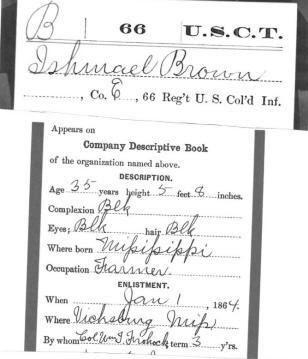
My great-great-great-grandfather Ishmael, the little 6- or 7-year-old boy who was enslaved at birth, sold like cattle and patriotically served his country in the military, lived to hear about the first Juneteenth celebration in 1866. It was held in Texas.
In August 2023, former presidential candidate Vivek Ramaswamy called Juneteenth a “useless holiday.” Ishmael Brown would vehemently disagree.