

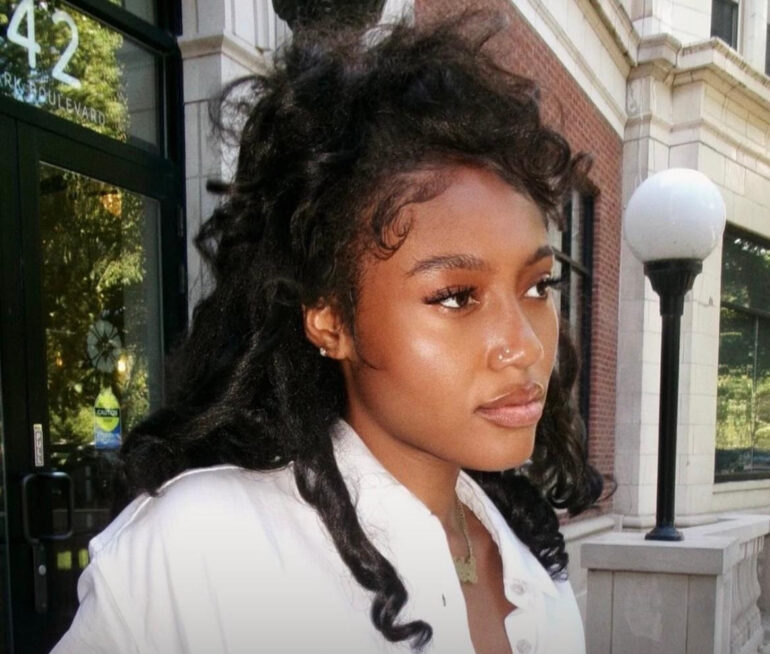
Jada-Amina returns to lead the Gene Siskel Film Center’s 31st Black Harvest Film Festival as curator, having previously served as coordinator for the 28th edition and curator for the 29th and 30th anniversary festivals. A Chicago-based artist, writer, and cultural worker, Amina is essential to the festival’s curation, direction, and programming. Their practice is a deep exploration of Black life across space and time, rooted in sound, writing, video, and collage.
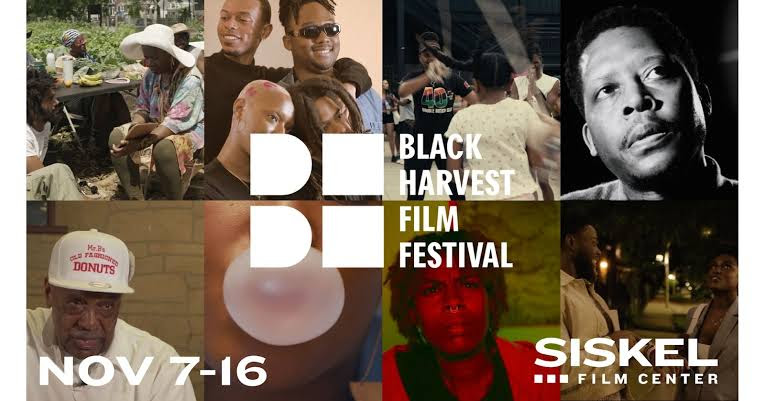
Jada-Amina‘s work engages with history to reclaim and reimagine Black narratives, aiming to resurrect collective memory. Beyond the Black Harvest Film Festival, they also steward Public Programs and Engagement at the South Side Community Art Center.
Reggie Ponder was able to sit down with Jada-Amina to talk about the depth and breadth of this year’s lineup.
Must-See Film and Festival Vision
Reggie Ponder: You have a wide range of films this year. I know you love all your films, but do you have a must-see film of the festival?
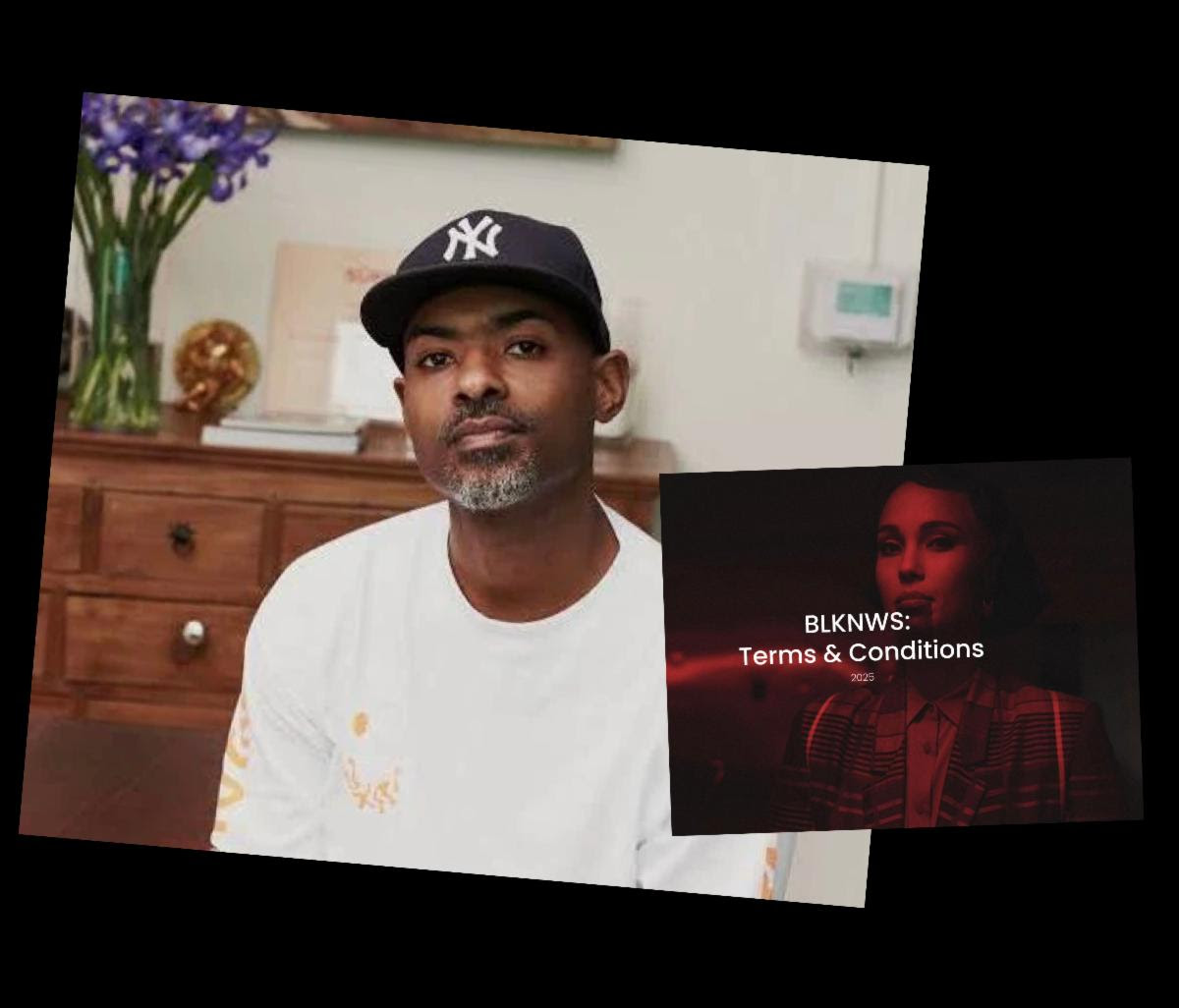
Jada-Amina: These are my, these truly are my babies. The lineup is one of my favorites in the past three years that we’ve exhibited, but my must-see film is Black News: Terms and Conditions by Khalil Joseph.

We are awarding Joseph the Visionary Award on November 9th, a well-deserved award. I’m excited for you all to witness this project, which has not had a robust theatrical run yet. We’re the Chicago premiere, and we feel extremely blessed to be exhibiting the film, which will run every Sunday for the rest of November, starting on November 9th. Khalil and his team are calling that Black News Sundays. Think about wearing your Sunday’s best because it’s certainly a sermon, and Khalil and his team are certainly evangelizing! I’m extremely interested in exploring the possibilities within this format and medium, and Khalil answers those questions very thoughtfully. I’m so excited about Black News Terms and Conditions.
I should say a word about the Black and Blur shorts program, experimental cinema on the edge of Black possibility, which is another challenge to really reconsider what cinema can be.
Reggie Ponder: Some argue that film is dead because most people only watch short-form content now. As a curator, what are your thoughts on what film can be today?
Jada-Amina: I certainly understand how we’ve gotten to this point. It’s all about it is neuroscience truly, and dopamine hits. And I, when it comes to this little thing (the cell phone), I have to remember that. I’ve had a cell phone with social media for at least 15 years, maybe more than half my life. I understand what’s happening. I find myself watching a video, and then I’m scrolling. But the only way to kick a habit or surmount any challenge is to do it and do it again. So my answer to that is keep coming to see these long-form films. When you’re on your phone watching a video, finding yourself not getting that dopamine hit, right before you scroll, just say, “Let me watch a film.” I just encourage us all to be more aware of the ways that we can resist beyond getting out and marching in the streets, and truly reclaim the agency over your mind and watch a good film.
Reggie Ponder: Film really does go deeper for you. You once said, “When we gather in the dark before the big screen, a covenant forms.” What do you mean?
Jada-Amina: Anything we do together in life is sacred. Everyone does not regard life as sacred. At Black Harvest, we certainly regard life as sacred, and when we’re doing that thing together, then it’s super sacred. Watching other folks and these stories and bearing witness becomes a spiritual thing. There’s power in numbers, and that’s why it feels good sometimes to go to church after you haven’t been to church in a while. There is this vibration. We are all here with the same intention, and that is to be changed by film. That’s what I’m looking for when I’m going to have any sort of experience that requires me to spend some money and leave my house. I want to have an experience, and Black Harvest is certainly excited to and just truly enthused by the opportunity to bring folks together around cinema.
Short Films and Black Love
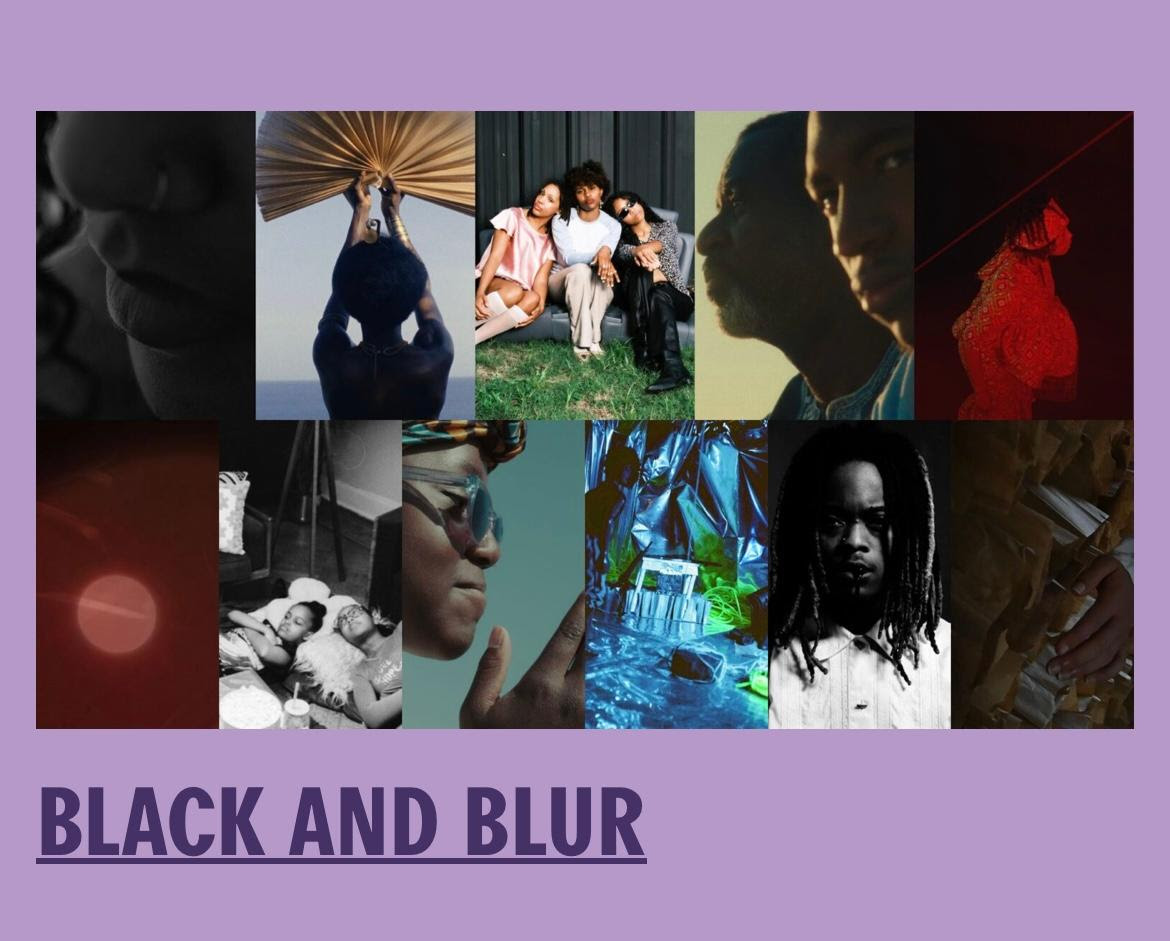
Reggie Ponder: Last year, I raved about the short films. They’re always amazing and perfect for shorter attention spans. Can you talk about your lineup of short films?
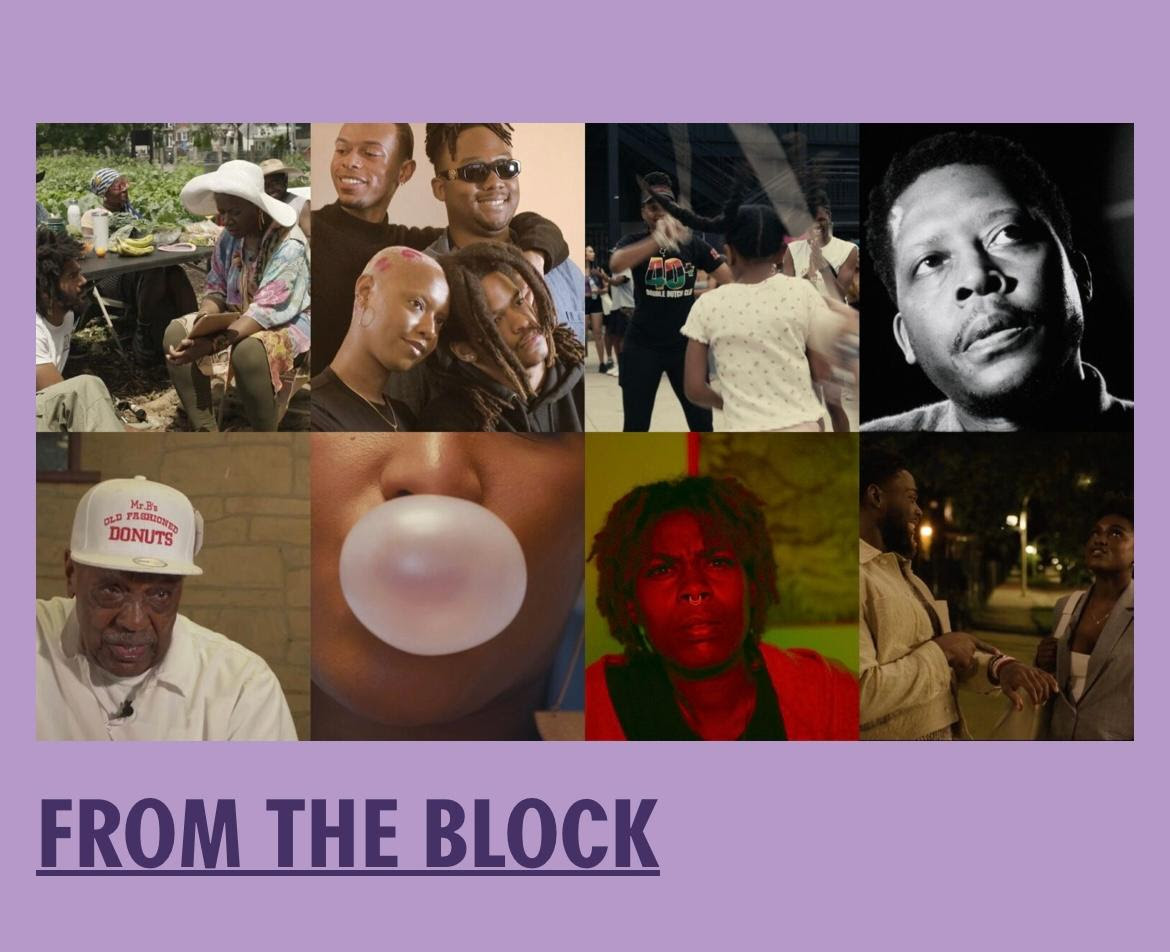
Jada-Amina: Absolutely. So, this year we have nine short films. We have a couple of short film programs that will be returning. Shorts from the Block is our bread and butter. This is where we showcase our local film talent. I’ve been using this metaphor a lot, but Chicago is such fertile soil for growing these brilliant filmmakers. We are super excited to bring Shorts from the Block again. As well as Black and Blur, which is also returning. This is our experimental shorts program, which is a nod to one of Fred Moten’s books. In this program, we see so many filmmakers break form and come in and out of this idea of what cinema can really be, challenging the possibility of film.
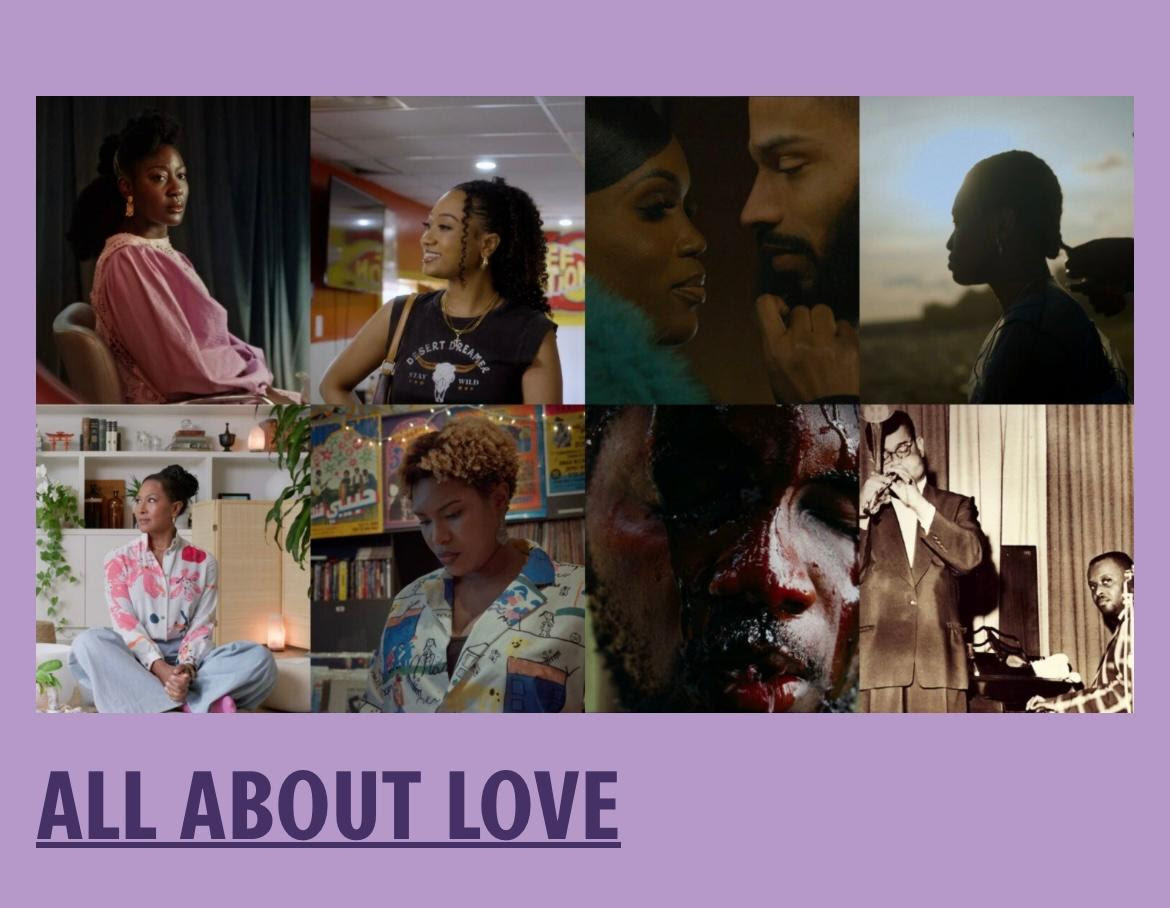
Reggie Ponder: I love the “All About Love” program. We don’t often show how deep Black love is. Can you talk more about the films in the program?
Jada-Amina: Last year, the All About Love program was called A Love Supreme, eponymous to John Coltrane’s song, a classic standard at this point. So All About Love borrows from Bell Hook‘s book on thinking about love, specifically in the wake of chattel slavery and in the wake of imperialism. Thinking about the ways that love, especially across Black families and romantic relationships, love. This film collection of films is a meditation on Black love in its many languages. And that’s a play on words because of the love languages. Folks are always asking about what’s your love language, and if anyone wants to know, my love language is all of them. All About Love truly does speak to the many languages of love, not just those five love languages that we hear about. Thinking about how the language of love and how we show up for one another goes beyond romantic relationships. We also have some complex familial ties. There’s one film called Sunset and the Mockingbird. Squeezing a 29-minute film into a shorts program is something that I typically don’t do, but this one is just so good. It’s the love story of Gloria Clayborne and renowned Jazz pianist, Junior Mance. Junior is from Evanston, actually, and has now gone on to be an ancestor, but this is just truly a potent film on aging and what it looks like to transition from loving someone on earth to loving them heavenly.
Music and Curation Style
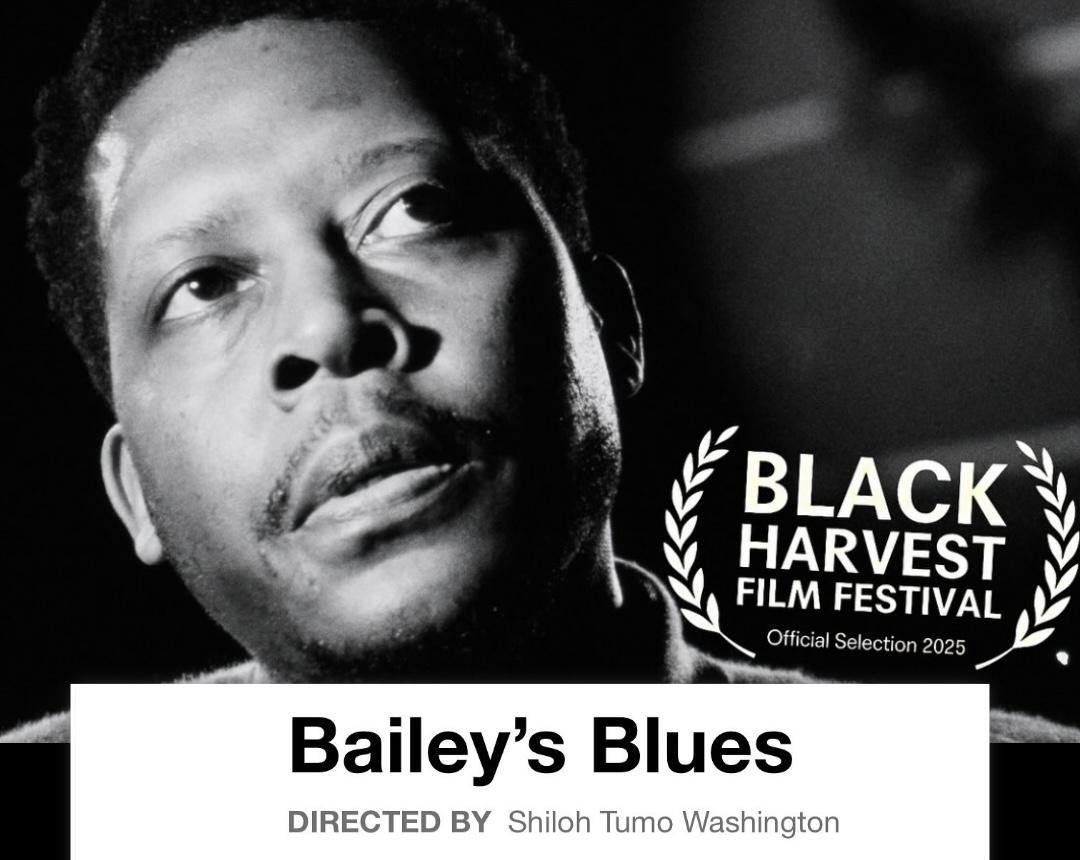
Reggie Ponder: I already saw Bailey’s Blues. I’d like you to do two things: talk about the film specifically, and discuss how music influences your curation style.
Jada-Amina: Bailey’s Blues is a speculative film. We always have a film on speculative fiction. A lot of films are speculative, but this one, particularly, is speculative fiction in that it’s thinking about the embodiment of a jazz musician. This very real scenario of the white influence media, its job of distorting the actual subject. This kind of resistance that director Shiloh Tumo Washington is speaking to along with along with the scoring and along with the element of jazz.
This idea of jazz is one that many of whom we laud as jazz greats would oppose. Jazz is what white folks call this genre. We’ve since embraced it as a colloquial term, as a genre. But Shiloh is really getting at this idea, this misinterpretation of this great Black sound that does come out of its early antebellum roots. Even before then, pre-colonial. I can share now since we’ve already announced the Sandor prize winners for best short and feature that we raised Bailey’s Blues to the jury. It was a hard decision, but Bailey’s Blues certainly was favored by all of our jurors. I’m just super excited for other folks to engage with this question of who we might have been if we didn’t have this type of resistance to look to.
Reggie Ponder: That’s beautiful. Now talk to me about music.
Jada-Amina: It’s interesting that you’re asking this because I just released a music video and a song recently called Twin. I make music, and the genres that I’m navigating or referencing are R&B, soul, but it’s definitely jazz. It is as if Billie Holiday also rapped. I listen to all the genres that have since emerged post-1950. I’m Black, so I’m musical. I think that it’s fair to say those things are often synonymous. For those of us who carry that torch, we are very musical people. My grandparents toured and played. My dad was in a punk rock band. Music is how we do life as Black people, and that’s what was instilled in me.
Reggie Ponder: Music serving as a historical record seems important to your work. How do you use music to cite the source and canonize cultural context in the festival?
Jada-Amina: You’d be hard-pressed to find a film that isn’t a silent film that doesn’t have music in it. A lot of filmmakers reference music. I’m going to always reference music because it serves as a historical record for us. And it’s very important to cite for me as a scholar, as well, just citing the source. It’s important to bring in certain cultural contexts and keep them canonized throughout this festival. So I do reference Black Proverbs, understanding like I’ve, we’ve had shows or films called, “The Kids are All Right,” which is not explicitly Black, but we understand what that means in terms of keeping the traditions amongst Black folks. I like to reference these cultural markers for us because they remind us that this festival is truly for us. If you don’t know, then you wouldn’t know. It’s this part of keeping of codification for me that our ancestors did so well on plantations; we created codes, and we were hiding in plain sight. And so it’s this idea: if you know what it means, then it’s for you. When I spoke to colleagues and other non-Black people, they were like, “What does Sisters of the Yam even mean?” None of us had to really ask that question. And that’s the cultural specificity that I bring to the festival.
Chicago’s House Music Legacy on Screen
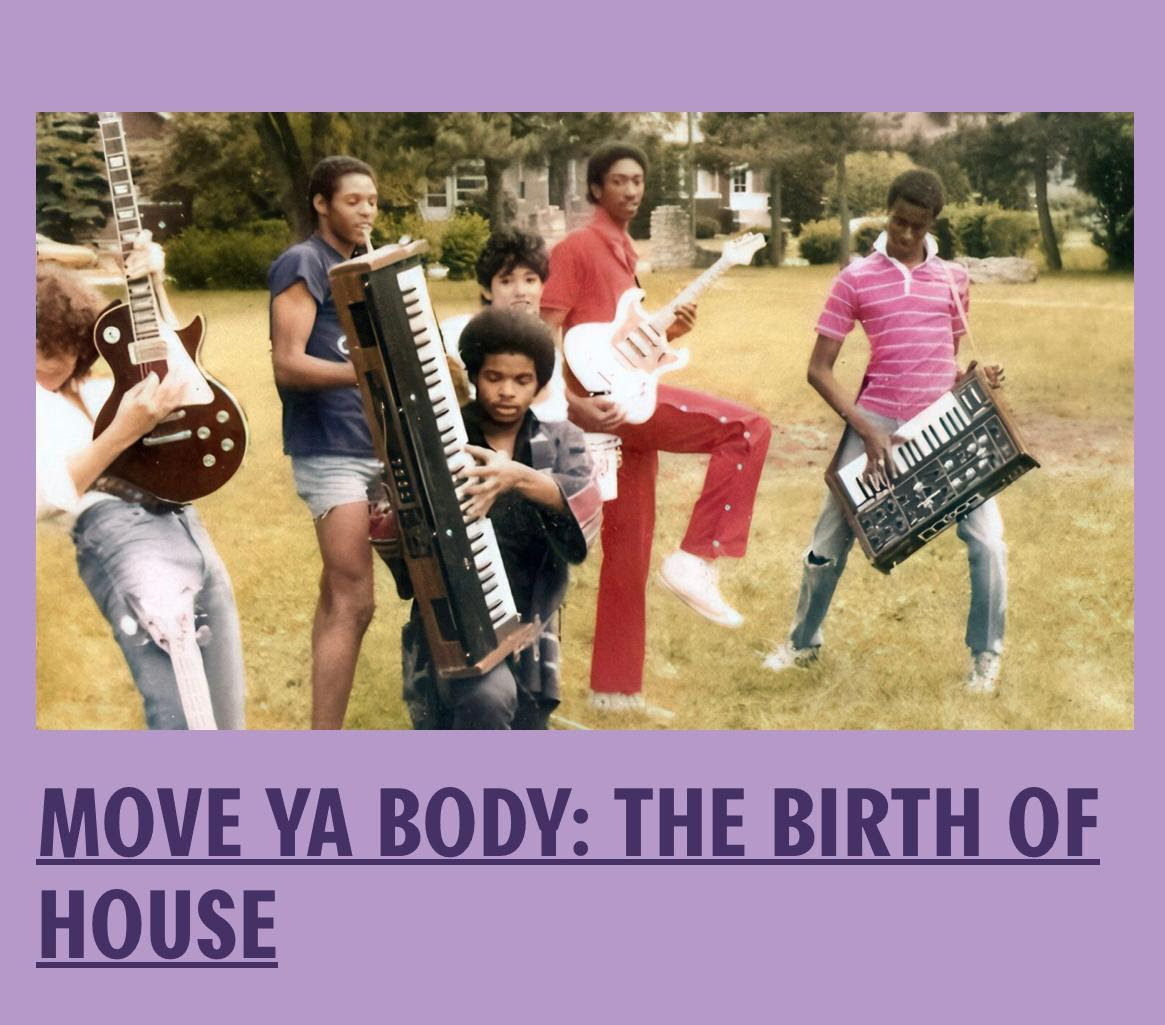
Reggie Ponder: Another musical reference or discussion is Elegance Bratton’s Move Your Body.
Jada-Amina: We are not always going to have a house film, but we will always have films that are touching on the same topics, and there’s room for that. We’re in Chicago, and this isn’t just another house film. Let me provide a bit of context, alongside one of my dearest friends and collaborators, Anisa Olufemi, we have a project called The Gospel Truth, which looks at Chicago House Music and DC’s go-go music. And looks at these sonic traditions as cultural responses to anti-Black violence in both cities – as resistance music. That’s my own personal agenda. But back to sighting sources, they’re playing house music in Berlin, and they’re not thinking about Chicago. So these ideas of creating historical documents. These historical records are really important, and Elegance Bratton presents house music as a cultural phenomenon once again, with roots back to the continent. That’s always bringing it home, right?
Collaborating with Leanne Trotter
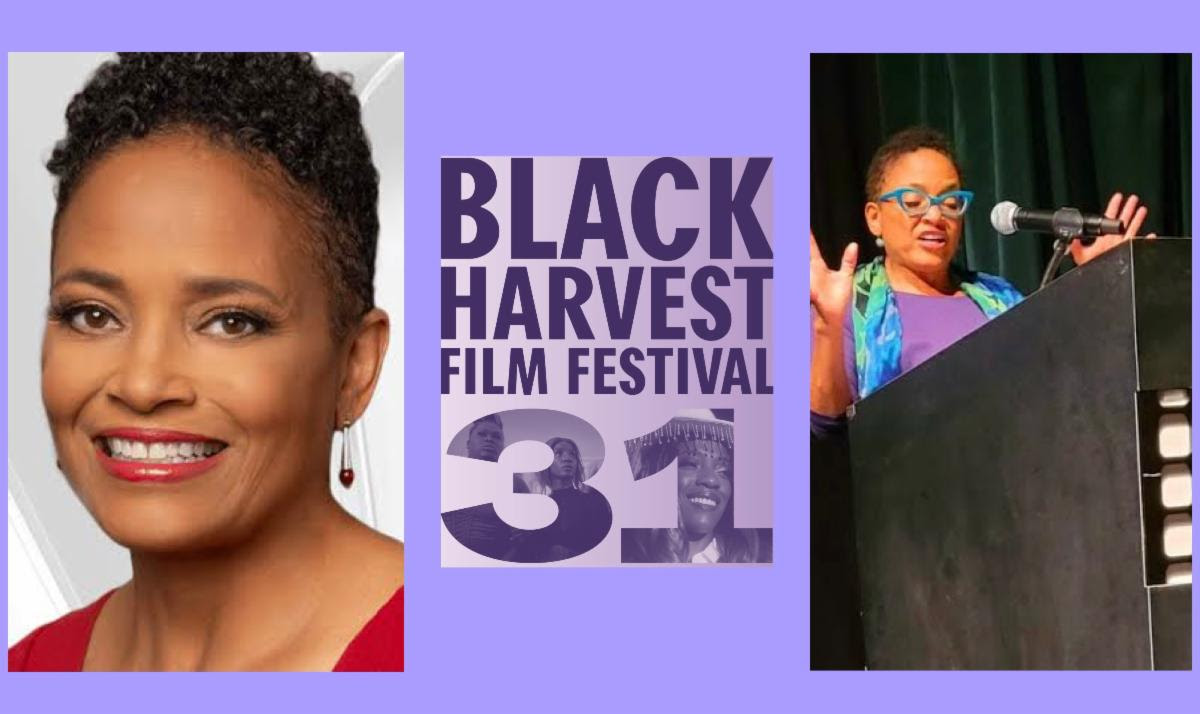
Reggie Ponder: The opening night will have already aired. Can you talk about collaborating with Leanne Trotter?
Jada-Amina: I grew up watching her on TV, so I’m just always humbled, like “is really Leanne Trotter.” She won’t get me for saying this because she’ll beat she beats everyone to it, but she’s really that small in person. She is full of so much life and so much passion for this city, for arts and culture. I feel like when I’m around Leanne, it’s just one of those, one of those shared visions – there’s a kindred spirit of really wanting to rally around all the incredible things Chicagoans are doing and that Black Chicagoans are doing. We’ve talked a little bit about opening night, but she always kills it. We’ve never once considered not asking her to be the MC, and that says a lot!
Final Pitch and Sign-Off
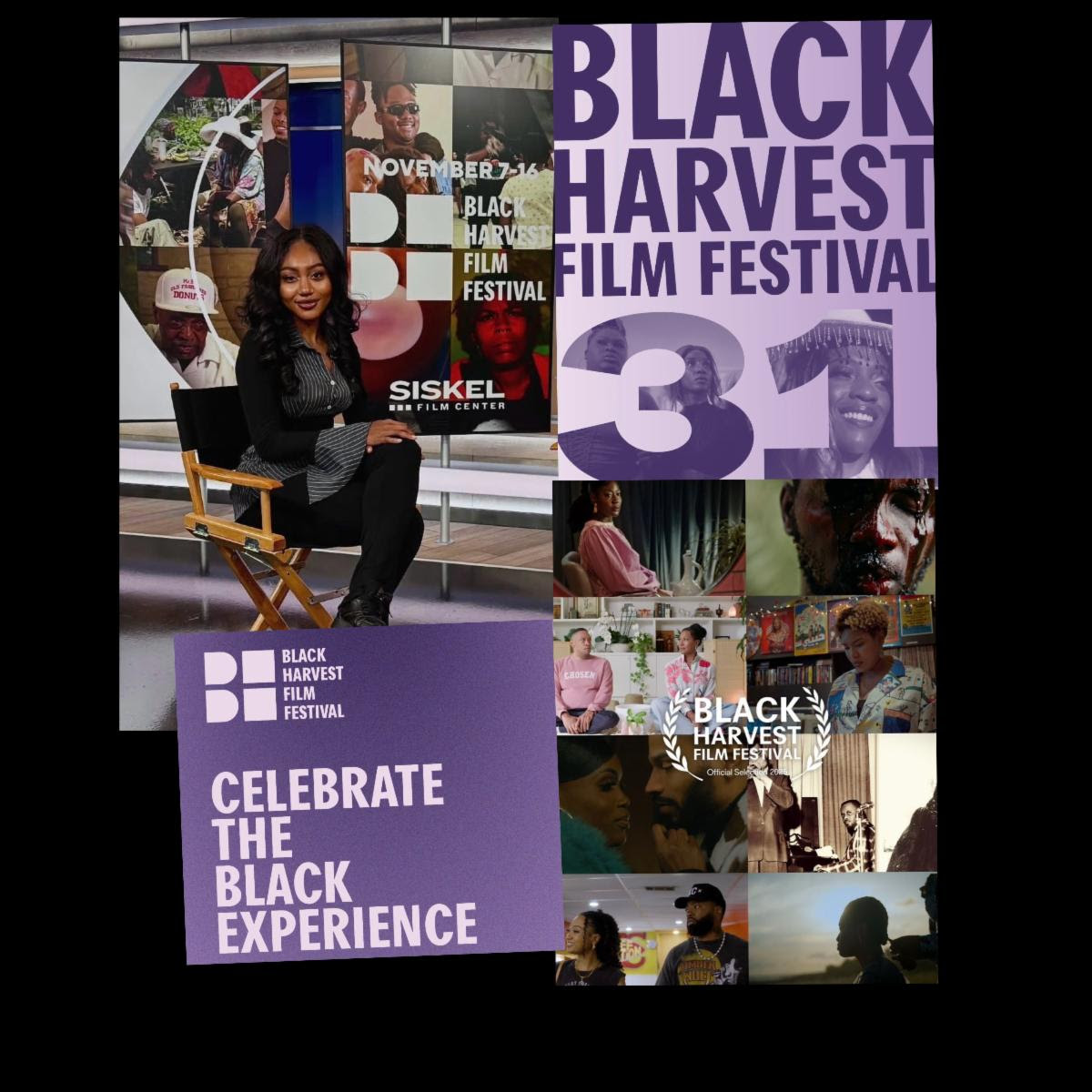
Reggie Ponder: Finally, make your pitch: times, dates, and places for people to come to the festival.
Jada-Amina: When was the last time you’ve been to the movies, and as you all think about it, and if it’s been a year or two, that is all the reason you should join us and re-engage with this site of transformation, which is the theater, that is the cinema. At Black Harvest, we started on November 7th, and we end on the 16th. That gives you plenty of time. Get your passes at blackharvestfest.org. If you don’t come this year, you’ll see it on Instagram, you’ll feel a lot of FOMO (Fear Of Missing Out). Hope to see you there.
Reggie Ponder: Thank you so much for your time.
Jada-Amina is all about Chicago. Check out her music on multiple platforms, including YouTube, and don’t be surprised if you run into her at some of her favorite places like Milano’s Pizza in Beverly, Portillo’s, or just chillin’ to jazz in the parks.